


POCATELLO — Idaho State University professors and their students have developed a way to identify species of fish native to Southeast Idaho and the surrounding areas.
According to a news release from ISU, Ernest Keeley and Janet Loxterman, two professors in the biological sciences department, have been working with their students, Brandy Smith and Tyson Hallbert for about a decade gathering data on the different species of suckers in the upper Snake River, Bonneville Basin and Colorado River.
One of the species of suckers they analyzed was the bluehead sucker that was believed to be in all three areas, but a previous study indicated that a similar species was in the upper Snake River and parts of the Bonneville Basin.
Keeley said in the news release that the idea for the study came when a group of ISU students were on a field trip where they had to collect fish for their biology class.
"It became apparent that some of the suckers species were difficult to tell apart," Keeley said in the news release. "So that led to the idea that someone should study it to figure out how to distinguish which fish species they were."
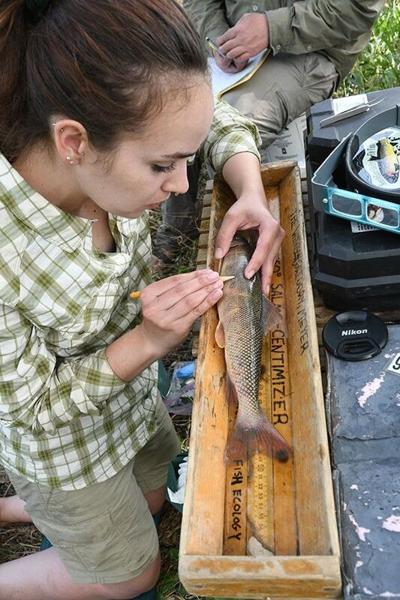
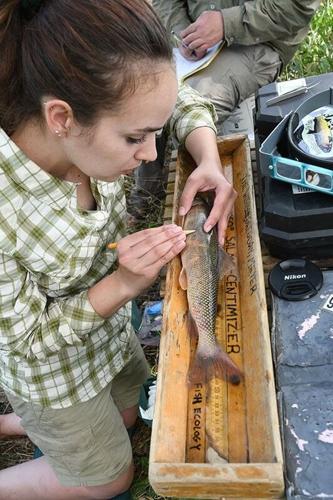
Keeley, Loxterman and their students collected fish from over two dozen sites located in Idaho, Utah and Wyoming. The fish were anesthetized and weighed before the researchers took a picture and collected tissue samples from their pelvic fins for genetic testing. The fish were returned to the water after this.
At the ISU campus in Pocatello, the students collected measurements from the pictures of each sucker. They measured everything from the length and width of different fins to the number of scales on the lateral line.
Students also extracted DNA from the fin samples for sequencing at ISU's Molecular Research Core Facility and the Idaho Department of Fish and Game's Eagle Genetics Laboratory. When they got the data back, they found there may have been some misidentification of where each species was found over the years.
“The green sucker in the Upper Snake River and Bonneville Basin watersheds were thought to be the same species as the bluehead sucker that is found in the Colorado River watershed, partly because they look very similar,” Keeley said in the news release.
When the researchers examined the DNA sequence, they found that there were differences between many of the fish that were thought to be the same species.
"It took a larger sampling of each species' genome to confirm that they were three separate species of suckers in all the watersheds," Keeley said in the news release.
After pairing the suckers' genetic data with measured physical traits, the researchers were able to determine which measurements were best suited to each fish.
“Of the 24 measurements, we found the number of lateral line scales, dorsal and pectoral fin lengths, head length and depth, depth of the caudal peduncle — the part of a fish between their tail fin and body — and their eye diameter were the best physical measurements to use to determine the three sucker species,” Keeley said in the news release.
Brandy Smith, one of the students who is now an environmental scientist in the Restoration Ecology Unit at the California Department of Water Resources, said in the news release that she is glad that she had the chance to take part in this research.
“I remember being amazed the first time I encountered a green sucker because I had no idea something so unique and cryptic lived in my local river," Smith said in the news release. "I loved exploring their diversity and hope that this effort can contribute to the conservation of this remarkable native fish."
Hallbert, the other student who is now postdoctoral scholar with the Center for Watershed Sciences at the University of California, said in the news release that he also enjoyed his research on the project.
“This study shows that there is still a lot to learn about the diversity of fishes and biodiversity in general,” Hallbert said in the news release.
More information about the ISU Department of Biological Sciences can be found at isu.edu/biology.


(0) comments
Welcome to the discussion.
Log In