

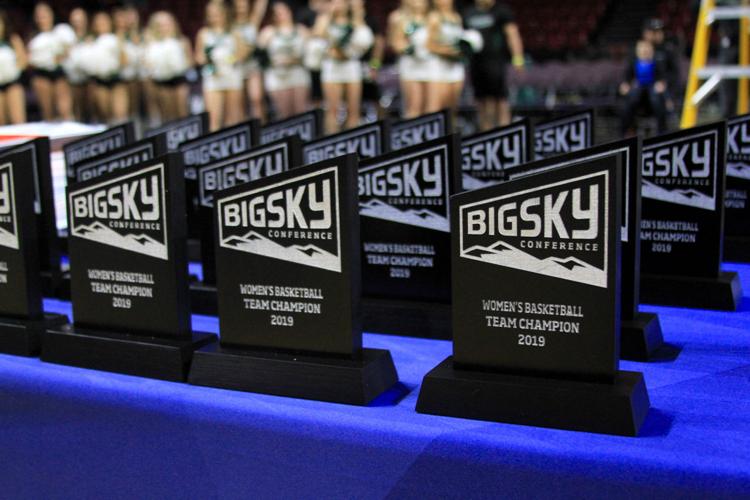




Happy new year to everybody who uses July 1 as the beginning of your official calendar. That includes the Big Sky Conference, which not only welcomes a change in calendar, but also a change in membership.
As of July 1, Sacramento State is out, on its way to the most expensive move up in football classification in NCAA history. And coming into the Big Sky are two schools from one of the fastest-growing areas of the country — Southern Utah and Utah Tech.
That gives the Big Sky 13 football-playing members, with 11 of those competing in most other sports the conference offers.
Some folks might say the Big Sky has grown too big, at least when it comes to football. Members will play nine games against fellow Big Sky schools, meaning there is always the possibility that the conference title could be decided without the top contenders meeting each other head-to-head.
Be that as it may, the Big Sky has typically taken a conservative approach to expansion ever since Nevada, Boise State and Idaho left the conference in the early 1990s. The conference has typically added more teams than necessary to meet the NCAA requirements to qualify its members for postseason play, simply because nobody knew who would be leaving next. The league didn’t want to get caught with its membership down and not meet NCAA requirements if a member school or two made a quick decision to depart.
So out goes Sac State, which is paying the Mid-American Conference $18 million over five years to join that Ohio-based league in football only, as well as travel expenses for MAC teams flying to Sacramento for games. And in come Southern Utah, a school that has already entered and exited the Big Sky once before, and Utah Tech, the erstwhile Dixie State University, which has been a four-year school for only a quarter of a century.
When Big Sky presidents were considering both SUU’s and Utah Tech’s applications, they were also likely looking over their shoulder at UC Davis and pondering how long the Aggies were going to keep their football program in the Big Sky. Most UC Davis athletic programs are transitioning to the Mountain West Conference this year, although football remains in the Big Sky at the FCS level. While UC Davis administrators have given no indication they are ready to make the same move up as Sac State, the door to the FBS appears much more convenient to the Aggies since, unlike Sac State, they may not have to bribe the Mountain West to let their football program in.
In the meantime, the Big Sky reopens the I-15 corridor to southern Utah. Here’s what they’ll be getting in the way of new members:
Southern Utah — the Thunderbirds have already given the Big Sky a twirl, joining in 2012, and then exiting for the Western Athletic Conference in 2022. At one time, the WAC entertained visions of moving up to the FBS level in football in toto. Never-ending defections from the conference forced the WAC to merge its football program with the Atlantic Sun Conference, forming the United Athletic Conference, and effectively bringing an end to the WAC as a football entity.
Despite the ups and downs of its conference identity, SUU has remained a competitive football program. The T-Birds beat Idaho State in football last season, 46-24, on the way to a 7-5 overall record, 6-2 in the United Athletic Conference.
Under Ed Lamb and later Demario Warren, the T-Birds built a competitive football program during their last Big Sky iteration, winning the conference championship outright in 2015 and tying with Weber State for the title in 2017.
Their men’s basketball program returns to the league after a 10-22 season overall, 6-13 in the WAC. Their women, meanwhile, were 19-13 overall, 11-8 in conference play.
SUU, which has an enrollment of about 18,000 students, carries an athletic department budget of about $18 million. Cedar City has been growing nicely, going from a town of about 30,000 to 43,000 in the last 10 years.
To be honest, Idaho State coaches weren’t mourning when the T-Birds left the conference originally. It’s more than a 400-mile bus ride from Pocatello to Cedar City. Now that Utah Tech has been added to the league, speculation is that they will be travel partners with Southern Utah, and Idaho State would pick up both those teams on one trip. The conference hasn’t issued a schedule yet, however, so it’s unclear how that trip will be packaged.
Utah Tech, meanwhile, enters the Big Sky off a 2-10 football season, including 1-7 in the United Athletic Conference. The Trailblazers men’s basketball team was 19-15 overall, 11-7 in the WAC, while their women finished 9-20, 4-14 in conference.
Utah Tech has an enrollment of about 13,000 students and an athletic department budget of about $18 million.
While the Trailblazers have struggled in their move up to FCS football and other Division I athletics, they are located in one of the fastest-growing regions in the country. In the last 10 years, the St. George metropolitan area population has grown by 50%, to about 208,000 people. Many of those are retirees who are escaping the cold climes of Idaho and Northern Utah, but the area also has a burgeoning high-tech industry that is attracting growth.
As the college football world continues to evolve, the Big Sky Conference has done a pretty solid job of dealing with all the comings and goings of programs. The two Montana schools stepped into the breach when Nevada, Boise State and Idaho left originally, and they have been the conference anchors. In between, we’ve seen California schools come (Cal Poly, UC Davis) and go (Cal State Northridge and Sac State). The conference has welcomed back two prodigals — Idaho and now Southern Utah. And the league has made what seem to be logical additions from its natural footprint — Northern Colorado and now Utah Tech.
All of which should provide the Big Sky with some level of stability — until the next big realignment wave hits. Folks have been speculating for a long time about when the two Montana schools will be making the jump to FBS in football. With the departure of traditional FCS power North Dakota State to FBS this year, that speculation has renewed. How long will it be before the Mountain West or the Pac-12 open their door to the Grizzlies and Bobcats? Stay tuned.
Brad Bugger has been observing athletics in southeastern Idaho since 1979, as a sports writer, broadcaster and fan. He can be reached at bpbugger@gmail.com


(0) comments
Welcome to the discussion.
Log In