

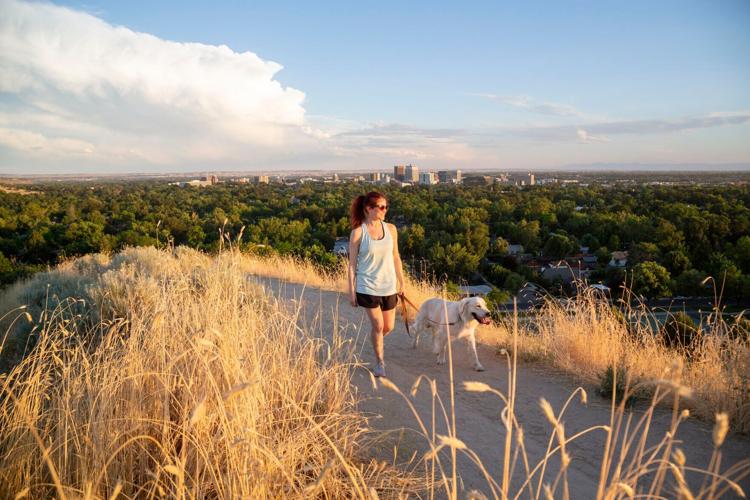

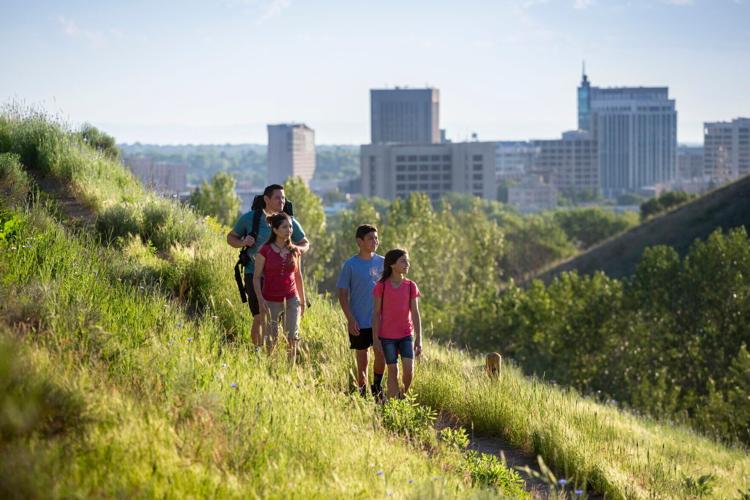

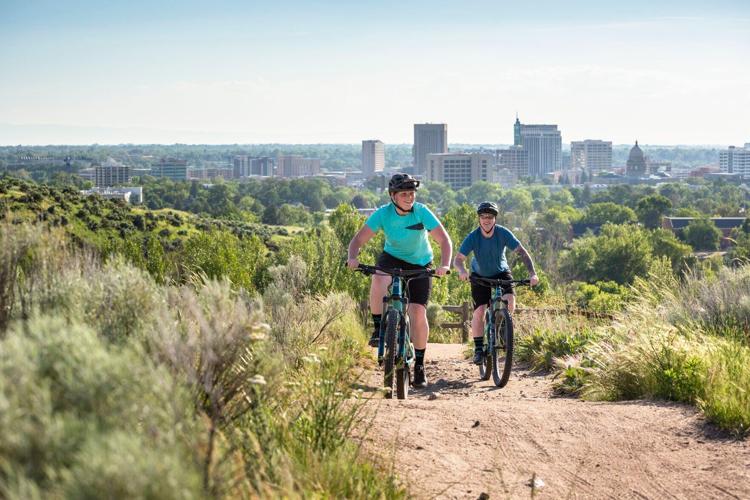

Ridge to Rivers started more than three decades ago with a vision of a trail system in the Boise foothills that would connect neighborhoods to public lands. Today, the Ridge to Rivers partnership between five land management agencies led by the city of Boise provides 210 miles of mostly non-motorized trails, free and open for use by Treasure Valley residents or visitors for hiking, running, mountain biking, wildlife watching and more.
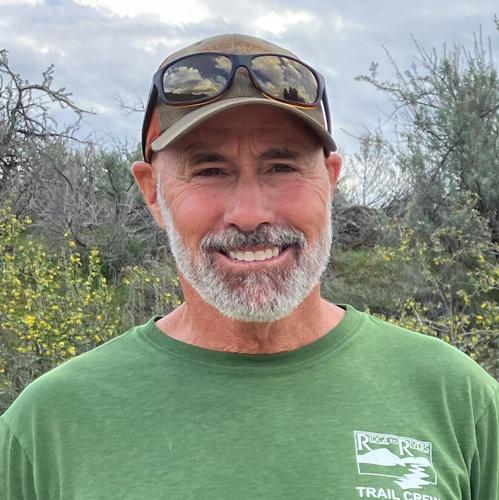
“It’s a really large and diverse trail system right next to the city, which makes it unique in many ways,” said David Gordon, program manager, “and allows for people to get outside very quickly and up into the foothills, and kind of leave the city behind.”
The trail system now sees well over a million visitor-days per year. Roughly 60% of that is people on foot; just under 40% is mountain bike use; about 1% is ATV and motorcycle use on specific motorized trails; and less than 1% is equestrian use by horseback riders.
The trail network spans an array of ownerships, from private land whose owners have agreed to allow the use through easements, to public lands managed by federal, state and local agencies. The five partner agencies who formed Ridge to Rivers in 1992 are the city of Boise; Ada County; the Four Rivers Field Office of the U.S. Bureau of Land Management; the Boise National Forest; and the Idaho Department of Fish & Game.
“The idea behind the partnership … is that we manage the trails into the foothills as if there’s only one landowner, allowing it to be a seamless trail system,” Gordon said. “Otherwise it would never work, because our trails cover all those jurisdictions, a lot of private land and other land. The goal is to provide a seamless trail system in the foothills even though when you look at it from an ownership point of view, it’s a real patchwork.”
Located in the foothills overlooking the city and the valley, many of the Ridge to Rivers trails feature panoramic views, from snow-capped mountains to the city skyline to the Boise River. “Military Reserve has really nice views of downtown,” Gordon said. “Out west, I personally think that Seamans Gulch Loop has beautiful views of the west side of the valley. And Table Rock has great views of the whole valley.”
On the RidgetoRivers.org website, users can find extensive information about trail conditions, restrictions and closures; an interactive trail map; a printable PDF trail map; and information ranging from hikes and rides and where to see fall colors or spring wildflowers, to trail etiquette, including information on on-leash and off-leash areas for dogs and how different user groups interact.
Also posted on the site are results of the latest user survey; Ridge to Rivers frequently surveys trail users and adjusts usage rules to balance the desires of the various trail users with the need to maintain and preserve the trails and support the birds and wildlife that live along them.
The latest user survey, which closed in November of 2023, received more than 3,400 responses. Respondents were highly appreciative of the trail system, with top issues including muddy trail etiquette, dog waste issues, and interactions between differing user groups. Roughly 90% supported trail closures to protect specific trails during muddy conditions.
Among the etiquette tips on the Ridge to Rivers website: “If you are leaving prints - hoof, tire, or boot - the trail is too wet to use. If you encounter muddy stretches of trail, please turn around.”
Different trails within the system have their own usage rules, all laid out on the map and website. There are two motorized trails, 8th Street Motorcycle Trail #4 (plus the half-mile Hulls Ridge Trail #4A), and Femrite’s Patrol Trail #6, that are open to ATV’s and motorcycles as well as all other users. All other trails are for non-motorized use only.
Nine trails forbid bikes or horses and are for pedestrians only. Some allow dogs under control but off-leash, with specific rules; others require dogs to be on-leash at all times. Some have directional rules, requiring users to travel in a specific direction.
Others are subject to special management strategies, which first were piloted in 2021, then made permanent after extensive surveying of users.
Those include an odd/even system for the popular Lower Hulls Gulch Trail #29 to separate uses, for safety and to enhance the experience for users. On odd-numbered days of the month, the trail is open to downhill mountain bike traffic and closed to all other users. On even-numbered days, it’s open to hikers and equestrians traveling either uphill or downhill, and to uphill mountain bike traffic, but closed to downhill mountain bike traffic.
In the Fort Boise-Military Reserve area, there are separated-use rules. One trail, Bucktail Trail #20A, is open to downhill mountain bike traffic only. Uphill bike access there is via the Central Ridge Trail. Two Point Trail, which runs between Central Ridge and Bucktail, is for hikers and pedestrians only, with no bikes allowed.
Ridge to Rivers encourages users to take its “Happy Trails Pledge,” which asks them to pledge to be kind, friendly and respectful to other trail users and user groups, and to be mindful of their own actions to make sure there is room for everyone.
All users are required to stay on the trails, to avoid damage to property and the environment; and mountain bikers are to yield to hikers, horses and uphill traffic.
Each partner agency, except Idaho Fish & Game, contributes funding for the maintenance and operational expenses for Ridge to Rivers, with the city of Boise covering more than 80% of the costs.
“Boise enjoys a high degree of support for open space and trails,” the Ridge to Rivers 10-year Management Plan states, noting that Boise voters approved a $10 million open space levy to acquire and protect open space in the foothills for conservation and recreation purposes in 2001; and then overwhelmingly passed a second $10 million levy in 2015. That showed “community-wide interest” in investing in open space for, among other uses, recreation that benefits not only Boise but surrounding communities in Ada County and beyond.
Volunteers contribute thousands of hours of work on the Ridge to Rivers trails every year, and the system employs one of the few full-time trail crews in the country. Both trail use and trail miles offered have seen steady growth since 1992. When conditions permit, trails are open year-round.



(0) comments
Welcome to the discussion.
Log In