


Thomas Jefferson wrote Colonel Charles Yancey in 1816 that “where the press is free and every man able to read, all is safe.” Judged by Jefferson’s wise insight, today all is not safe.
“Not safe” because the press is no longer what Americans read. According to the Pew Research Center, 86 percent of us obtain our news from self-selected applications on hand-held digital devices in our pockets, often in short video formats. Giant tech corporations dominate this space.
Americans under 30 rely on “the press” even less. Print publications are the primary news source for only 3 percent of Gen Z (born between 1997 and 2013). The windows on the world for these citizens are social media platforms like Twitter, Facebook or WeChat.
These tech companies share a common business imperative: quickly lead customers to wanted online content. This model has spawned a new artificial intelligence (AI): one using individual histories and personal data to better “recommend” the next thing popping up on the phone. This AI is often nicknamed “the algorithm.”
Jefferson didn’t anticipate “the algorithm.” His idea of “the press” meant real human beings: reporters for whom trust and insight would be their tickets to success, editors whose job was to grow an audience with content appealing to broad cross-sections of society, and owners who understood that “the good of the community” was intrinsic to the success of the ‘community news’ business.”
When it comes to these values, the algorithm is the diametric opposite of “the press.”
It was, therefore, fascinating to see the Swedish Academy present the 2021 Nobel Peace prize to one of the world’s greatest critics of the algorithm, Philippine journalist Maria Ressa. Her key observation is that algorithm-driven media can’t recognize fact from fiction.
“Facts are at the core of any democracy,” Ressa told German broadcaster Deutsche Welle in October. “Freedom of speech, freedom of expression is about being able to say what you think without fear of retribution.” Because popularity drives the algorithm, unpopular facts might as well be censored.
Ressa condemns the algorithm on two fronts. First, “popularity easily turns into mob rule but in the age of social media, you can’t quite tell whether it’s real or manufactured.”
Secondly, she argues: “I think the core of the problem is that all the social media platforms treat lies and facts identically. ... Research has now shown us that on social media, lies laced with anger and hate spread faster and further than facts. So, you can say that the world’s largest delivery platform of news is actually biased against facts and biased against journalism.”
If, as Jefferson believed, a free press is the salvation of a self-governing republic, couldn’t “a delivery platform of lies” be our Constitution’s undoing?
On solutions, Ms. Ressa is less certain. As a progressive, her instinct is to create a government agency to declare what is truth and to censor lies. But she disavows that answer when asked if this agency will be part of the Duterte or Marcos governments, the current or the aspiring Philippine bosses.
A more “American” answer would be to put the responsibility back on “We, the People.” Perhaps some new year’s resolutions, to be adopted by patriotic citizens across the nation, may help. For example:
Weekly, read about a current event in an in-depth printed article.
Daily, read, in print or online, something produced by a local reporter.
Routinely seek news sources respected by both progressives and conservatives.
Now and then find a sincere person who thinks differently from you and ask them “why?”
Resolutions like these take effort but are well worth it. They are an antidote to the tunnel vision symptomatic of algorithm-driven news.
As Jefferson advised John Jay, caring about how we find truth “is a part of the price we pay for our liberty, which cannot be guarded but by the freedom of the press.”
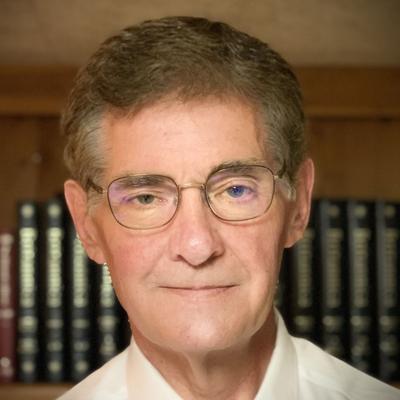
Trent Clark of Soda Springs consumes news as it arises from online searches of relevant topics, while routinely reading a few local papers in hardcopy.

(0) comments
Welcome to the discussion.
Log In