



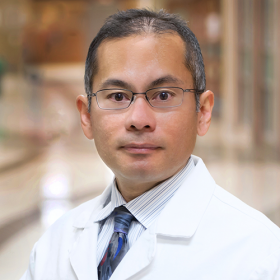
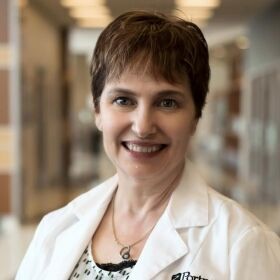

POCATELLO — When people first walk into Dr. Lynn Otto’s procedure room, one of the first things they say is that it looks like a spaceship.
“It looks like the Enterprise, like we’re going to take off to a galaxy far, far away,” joked Otto, a heart rhythm specialist who has worked at Portneuf Medical Center for three years. “There’s just so much equipment, and there’s like eight monitors.”
While Otto’s equipment isn’t assembled inside disc-shaped ships hurtling through space, it does tap into a frontier that both Otto and cardiovascular surgeon Julio Vasquez are exploring with their new, alternative procedure for those suffering from chronic atrial fibrillation.
The two heart specialists have brought a hybrid treatment called the convergent procedure to Southeast Idaho. It uses non-invasive surgery and catheter-based ablation to treat the abnormal heart rhythm disorder more effectively than other treatments.
“(The equipment) really shows the technology that actually has to go into a procedure like this,” Otto said.
“It is a combination of open surgery and catheter-based ablation, but Otto has been performing catheter-based procedures in this hospital for several years and those procedures are also available elsewhere,” said Vasquez, who is a thoracic and cardiovascular surgeon at PMC and has been with the hospital since 2007. “But for convergence, in this combination, we’re kind of pioneers in our region.”
Vasquez knows of no other doctors offering the procedure between Boise and Salt Lake City. It took them years of preparation and training to fully bring it to the area, and they began offering it at PMC and treating patients about four months ago.
“AFib is an abnormal rhythm where the top of the heart kind of quivers like Jell-O and the bottom tries to follow,” Otto explained. “And it ends up being chaotic and fast. Most people don’t feel well in this rhythm. They feel like a fish flopping (on dry land), and have shortness of breath with exertion … and it does increase their risk for stroke about fivefold. ... Some don’t know they have it.”
The heart rhythm disorder affects many older individuals and those with obesity, high blood pressure and sleep apnea. According to the Centers for Disease Control and Prevention, AFib has been rising as the primary or contributing cause of death for more than two decades.
“By the time we’re 80 years old, more than 10 percent of us will have some AFib,” Otto said. “It’s really common.”
Procedures like convergent open up new, more effective avenues that patients can pursue if they are eligible. It allows for shorter hospital stays and quicker recovery for patients, and while it doesn’t cure AFib, it alleviates their health complications.
“The goal is for (patients) to resume their life,” Otto said. “Atrial fibrillation is a chronic disease. We don’t like to use the word ‘cure.’ It’s kind of like if you have a bad back and you have surgery, you always have a bad back. And with AFib you always have that risk of going back into the rhythm again and (have to) repeat procedures five years, eight years later.”
Another aspect of the procedure is just how collaborative it truly is.
“There are two really nice things about this procedure,” she said. “One is that we didn’t have a lot to offer these patients who were stuck in AFib for a year or more and who haven’t responded to less invasive therapies. We just didn’t have much to offer to help them. And the other is, it is so collaborative and it’s fun because usually we work in our little silos and we talk to each other about patients, but with this procedure there’s a patient that we can do together. I can’t get to the outside back of the heart and (Vasquez) can’t get to the veins. So I do my part, he does his, and we have the whole back of the left atrium treated and covered. So that’s convergent.”
Vasquez echoed this statement, explaining that they hope to help community members by providing a local service for a growing health issue.
“When we work together, we’re also thinking of our patients in the community,” he said. “We’re offering this as a service to them. It’s another option that we have available to patients with atrial fibrillation. Not everyone is eligible for this, but for those who are, they don’t have to go elsewhere. We can do it here.”
Both doctors encouraged the community to practice good health habits, which include exercise, eating healthy, sleeping right, and staying up to date with health screenings.
“Prevention is always better than treatment,” Otto said.
To learn more about Portneuf Heart and Vascular Center, visit Portneuf.org/heart. To find a provider, call 208-239-DOCS.


(0) comments
Welcome to the discussion.
Log In