

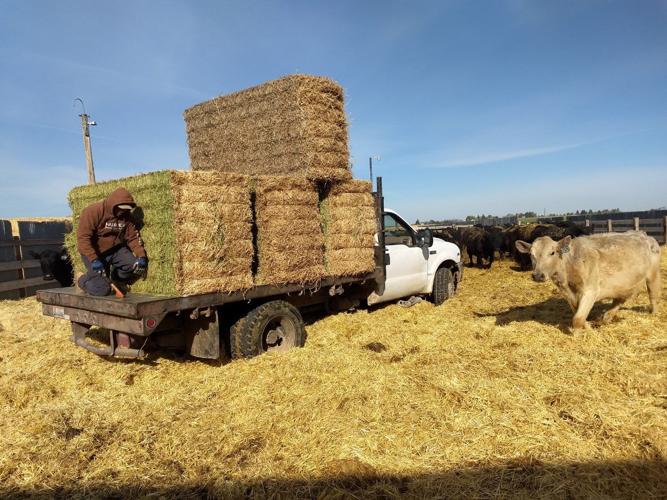
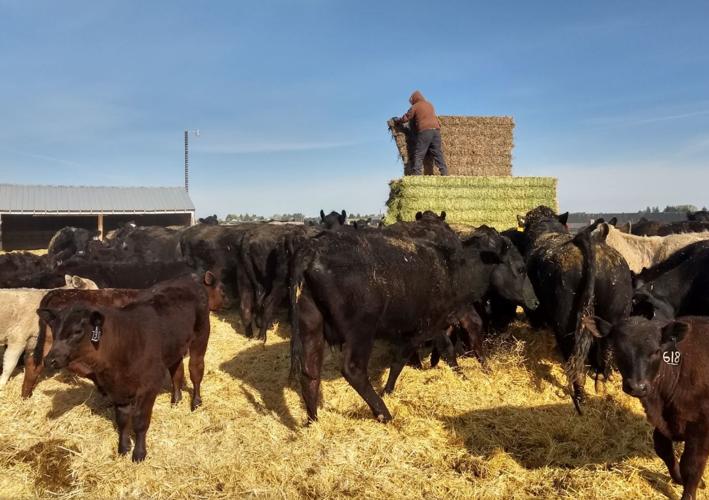

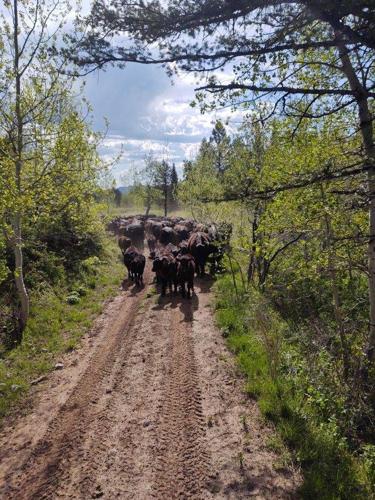
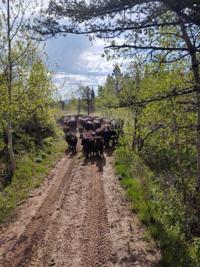
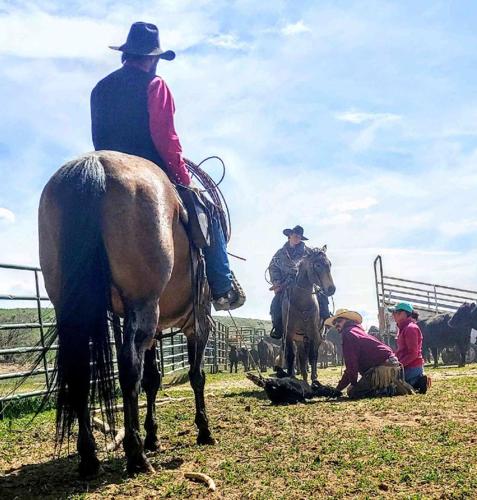

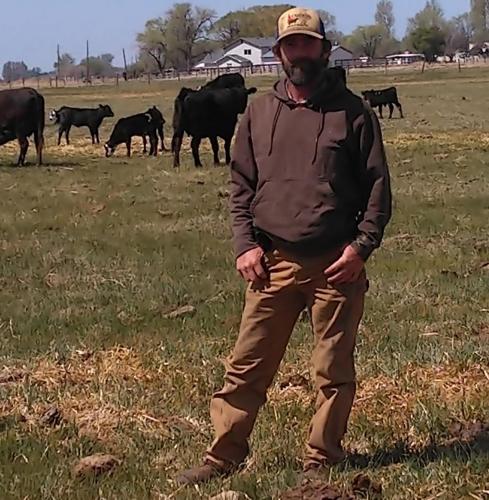

McCammon rancher Jim Guthrie’s cattle are normally grazing private pasture by mid-April, but he’s had to feed them hay for an extra month due to cool, dry and windy weather stymieing grass growth.
Pasture and range conditions have been historically poor throughout the state this spring. Consequently, many of the state’s ranchers have been forced to adjust grazing plans and sustain their cattle on feed for longer than anticipated, cutting into their profit margins. Furthermore, some ranchers have slaughtered more of their least productive livestock, contributing to declining prices for fed cattle.
“It’s as bad as I’ve seen it for some time — the cold and the wind and the drought conditions,” Guthrie said. “We’re pretty nervous about that. Everybody I talk to is totally frustrated because nothing is growing.”
Several in the industry have noticed a glut of “grass” calves — older calves that are ready to be turned out to graze — and a reduction in calf prices as fewer ranchers have the feed to grow their herds. It also doesn’t help that feed prices have strengthened, with corn selling for more than $7 per bushel and feeder-grade alfalfa fetching $175 to $180 per ton.
“One of the keys to making any money in this business is your spring and fall pasture,” said Blackfoot area rancher Slade Butler, who serves on the board of the Eastern Idaho Grazing Association. “Hay is $180. When you’ve got to feed that, you watch your bottom line disappear.”
Butler said pasture has been in short supply in recent years. The grass in the hills near his ranch is no more than an inch tall. His cattle are already grazing, but absent a wet June and July, he may have to pull his cattle off of their summer range early.
“I know some ranchers who (poor grazing conditions) is really hurting them. They’re not sure what they’re going to do,” Butler said.
According to the USDA National Agricultural Statistics Service crop progress report for the week ending May 9, 70 percent of Idaho’s pasture and range land varied from “very poor” to “fair,” while just 30 percent was considered “good” or “excellent.” Furthermore, 41 percent of topsoil in the state was either “short” or “very short” of soil moisture.
“I drove across East Idaho last week and the fields along the freeway were just bare,” said Gretchen Hyde, executive director of the Idaho Rangeland Resources Commission.
Hyde, of Emmett, has noticed her local sale barn has been having a tough time selling grass calves. She said irrigated pastures are also behind pace due to the cold weather, and even cheatgrass isn’t growing. In fact, she knows of some targeted grazing studies evaluating the use of cattle to control cheatgrass that had to be canceled due to the lack of growth of the invasive weed.
“I do see a lot of people looking for places to take their cattle, and they’re not staying in places where they’re normally able to leave them for periods of time,” Hyde said.
Richard Savage, who ranches in the Spencer area of East Idaho, near the Montana border, normally turns his cattle out on his pastures in mid-May, but he’ll likely delay grazing until early June this season.
“(Grass is) trying to grow but then you hit it and graze it and it really looks tough,” Savage said. “We’re still really praying for a rainstorm.”
The federal Bureau of Land Management anticipated such challenges back in February, based on the thin snowpack, and the outlook has further deteriorated with a dry spring, explained Chris Robbins, rangeland management specialist for the Idaho BLM office.
Robbins said the agency’s Upper Snake Field Office in Idaho Falls sent permittees a letter about the drought conditions, encouraging them to consider voluntarily reducing grazing numbers and their duration on grazing allotments. Robbins said inadequate water availability could further complicate matters for ranchers who use public lands.
Robbins said the BLM should have a clearer picture of the situation by early summer, and he’s optimistic mandatory cuts to grazing permits won’t be necessary. Parts of Blaine and Custer counties have been hardest hit and are currently listed as being in extreme drought.
“Our permittees in Idaho are very proactive and very good to work with,” Robbins said.
In the Rockland area of Southeast Idaho, ranchers who usually have cattle grazing the desert by April 15 are still feeding hay to their livestock and praying for rain, explained rancher James Udy.
“Usually by May 10 we have really good grass,” Udy said. “There’s not much there.”
The first two weeks of May brought nighttime lows well below freezing to his area. Udy said ranchers in his community face a tough choice.
“Do you buy hay or sell cows?” Udy asked. “Most guys are going to sell cows.”
Idaho Cattle Association Executive Vice President Cameron Mulrony said ranchers throughout the state have been turning their livestock out on range a week to 10 days late, allowing more time for grass to grow. Mulrony said water-deprived grass on south-facing slopes has been heading earlier than normal.
“At least in the part of the state where I live, when we did get moisture it was followed by enough wind that plants weren’t able to take advantage of all the moisture,” Mulrony said. “... Water fixes everything.”
If not for the drought, Idaho ranchers would be enjoying an exceptional year, according to University of Idaho Extension economist Ben Eborn.
“Beef exports were record high in March. Consumers are feeling good and restaurants are starting to open up and people have money,” Eborn said. “Last year should have been the bottom of the price cycle.”
But the expected market improvement never materialized. Instead, Eborn explained ranchers have been culling older livestock they can’t feed and packing plants have reached capacity, placing downward pressure on returns to ranchers for fed cattle and calves.
“Normally, people are optimistic this time of year, but people are pessimistic because they don’t have any feed,” Eborn said. “Prices have gone sideways on calves since February — in the $1.35 to $1.45 per pound range for feeder cattle. Calf prices are normally really good this time of year. I saw at a sale the other day $1.40 to $1.50 per pound for grass calves.”
The double-whammy for Guthrie is that the drought is also threatening his irrigation supply. The director of the Idaho Department of Water Resources recently agreed to a request by irrigators with the Surface Water Coalition that surface water rights in the Portneuf River Basin be regulated this season in conjunction with Snake River water rights.
The request, based on a forecast of just 80 percent of average runoff into the Upper Snake River, could lead to a basin-wide delivery call this season and possible curtailment of junior Portneuf River water rights holders, such as Guthrie. Guthrie noted that farmers and ranchers within the Portneuf Basin will be bound by terms of a 2015 settlement agreement between the coalition and groundwater users, though Portneuf surface irrigators weren’t a party to the discussions.
“I’m hoping the water board will take a measured, reasonable approach to solving the problem rather than just dropping a hammer in the mix with things not growing,” Guthrie said.
It’s also been a tough spring for Idaho sheepherders.
Henry Etcheverry spent the first few weeks of May grazing several bands of sheep on BLM land in the deserts north of Aberdeen and in the agency’s Burley district. The range has offered slim pickings in terms of forage, and he’s had to cover a lot of ground for his sheep to find enough to eat. He was scheduled to move his sheep to East Idaho on May 17.
“This is the second driest, toughest spring I have seen in my time, which started in 1972 when I graduated college,” Etcheverry said, adding spring grazing conditions were worse only in 1977. “This is very, very serious.”


(0) comments
Welcome to the discussion.
Log In