

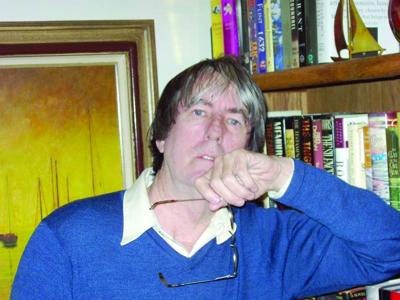

It grieves me to write that we lost Bruce Loebs on April 9, after a long debilitating illness. Husband of Nelia Loebs, father of three, Bruce was an Idaho State University professor emeritus of Speech Communications, a mentor and a friend, despite our political differences.
Bruce Loebs was an ardent supporter of the Vietnam War. That position was not a popular position on any campus. Though we debated it, many times, I never would have debated Dr. Loebs in public as he would have surely eviscerated me due to his vast knowledge. He was a master of debate using what I call the “deadpan delivery.” He could turn the tables or take his opponent’s argument to a point of absurdity. Bruce Loebs once challenged the late Sen. Frank Church to a debate over the Vietnam War. Sen. Church considered it but declined. It was a wise decision, though any authentic politician should be ready to defend their policies.
If Dr. Loebs was a fiscal conservative, politically, he was liberal on social issues.
Dr. Bruce Loebs was a gifted teacher. His class on the Vietnam War and the arguments it created was balanced and didn’t reveal his personal opinion. He also taught an excellent unit on the Civil Rights movement, which he strongly supported.
Here is a comment from a former student, Cheryl Connell:
“He taught fascinating classes on The Rhetoric of Hitler, US Entry into WWII, and 6 other absolutely excellent offerings. These semester-long courses were provided free of charge to students enrolled in New Knowledge Adventures, NKA, a volunteer-run program for people over 50, interested in learning. When I took these classes, Dr. Loebs had been teaching NKA students for over 20 years. Everyone I know who was lucky enough to be taught by Dr. Loebs took every class he offered, and was sad when there were no more. What an excellent person was Bruce Loebs. So many of us are better for knowing him.”
Another student had a simple term for Loebs: “polish and class.”
Rod Hansen has this touching remembrance:
“While I was teaching at ISU, Christine and I had a baby. Christine was working in the box office, and when Abigail was so very small, she would take her to work with her and tuck her under the desk while she slept. I came into the office one day, to find Christine helping a patron with tickets at the window, and Dr. Loebs was sprawled out in front of the copy machine, playing with Abigail on her blanket as though there was no one else in the world. I have moved many times since then, but I still have the teddy bear he and Neila gave her at her birth.”
The university adjuncts were originally hired for two years. Thanks to Bruce Loebs, we eventually had continuing contracts. He reasoned that the adjuncts could be valuable seasoned professionals. Bruce Loebs helped save the Speech Department, itself, from extinction. As the department chairman, he hired many faculty members who were quite liberal. What mattered to Bruce Loebs was that if the instructor could do the work, his or her politics were irrelevant.
When a former president of Idaho State University received a faculty vote of no confidence due to undemocratic policies, Bruce Loebs wrote an open letter demanding the president resign. His demand was backed by strong evidence. The ISU president and his backers certainly couldn’t accuse Dr. Loebs of being “a left-wing disgruntled employee.”
On a personal note, one topic we often discussed was the art of film. When I asked what his favorite film was, I was surprised when he named “The Last Picture Show” about a drab Texas town that stifled the dreams of its younger citizens. I discovered that Bruce Loebs came from a similar small town: Bowdle, South Dakota. Bruce also loved “Napoleon Dynamite” and could even quote lines, despite the late Roger Ebert’s comment that the film had "a kind of studied stupidity that sometimes passes as humor." Bruce Loebs, not an expert on popular music, could never understand my fascination with the songs of Bob Dylan. He did know, however, that someone named Elvis Presley had a hit song titled “Love Me Tender.”
Dr. Loebs, always well-dressed and polite, was a sensitive man, concerned about the welfare of students who referred to him as “Our Doctor Loebs.” I would often find him in his office with one of three biographies: Hitler, Churchill or Franklin Roosevelt. I highly recommend his brilliant essay, “Hitler’s Rhetorical Theory,” on the charismatic effect and lethal rhetoric of Adolph Hitler that led to so much destruction (Relevant Rhetoric Vol. 1, 2010, “Hitler's Rhetorical Theory”).
Bruce Loebs was one of the first to call and offer comfort when I lost my wife, Karen, in 2005.
What can one say about the passing of a special person and friend? Bruce Loebs touched many lives. I will miss those conversations about politics, World War II, the rhetoric of the pre-Civil War days, Lincoln and so many topical issues. Bruce Loebs was simply a good man and so vital to the community as a teacher and a scholar.
Michael Corrigan graduated from San Francisco State with a Master of Arts degree in English and creative writing. He was active in theater and attended the American Film Institute. He retired from Idaho State University as an instructor of English and speech communications. He has written several books, including “Confessions of a Shanty Irishman,” “Mulligan” and “These Precious Hours.” NPR broadcast his play for two readers: “Letters from Rebecca.”

(0) comments
Welcome to the discussion.
Log In