


“It was a dark day in Dallas, November ‘63/ A day that will live on in infamy/ President Kennedy was a-ridin’ high/ Good day to be livin’ and a good day to die.”
— Bob Dylan
Journal entry: Nov. 22, 2021
Today is the anniversary of President John F. Kennedy’s death by assassination, “a murder most foul,” to quote Shakespeare and the title of a Dylan song.
I remember that Friday vividly. I walked into a diner for breakfast and the waitress asked, “Do you know the president was shot?”
Looking at her face, my first reaction was, “The president of what?”
I couldn’t believe the answer. Jack Kennedy was too young, too vibrant, too special. Who would shoot at President Kennedy who — for some — turned Washington, D.C., into Camelot? Conflicting reports came in over the radio about the attack on the president’s motorcade in Dallas. The many diners sat quietly. Breakfast arrived but I felt too anxious to eat. Then I heard an announcer on the radio reading from a bulletin. He spoke three words: “President Kennedy, dead.”
The deadly pall over the diner was palpable.
I rode the streetcar to City College of San Francisco but it had been closed. Dazed students milled about. My freshman English instructor named Don Liles was pale and fighting tears. In his soft voice, he said that he hoped a bolt of lightning would strike the assassin dead. A student named Ruth who was from the south was visibly distraught. Ruth — fiercely intelligent — had long brown hair and never wore makeup. Other students seemed to dismiss her as a latter-day beatnik, but I admired rebels.
Ruth shook her head and said, “It was some racist cracker.”
We sat in a nearby coffeehouse and heard a woman complaining about how the news would be full of the assassination and nothing else. She liked soap operas.
“Well, someone shot the president,” A man said. “I wanted him out of office, but not like this.”
We left the coffeehouse for Ruth’s place and listened to renaissance music. Then I saw an album I had heard about: “The Freewheelin’ Bob Dylan.” I played the first song, “Blowin’ in the Wind.” The ethnic folk voice, simple guitar and wailing harmonica was new to me, and the lyrics seemed unbearably poignant and timely.
“The answer, my friend, is blowin’ in the wind, the answer is blowin’ in the wind.”
“My God,” I said. “Who is this guy?”
“Bob Dylan? He’s a singer-songwriter,” Ruth told me. “He doesn’t sing Kingston Trio ballads. He’s an authentic voice of our times.”
After hearing the entire album, including the apocalyptic “A Hard Rain’s a-Gonna Fall,” I agreed. Our world had suddenly changed, and Dylan’s lyrics were a warning.
Ruth and I spent part of that bizarre weekend together listening to music, talking and trying to put everything into some rational perspective. That Sunday on live television, Jack Ruby shot the assassin, Lee Harvey Oswald, while Oswald was in police custody. The madness was complete. A bolt of lightning had actually struck. The country had changed forever.
Eventually, I lost track of Ruth. A national tragedy had brought us together, and time pushed us in different directions. Decades later, America is still a divided nation with a broken justice system, and the answers remain blowin’ in the wind.
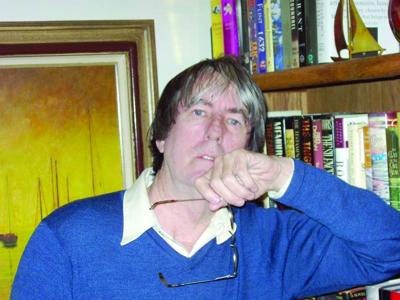
Michael Corrigan graduated from San Francisco State with a Master of Arts degree in English and creative writing. He was active in theater and attended the American Film Institute. He retired from Idaho State University as an instructor of English and speech communications. He has written several books, including “Confessions of a Shanty Irishman,” “Mulligan” and “These Precious Hours.” NPR broadcast his play for two readers: “Letters from Rebecca.”

(0) comments
Welcome to the discussion.
Log In