

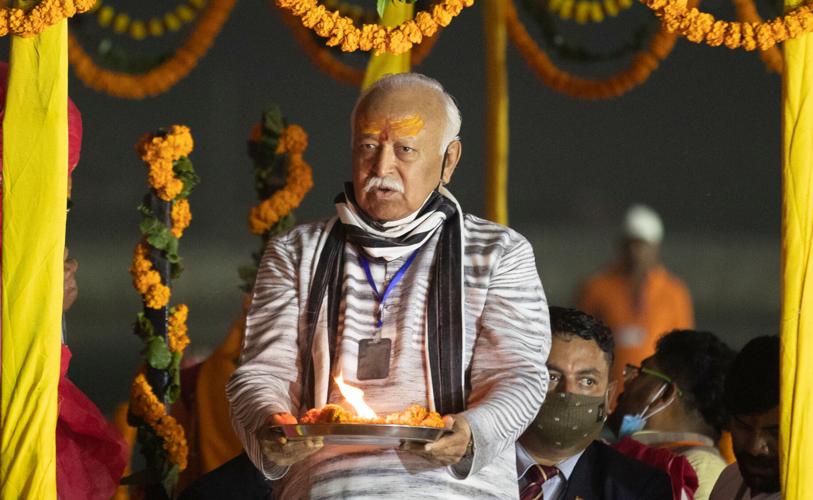

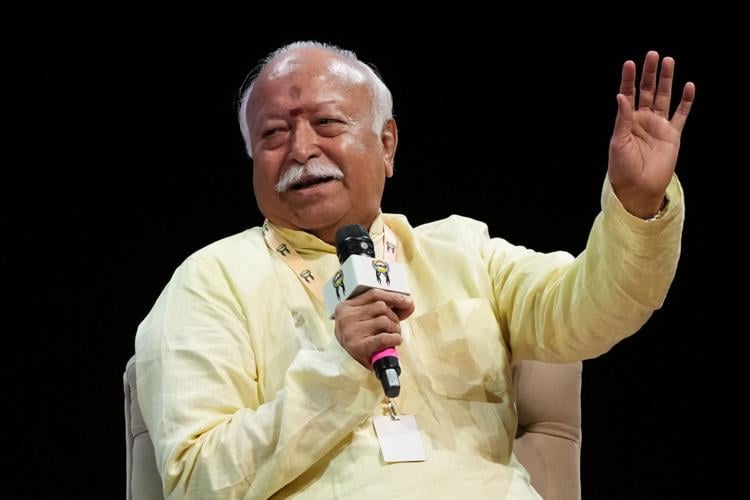

An event Saturday in New York City, featuring the head of a Hindu nationalist group instrumental in putting India’s ruling party in power, is being met with protests, a denunciation from the city’s mayor and a call for sanctions from a U.S. panel on religious freedom.
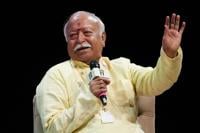
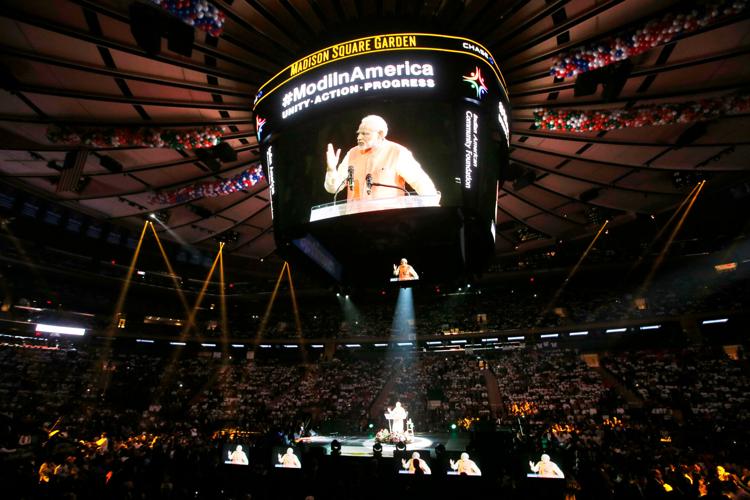
Mohan Bhagwat, chief of the Rashtriya Swayamsevak Sangh, widely considered the ideological parent of the Bharatiya Janata Party, is scheduled to address about 5,000 members of Indian American groups at the city's iconic Madison Square Garden arena. Titled “Universal Oneness Celebration,” the event is being organized by American Hindus for Engagement and Dialogue.
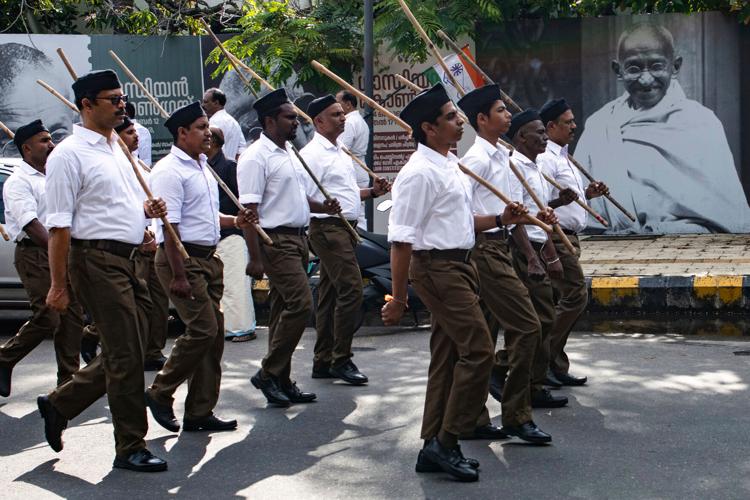
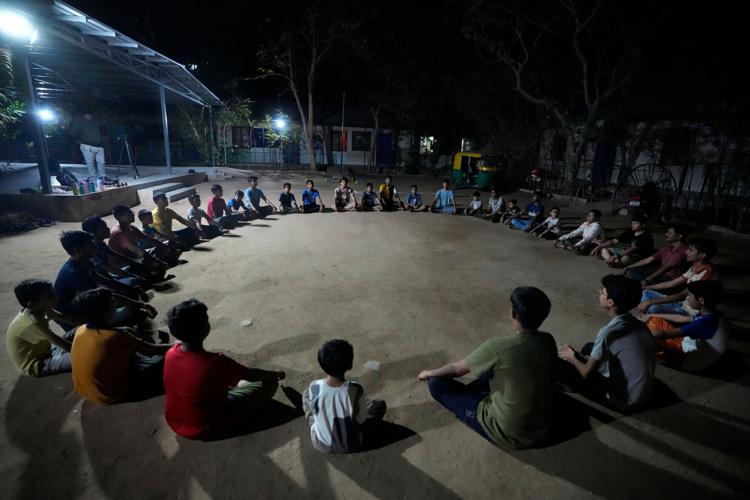
Indian Prime Minister Narendra Modi, who has been a polarizing figure in that country and the diaspora, emerged from the group known as RSS, a right-wing paramilitary group founded a century ago. Critics have accused the group of promoting the political ideology of Hindutva, which means “the essence of being Hindu,” and seeks to define Indian culture and national identity in terms of Hindu values.
The party and its branches have also been accused of fostering a culture of intolerance and committing human rights violations such as mob lynchings, targeting minority places of worship and razing Muslim-owned properties with bulldozers.
This week, New York Mayor Zohran Mamdani publicly declared his opposition to the event, labeling RSS ideology as exclusionary and contrary to the pluralistic views of the city.
The event’s organizers did not respond to The Associated Press' interview requests.
Event to draw attendees and protesters
The group's news release says the event is a collaboration among more than 200 Hindu American organizations and is built around the ancient Sanskrit phrase “Vasudhaiva Kutumbakam,” which means “the world is one family.” Expected attendees include entrepreneurs, educators, artists, youth leaders, faith leaders and public officials as well as representatives from temples and yoga centers.
This event, organizers said, also builds on the message of the Hindu festival of Rakshabandhan, which marks the bond between brothers and sisters, using the occasion “to broaden the idea of mutual responsibility from family to communities, nations, humanity and the natural world.”
On Wednesday, the U.S. Commission on International Religious Freedom, a bipartisan federal body, urged the U.S. government to consider sanctions against RSS members and to revoke Bhagwat’s visa over the alleged religious freedom violations in India. The Ministry of External Affairs in India quickly rejected the commission’s remarks, calling the body biased and lacking in credibility.
Several interfaith and civil rights groups — including Hindus for Human Rights, the Indian American Muslim Council and the Interfaith Center of New York — held a news conference outside New York City Hall on Tuesday calling for the event to be canceled.
Sunita Viswanath, executive director of Hindus for Human Rights, said her group is one of 61 interfaith and secular organizations that signed an open letter protesting Saturday’s event. She said many of the groups' supporters will show up in person with the message that “the RSS and their Hindutva ideology do not represent us.”
Hindu nationalism has created divisions in the diaspora
Even if a majority of the diaspora doesn’t support Hindu nationalism, Viswanath said not enough are speaking against it.
“So, our only option is to show up again and again with love and with the intention that our love should drown out the hate of these people and their organizations,” she said.
There are, however, stark divisions among Indian Americans regarding Modi and his party, which have strong support in the U.S. as they do in India. RSS has over 250 centers and youth groups in the U.S.
The Hindu American Foundation, a nonprofit that advocates for U.S. Hindus, has issued an alert urging those attending the event “to be situationally aware, vigilant and maintain civility.”
The foundation, in a statement Wednesday, called out Mamdani for taking a stance on the event, urging him “to remember his sworn duty as Mayor to protect everyone in New York City, regardless of their national origin, religion or even political beliefs.”
Safa Ahmed, an Indian American and Muslim activist, planned to travel from North Carolina to New York to protest outside the venue Saturday. She is alarmed that thousands support Bhagwat’s “politics of hate.”
“That is very disturbing to me as an Indian American Muslim,” she said.
Ahmed is heartened by the pushback against Hindu nationalism in recent years from progressive Hindus, Sikhs, Christians and Dalits, members of the former untouchable caste in India who have historically faced discrimination.
RSS is on a quest to engage and change its image
Some view Bhagwat's U.S. visit as part of a larger public relations campaign by RSS to repair its image. Bill Drexel, senior fellow with the Hudson Institute who specializes in U.S.-India relations, said Bhagwat has recently toned down some of his comments.
In an international context, Drexel noted that RSS seems so idiosyncratic to India and has such a complex history that it is difficult to compare it to other, more familiar political and religious movements in the U.S. and elsewhere.
“We’re seeing a new chapter in terms of how they are relating to the outside world,” Drexel said. “They’ve been growing as a grassroots movement for many decades. Now, that the political party they spawned is in power, it imposes a different kind of responsibility on them.”
Sunil Ambekar, RSS’ national spokesperson, said in a statement on X that Bhagwat will “communicate with a diverse, multicultural, and multifaith audience.”
“Organized in the spirit of open dialogue and mutual respect, the event reflects Bharatiya (Indian) ethos which is fundamentally inclusive and welcoming to all,” he said. “This initiative is in line with the longstanding tradition of engagement by RSS with varied communities across India and the world fostering understanding and shared purpose.”
However, critics such as Viswanath don’t believe RSS is engaging in good faith.
“I just don’t buy it,” she said. “It’s still the same Hindutva ideology.”
Associated Press religion coverage receives support through the AP’s collaboration with The Conversation US, with funding from Lilly Endowment Inc. The AP is solely responsible for this content.

(0) comments
Welcome to the discussion.
Log In