

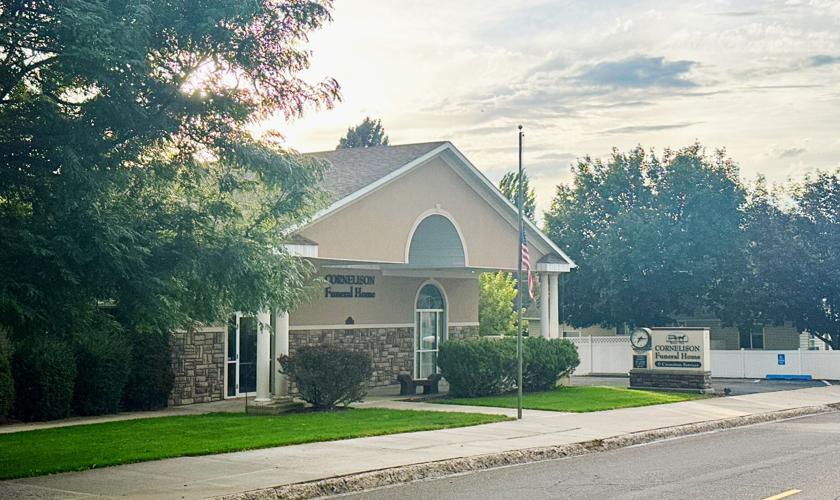


POCATELLO — A Pocatello funeral home tried to force the Bannock County Coroner’s Office to sign off on three cremations this week, but a district judge tossed the filing before ever reaching the underlying dispute.
Cornelison Funeral Home filed an emergency consolidated petition for a writ of mandamus Aug. 19 in 6th Judicial District Court, naming the Bannock County Coroner’s Office as respondent and asking a judge to compel Coroner Torey Danner to sign cremation authorizations for three deceased Bannock County residents, or to formally explain the delay.
The petition was filed pro se — a Latin term meaning the litigant represents themselves without a licensed attorney — and requested an expedited hearing.
The dispute began to unfold over three natural deaths in Bannock County between Aug. 12 and Aug. 17, all certified by attending physicians, with the lawful next of kin for each authorizing cremation, according to the petition and court records the Idaho State Journal recently obtained.
The funeral home argued Idaho law requires the coroner to either sign a permit or formally assume investigative jurisdiction, and that Danner had done neither, with permit requests pending as long as three days in one case and about a day in the other two.
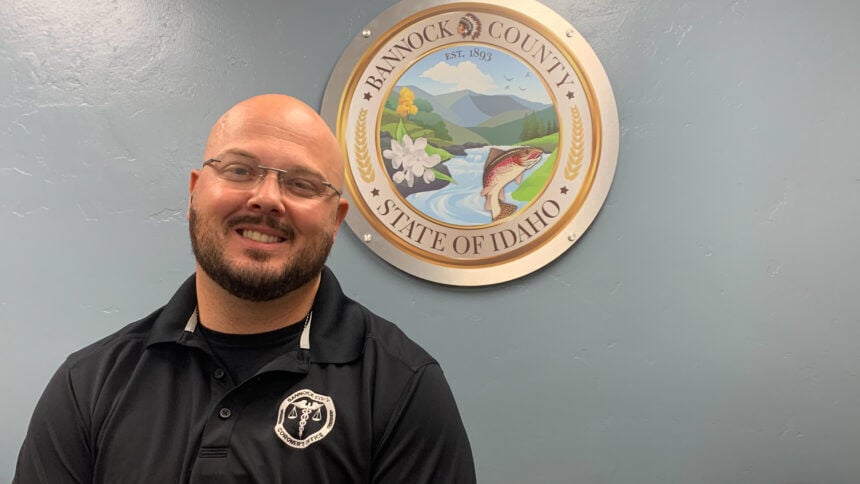
Coroner Torey Danner
Notably, the petition states that permit requests for two of the three decedents weren’t submitted to the coroner’s office until Aug. 19 — the same day the petition was filed — meaning the funeral home was already alleging an unlawful delay in those two cases before a full day had passed.
“This backlog creates severe, immediate operational gridlock, compromises sanitary safeguards, inflicts severe emotional distress upon grieving families waiting for closure, and subjects Petitioner to compounding civil storage liabilities,” the petition states. Remains, it says, were left “stuck in biological stasis.”
Dallas Warren, identified in the filing as Cornelison’s manager, signed and filed the petition. A day later, on Aug. 20, the funeral home filed a motion asking the court to substitute Scott Cornelison, the business’s owner, as the authorized representative going forward.
Both filings landed before 6th District Judge Rick Carnaroli for a hearing Monday. According to court minutes and a reporter present, the case didn’t get far.
Carnaroli told the parties he hoped to “break this logjam” for the families involved — but said the petition itself gave him nothing to act on.
“It’s not verified. It’s not sworn under oath, and there is no affidavit to support the petition,” Carnaroli said.
Carnaroli added that the filing also failed to show the coroner had been given a clear demand and had refused it, as state law requires.
“Failure or neglect to sign it doesn’t amount to a refusal,” Carnaroli said.
Bannock County Prosecutor Ian Johnson represented the coroner’s office in what the minutes describe as a special appearance, arguing the county had not been properly served, and moved to dismiss the petition.
Johnson told the court the funeral home had refused to sign a coroner’s office document called the “Positive Identification of Decedent” form, and provided the court a copy.
“Cornelison is the only one that refuses to do that,” Johnson said, telling the court other area funeral homes had signed the form without objection.
Cornelison argued the form raised privacy concerns and created legal liability for the business, and pressed the court to order Danner to sign off on the cremations regardless.
Carnaroli advised him he’d need a properly verified, amended petition and proper service before the court could act, and denied the motion to substitute Cornelison as authorized representative.
The hearing opened at 2:31 p.m. and was over by 2:51 p.m.
Bannock County weighed in a day later, issuing a news release Tuesday confirming it had withheld the three permits because the required identification forms hadn’t been submitted.
Following Monday’s hearing, the release states, the documentation came through, and the coroner’s office “promptly issued” all three authorizations.
Danner tied the requirement — in place since January 2026 — to the 2021 case involving the now-demolished Downard Funeral Home, where investigators found decomposing bodies and dozens of sets of unidentified cremated remains amid a criminal probe into former owner Lance Peck, who is accused of misrepresenting or losing remains belonging to many local families.
“Our priority is to protect grieving families and ensure they receive their loved one’s remains with absolute certainty,” Danner said in the release. “This standard aims to prevent errors that can never be undone, ensuring no family is left wondering about the status or location of their loved one’s remains.”
Local funeral homes must submit a Definitive Identification of Decedent Form before the coroner’s office will authorize cremation, verifying remains were identified through reliable methods and satisfied by next of kin, according to the coroner’s office news release.
The office said it will keep enforcing the requirement “uniformly across all licensed care facilities” and would handle any further legal proceedings “through the court system rather than through the media.”
In an interview with the Journal Wednesday, Danner said the form has been part of his office’s cremation process since January and Cornelison is the only local funeral home to object to signing it.
Danner said he had offered to work with Cornelison and the Bannock County Prosecutor’s Office — the county’s legal advisors — to try to find a middle ground and resolve this dispute, but those attempts fell short and ultimately culminated in the petition being filed last week.
He said Cornelison had actually reached out to his office before filing to confirm no cremations would proceed without the signed form, and his answer was, “Yes, that’s absolutely correct, we will not proceed without the form.”
Whatever the legal merits of the dispute, Danner said, he found it troubling that three grieving families got caught in the middle of it — particularly this far into a policy that’s been on the books for nearly nine months.
“It’s completely unfair that three grieving families were pulled into the middle of this,” Danner said.
Separately, Carnaroli signed an order Aug. 25 sealing several exhibits filed with the petition, including the cremation authorization forms and death certificates for the three decedents, after finding they contained “highly intimate facts or statements” whose disclosure would be “highly objectionable to a reasonable person.”
Any refiled petition must be submitted in redacted form without those exhibits attached, and the public is barred from examining, inspecting or copying the sealed documents.
As of this reporting, no amended petitions, motions or other requests had been filed in the case.
Warren told the Journal Thursday that he and Cornelison have been in discussions with several attorneys about this ongoing dispute. He declined to comment further but said the funeral home intends to keep pursuing the matter in court.
Idaho State Journal Reporter Taylor S. Calder contributed to this report.

(0) comments
Welcome to the discussion.
Log In