

SALT LAKE CITY — The clear, sweet notes of the organ broke the reverent solemnity that filled the conference center as the choir rose and began to sing.
“Out in the desert they wander, hungry and helpless and cold. Off to the rescue he hastens, bringing them back to the fold.”
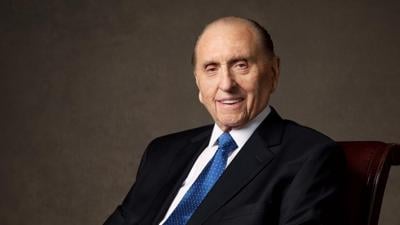
Though this favorite Mormon hymn is a reference to the Good Shepherd, Jesus Christ, it seems the parallels to the late LDS Church President Thomas S. Monson’s own life are striking.
“He would go to visit someone in need, feel while he was there an impression to go to another person, and then to another. More than a few times, such a person said, ‘I knew you would come,’” said President Henry B. Eyring, first counselor in the First Presidency under President Monson.
Over 20,000 gathered Friday afternoon for funeral proceedings honoring Monson, who served as prophet and leader of The Church of Jesus Christ of Latter-day Saints for nearly a decade before his death.
Many remembered his unfailing service to others, especially the sick and lonely. His daughter, Ann M. Dibb, recounted memories accompanying her father to visit a lifelong, 98-year-old friend, Elder Glen Rudd.
At one point, a little too much time had passed between their visits. President Monson’s secretary answered a phone call from Rudd who asked, “Is President Monson out visiting the sick, the afflicted and the aged? If so, I qualify!”
President Monson and his daughter quickly went to visit their friend, and afterward the prophet turned to his daughter and said, “I feel we’ve done some good today!”
Though known for his ability to easily sense the needs of others, President Monson knew he wasn’t perfect, Dibb said. Once, after seeing his picture in an open church magazine on his desk, he said, “I know that guy. He tried his best.”
And try he did, she said. Though his duties in the church kept him from serving everyone he wished he could, he would often delegate the task to another, asking if they’d like to “paint a bright spot on (their) soul today.”
President Monson’s reputation of selflessness also extended overseas and, during 1988, he traveled with other local church leaders to East Berlin in the then-communist German Democratic Republic. The country had been closed to church missionary work for more than 50 years, but President Monson felt impressed to ask permission for missionaries to serve there.
The delegation met with Erich Honecker, chairman of the state council for the German Democratic Republic, and his staff. After a long speech about the merits of communism, Honecker invited President Monson to speak.
“He boldly but kindly presented his message of how and why our missionaries would be good for that country,” said President Russell M. Nelson, president of the Quorum of the Twelve Apostles under President Monson.
“After President Monson’s pleas, all awaited Chairman Honecker’s response with breathless anxiety. I will never forget his reply: ‘President Monson, we know you! We have watched you for many years! We trust you! Your request regarding missionaries is approved!’”
In that moment, it felt as if the clouds had parted as heaven smiled upon what had happened, Nelson said.
And that’s only part of the legacy that Monson — who in April 2017 announced plans to build an LDS temple in Pocatello — leaves behind.
Since his ordination as an apostle in 1963, church membership has grown from 2.1 million to nearly 16 million, and the missionary force from 5,700 to almost 70,000.
In the 54 years of his apostolic ministry, the church built and dedicated 147 temples, increasing the number from 12 to 159.
Yet it was the “one” that President Monson sought, President Eyring said.
“Those who knew he would come also knew that God loved them enough to send His servant. They felt the love of God through President Monson’s kindness to them. The love of God, and love for God’s children, permeated his life.”

(0) comments
Welcome to the discussion.
Log In