








Boise State University professor Greg Hampikian saw Carol Dodge’s name listed in his voicemails late one afternoon years ago. He’d never spoken to her, but when he saw the last name, he realized who she most likely was.
She’s the mother of Angie Dodge, who in June 1996 had been raped and murdered at 18 years old in her Idaho Falls apartment. Hampikian — a professor of biology and criminal justice at the university — knew about the case because of his role as the founder of the Idaho Innocence Project, an organization that works to exonerate those wrongfully convicted and prevent wrongful convictions in the first place, through both scientific research and litigation.
One of the first cases the project, then in its infancy, took up in 2007 was that of Chris Tapp, the man who was at the time about 10 years into a 30-years-to-life sentence for Angie Dodge’s murder and rape.
Receiving a call from the mother of the case’s victim shocked Hampikian, but he still describes their conversation as “moving.”
“She said, ‘I just want to know who killed my daughter,’” Hampikian remembers. “And I said, ‘Oh. I think I might be able to help with that.’”
In 2017, Tapp was released from prison, but it took a change in Idaho law along with new DNA tests and new police work that pointed to Tapp not being the person who murdered Carol Dodge’s daughter. Much of that work was motivated by Hampikian and others at the Idaho Innocence Project, as well as Carol Dodge’s belief in Tapp’s innocence. It was the first time a victim’s family worked with the Innocence Project to that degree.
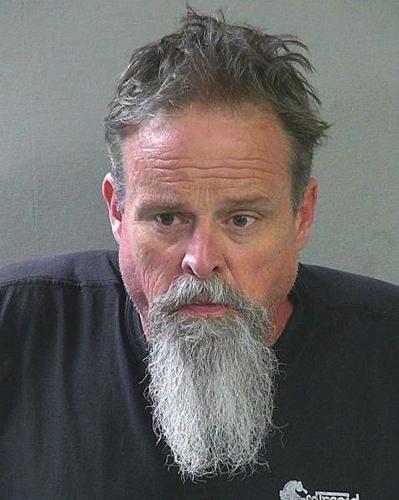
On May 15 — as a result of cutting-edge DNA testing and continued police investigation — officers arrested 53-year-old Brian Dripps of Caldwell on suspicion of Dodge’s murder and rape. He has since confessed to the crime and told police he acted alone, according to police.
Yet, because of the deal the state offered Tapp in releasing him from prison, only the rape conviction was removed from Tapp’s record. He’s still technically a convicted murderer. That title has followed him into his life outside of prison.
That’s not an uncommon outcome for people exonerated after years in prison, Hampikian said.
“I know (exonerated) prisoners who keep magazine articles and newspaper articles in their bag with them to try to explain (why they’re listed as a felon),” Hampikian said.
Cases such as Tapp’s are why the Idaho Innocence Project is still active in Idaho.
Angie Dodge’s rape and murder
Sometime between 12:45 a.m. and 1:15 a.m. June 13, 1996, police believe, a man broke into Angie Dodge’s apartment in Idaho Falls and fatally cut her throat. There was also evidence he’d raped her.
At the time, officers hypothesized multiple people had been involved in the crime, according to a recent statement from the Idaho Falls Police Department. In January 1997, they began to believe Chris Tapp, then 20 years old, was one of them.
Brian Dripps lived across the street from Angie Dodge. He had told police he’d been so drunk on the night of her murder he couldn’t remember any of the people or vehicles he may have seen or interacted with, according to an affidavit, but he was not investigated further.
Police kept investigating Tapp, even when they learned his DNA did not match that found at the scene. They still believed he may have been involved in the crime, because they thought it had been committed by multiple people. Tapp confessed his involvement in January 1997 — a confession he later tried to rescind and later said was coerced. Police asked him for the names of other people who may have been involved. None of the information he gave them led to any viable suspect, according to the affidavit.
With a withdrawn confession and a lack of a DNA match, a Bonneville County jury in May 1998 convicted Tapp of the rape and murder of Dodge.
A key witness in the case against Tapp — who had been 18 years old at the time — recanted her testimony this week, claiming she, too, was coerced by police and fed information, according to the Post Register.
In December 1998, a judge sentenced Tapp to prison for 30 years to life and ruled he would be eligible for parole after 20 years.
Investigating further
The Idaho Falls Police Department had never matched the DNA evidence taken from Angie Dodge’s apartment on the night she died. All that officers knew was that it did not belong to Tapp.
About 12 to 13 years ago, an attorney working with a Boise State student on another Idaho Innocence Project case suggested they look into Tapp’s case, Hampikian said. The Idaho Innocence Project was still in its infancy and working on its first cases — that of Sarah Pearce, who was convicted in a brutal attack of a Canyon County motorist and later released after the project got involved.
Tapp’s case became the Idaho Innocence Project’s second.
None of the DNA evidence in the case was tested at Boise State, for legal reasons, Hampikian said, but the project worked with the Idaho Falls Police Department nonetheless. The department contracted with a private company, Parabon NanoLabs, ultimately using the genealogical techniques project members told them about, in order to secure Dripps’ arrest.
The technique is a new one, and it’s controversial, but it has been effective at solving cold cases across the country. Hampikian said the Idaho Falls Police Department was the first department to use it. Scientists use the DNA evidence to build a profile of the suspect. They then cross-reference that profile with other records, such as Census data, vital data, newspaper archives, and information publicly available through ancestry websites, according to the Idaho Falls Police Department. Once they pinpoint a likely ancestor of the DNA sample’s owner, they build a family tree using more records. That, eventually, creates a pool of suspects.
After that, police collected evidence “surreptitiously” — in this case, they waited until Dripps tossed a cigarette out a car window, then tested the DNA on the cigarette butt. It matched the DNA collected in 1996 from Angie Dodge’s apartment.
DNA access law
Meanwhile, Tapp remained in prison. Back then, in Idaho, as long as they had an “actual claim of innocence,” an inmate could ask for additional DNA testing to help prove their innocence — but only if they did so within a year of their conviction.
Tapp hadn’t done that, and since he started his sentence in 1998, forensic DNA had evolved. Additionally, Idaho, alongside Mississippi, had some of the most restrictive laws governing post-conviction DNA tests.
Such cases are why current Ada County Commissioner Rick Visser, who was then serving as the Idaho Innocence Project’s legal director, wanted to change the law.
The law change, as he put it, was a “tough road.” He worked with lawmakers at the state level, and in 2009, the first year he made the effort to change the law, it was unsuccessful.
“Even some Republicans were hesitant to do it because they associated the Innocence Project with a criminal defense firm,” said Visser, a Republican.
He tried again in 2010. The law change received resounding support from the Idaho House, where it passed, 68-0, with two lawmakers absent. It also passed its hearing in the Idaho Senate Judiciary and Rules Committee with a narrow 5-4 vote.
Gov. Butch Otter signed it into law the first day it appeared on his desk.
That law, Visser said, “would open the door for Chris Tapp to make that claim (for DNA testing) 17, 18 years after the murder.” Under the new law, there is no expiration date on the inmate’s right to ask for DNA testing.


(0) comments
Welcome to the discussion.
Log In