

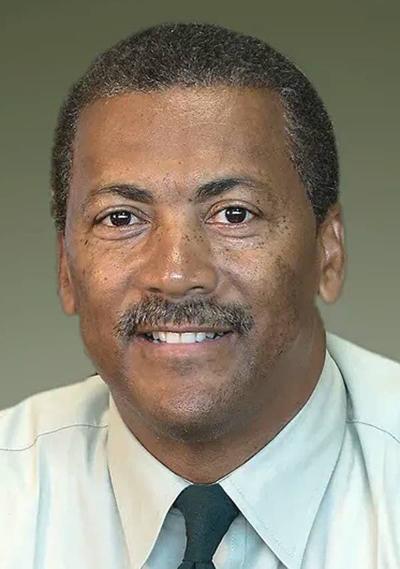
U.S. Forest Service Chief Randy Moore has temporarily suspended a strategy that encourages some lightning-caused fires to play a natural role in the environment and clamped down on the use of prescribed fire.

Randy Moore
Instead, he said all firefighting resources will be steered toward protecting communities and infrastructure and be prioritized based on where “they have a high probability of success and they can operate safely and effectively.”
Moore, who was appointed chief in June after overseeing federal forests in California, wrote a letter to Forest Service brass Monday saying the number of fires burning in the western United States combined with widespread drought and related shortages of firefighting personnel and equipment is placing unprecedented strain on the agency.
“In short, we are in a national crisis,” he said in the letter. “At times like these, we must anchor to our core values, particularly safety.”
With that in mind, he said the strategy known as managing fires for resource benefit will be suspended. The practice where natural fires are monitored closely but otherwise allowed to burn acknowledges the crucial role fire plays in many forest ecosystems. It is most often used in remote wilderness or roadless areas where fires can grow without threatening homes or private property. Although such fires are closely watched by firefighters, they don’t require as intensive or as expensive deployments as do suppression fires.
On the Nez Perce-Clearwater National Forest, the practice has been used in past years to improve elk and other wildlife habitat in places such as the upper North Fork of the Clearwater River basin or in places such as the Selway-Bitterroot Wilderness Area.
The strategy is often suspended in bad fire years and 2021 qualifies. Moore noted there are more than 70,000 large fires burning in the West and about 22,000 people assigned to them.
However, such conditions frequently mean that some fires in remote areas are monitored but otherwise allowed to burn — not as a strategy to improve habitat but because scarce firefighting personnel are concentrating on blazes threatening communities.
There are several remote fires on the Nez Perce-Clearwater Forest where fire managers are working to protect things like campgrounds, lookout towers or pack bridges but are not actively attempting to suppress them.
“We are in ‘triage mode’ where our primary focus must be on fires that threaten communities and infrastructure,” Moore said. “There is a finite amount of firefighting resources available that must be prioritized and fires will not always get the resources that might be requested.”
Moore said prescribed fires can only be used in areas where fire danger is lower and resources are available to implement it. The agency often uses prescribed fire to either reduce fuel loads or to improve wildlife habitat. Many fire researchers have said more prescribed fire is critically needed to reduce fuel loads and have noted the agency often falls short of its implementation goals.
Media reports earlier this week that relied on second-hand quotes attributed to Moore indicated he had ordered that all fires be immediately suppressed. Some had likened that as a return to a Forest Service policy implemented following the Great Fire of 1910 in which the agency strived to suppress all new fires by 10 a.m. the next day.
Many people view that policy and the resulting widespread fire suppression as responsible for an unhealthy accumulation of fuels decades in the making.
“Let me be clear. This is not a return to the ‘10 a.m. Policy.’ This is the prudent course of action now in a situation that is dynamic and fluid,” Moore wrote. “When western fire activity abates, we will resume using all the tools in our toolbox, including wildfire and prescribed fire in the right places and at the right time.”

(0) comments
Welcome to the discussion.
Log In