

POCATELLO — A local nonprofit is organizing a community meeting to help residents prepare for potential U.S. Immigration and Customs Enforcement activity in the area.
Bridges Idaho, a nonprofit focused on immigrants, culture and community, will host its Prepare Now meeting following reports of ICE operations in Boise and rapidly changing immigration policy and enforcement nationwide. The gathering comes as local advocates say East Idaho immigrant residents are experiencing growing fear and uncertainty, with some afraid to leave their homes or send their children to school.
“I do think the level of stress and anxiety is definitely in our immigrant population, for sure, and in our international student population,” Bridges Idaho President Gesine Hearn said. “There’s a lot of uncertainty, a lot of fears and problems with financial support. They’re really stuck between a rock and a hard place, and our purpose for this meeting is information within the community, giving the community a place to ask questions about what is currently going on, but then also figuring out what we as a community can do to support our immigrant neighbors.”
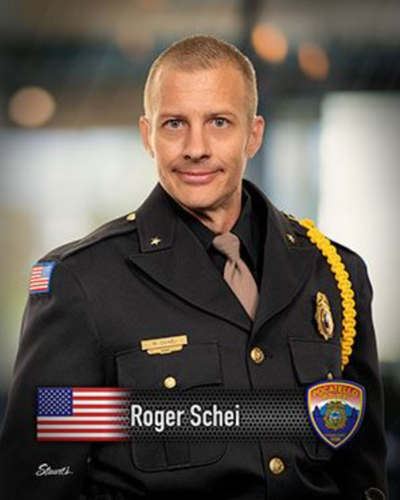
The event will be held from 6 to 7:30 p.m. on Friday at the Idaho State University Rendezvous Suites and will feature vignettes of immigrants in Idaho and a panel of presenters including ISU sociology professor Deirdre Caputo-Levine and Pocatello Police Chief Roger Schei.
Short presentations will also be provided by Chandra Upreti, director of the Twin Falls-based U.S. Committee for Refugees and Immigrants, and Raquel Reyes, director of programs and operations for PODER of Idaho, a grassroots organization that empowers Latinx and immigrant communities statewide through education, advocacy, and action, according to its website. Both will attend via Zoom.

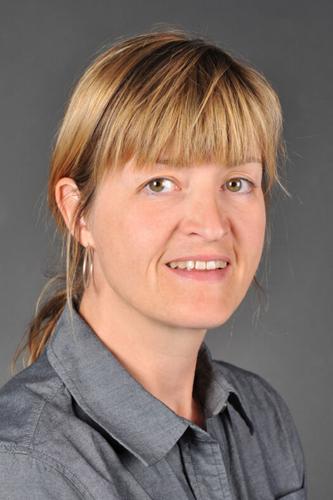
Gesine Hearn
Hearn, an immigrant who recently became a U.S. citizen and works as a sociology professor at ISU, will provide opening remarks alongside Annie Anderson, president of the ISU political science club.
Hearn said the topic is close to her heart.
“There are many people that are here legally,” Hearn said. “People who, for example, have temporary protection status, like Haitian immigrants and refugees that are running out (of time). They just don’t know what to do anymore with their life. There’s a lot of uncertainty, a lot of threats, a lot of sadness, a lot of frustration and despair among immigrants, the refugee population here in East Idaho, as well as anywhere else in the U.S.”
Bridges Idaho held its first Prepare Now meeting in January 2025, prompted by the election of President Donald Trump and the wave of new immigration policies his administration announced. The immigrant-focused nonprofit held an additional meeting in September and Pocatello police issued a news release intended to quell fears about local ICE activity in November, the Idaho State Journal reported last year.
“What we wanted to do with the Prepare Now meeting last year was figuring out what exactly was going on,” Hearn said. “We gathered information. We had the police chief come there, just to make clear — what is the reaction in the community? We wanted to have some questions answered, because everybody was up in arms. Fast forward one year and we now know what’s going on. Now the concern is — how are we protecting our neighbors that feel very threatened, people that are here legally, people that don’t dare to get out of the house anymore or send their children to school, people who are thinking about self-deporting?”
Hearn said there is now a list of about 75 countries where immigration policies are being halted, and that refugees from Yemen will be denied admission to the United States.

Roger Schei
Schei will again join the panel on Friday. Hearn said she wants answers about how local police are interacting with federal immigration agents.
“We invited Chief Schei to our panel again,” Hearn said. “We want to know from Chief Schei — what is the perspective of the police on ICE here? Are they cooperating with ICE? What can we do to help our neighbors? What is okay to do to help our neighbors? How can we cooperate with the police? Is the police helping us? Or are they helping ICE?”
Caputo-Levine will give a presentation on the history of immigration in Idaho.
Upreti will provide updates on the U.S. Committee for Refugees and Immigrants facility in Twin Falls, which recently stopped receiving new admissions, and will speak to the developing refugee status of area immigrant residents.
Reyes will give a breakdown of current sentiments among Hispanic residents in Idaho, what PODER of Idaho is doing and how community members can help.
“They’ve been very involved in trying to support people who have been detained, as well as their families,” Hearn said about PODER of Idaho. “We have people here in our communities hiding out. We have people in our communities that are self-deporting. We have people who are afraid to bring their kids to school. We cannot exclude that ICE might be coming here and detaining more people.”
Hearn said international students have told her they are afraid to go outside, and she expects few will attend the Bridges meeting because of those fears.
“This has real-life consequences for people in our community,” Hearn said. “These people, I’m talking about people that are here legally, that have visas, feel that uncertainty.”
Hearn said she hopes to coordinate with local groups, organizations and neighborhoods on a block-by-block basis — similar to community efforts in Minnesota — to prepare a response if ICE comes to Pocatello.
“I think we need to be prepared for possible issues here in our community too,” Hearn said. “I don’t think we’re going to be exempt from ICE detentions here in our community. I think it is a good thing to be prepared in regards to information and what we can do to support people.”


(0) comments
Welcome to the discussion.
Log In