



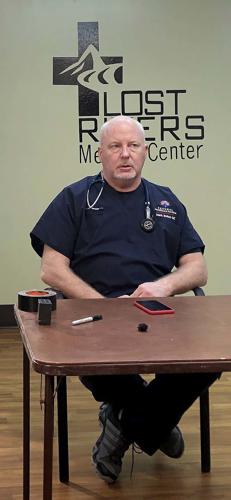
The best advice Dr. Mark Bolton with Lost Rivers Medical Center in Arco offers about the summer tick season is if one attaches, use tweezers.
“Remove it vertically, gently and slowly,” Dr. Bolton said. “Generally in medicine, slowly, steadily and firmly is the way to go.”
The upcoming tick season is predicted to be worse than average, Bolton said, because of the mild winter. That led to an early, wet spring, conditions in which ticks thrive.
Peak months for tick activity are March to June, according to Dr. Bolton. While they are a year-round threat, certain conditions during the summer make contact with the insects more likely.
Since people go outside more and wear less clothing when it’s warm outside, ticks are more likely to find unwilling hosts. Simple measures taken before, during and after outdoor activities can definitely reduce the risk of contacting a disease-carrying tick, according to Bolton.
Ticks are vulnerable to most insect-repellent sprays and infused clothing, Bolton said. Generally wearing clothes that cover arms, chest and legs is helpful. If someone is hiking on trails bordered by tall grass, Bolton advised keeping to the center and staying away from the vegetation. Ticks love tall grass, he said, as it makes it easy to hook onto people as they walk through.
Once inside, Bolton said people should either use a mirror or a friend to check for ticks. The miniscule insects will bite down anywhere, and Bolton said the only way to confirm a person has a tick is to see it. Once they bite down, Bolton said it usually takes 24-36 hours for any symptoms of disease to develop.
According to Bolton, 80 percent of all tick-born diseases are diagnosed as Lyme disease. Typically transmitted by the blacklegged tick, more commonly called the deer tick, Bolton said the disease can have serious symptoms if left untreated. People with Lyme disease can experience chronic joint pain, neurological symptoms and cognitive defects. According to Bolton, Centers for Disease Control and Prevention officials report about half a million cases every year.
By following common-sense recommendations he made, Bolton said people can enjoy the outdoors without the fear of contracting a terrible disease from a tick. If a tick bites down on someone, the Arco doctor said the least people can do is make sure they don’t snap off the head when they remove it. Leaving the head burrowed in the skin can lead to infection.
Not opposed to home remedies like poking the insect with a hot needle to get it to let go or using cayenne pepper to draw it out, Bolton said a bitten person should be OK if they remove the tick safely and slowly.


(0) comments
Welcome to the discussion.
Log In