


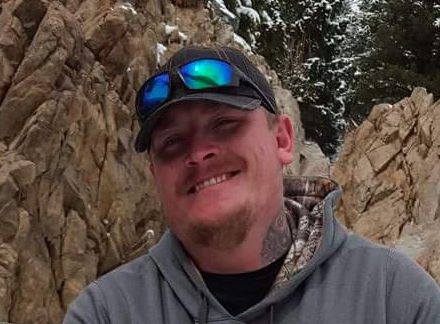
POCATELLO — Graphic autopsy photos of a murdered Pocatello man caused several of his family members to cover their eyes or leave the courtroom of Bannock County Judge Robert C. Naftz on Thursday.
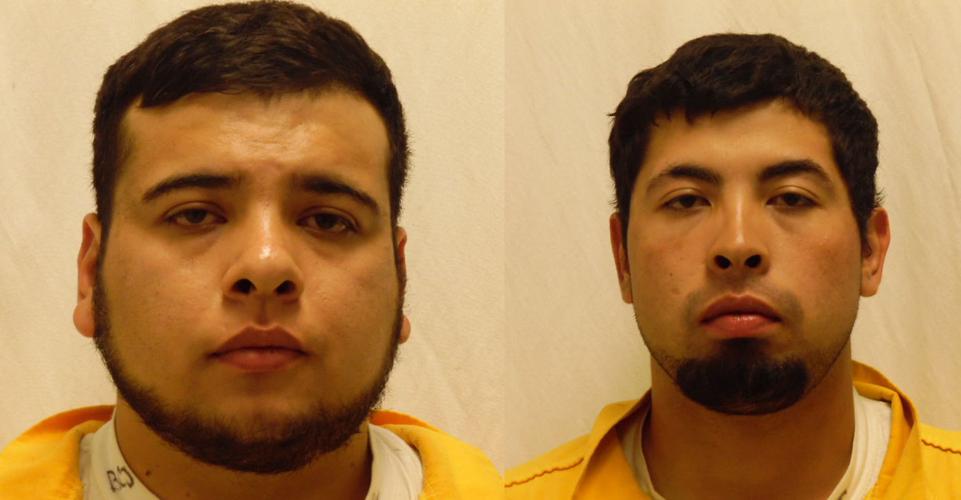
When photos of Nathan Tad Richardson, 30, were shown to jurors during the third day of trial, the two brothers facing murder charges for Richardson’s death, Gabriel Moreno, 26 and Anthony Moreno, 24, both of Pocatello, showed no emotion and did not appear to examine the photos of their alleged victim.
Gabriel has been charged with second-degree murder and Anthony has been charged with principal to second-degree murder. The Morenos are accused of killing Richardson during a fight in an alleyway outside the Center Street Clubhouse on June 24, 2017.
In addition to autopsy photos, jurors were shown pictures of Richardson’s unclothed body on a hospital bed shortly after he was declared dead around 3:17 a.m. on June 24.
Jurors heard testimony Thursday from an expert of computer science who spoke about the way that the social media platform Snapchat works; an Ada County forensic pathologist who spoke about the nature of Richardson’s fatal injuries; and an expert with 40 years experience practicing clinical pharmacy, toxicology and pharmacology who spoke about how alcohol and cocaine can affect a person.
Dr. John Edwards, an assistant professor of computer science at Idaho State University, testified that Snapchat — a social media platform used for sharing still photos and videos that was used to capture some of the altercation the night Richardson died — is unique from other social media platforms because it can only be used from a smartphone.
Further, Edwards said that researchers studying Snapchat have noticed its users are increasingly prone to sharing experiences involving drinking, illicit drug use, crimes and among others, sexually explicit material.
Edwards showed jurors a diagram of how Snapchat generally works and a relative timeline of the Snapchat videos originally shot and shared by Anthony and later recaptured from another individual using the camera on their own cellphone.
In essence, the video depicting some of the incident is a secondary video of a Snapchat story, or a series of videos shared to every friend of the user that are typically accessible for only 24 hours.
Dr. Glen Groben, a forensic pathologist with the Ada County Coroner’s Office and the person who conducted Richardson’s autopsy, testified that Richardson experienced contusions and bleeding in his brain as well as skull fractures consistent with falling to the ground while unconscious and striking his head on an immovable surface.
“That was a lethal injury,” Groben said.
Groben also said Richardson’s injuries indicated that his face was impacted at least twice, once to the right side of his face near his eye and again on the left side near his mouth. However, Groben could not say whether Richardson was struck multiple times in the same spots.
State prosecutors called upon one last witness to testify on Thursday. Dr. Gary Dawson, an expert in clinical pharmacy, toxicology and pharmacology with more than 40 years of experience, spoke to jurors about the chemical makeup of cocaine and alcohol and the results and implications of Richardson’s toxicology reports.
Dawson said cocaine is a stimulant that, when ingested, can increase blood pressure and heart rate as well as cause other physical symptoms like hypothermia, pupil dilation and muscle cramps. Moreover, cocaine causes other psychological effects, Dawson said, including intense sensations of euphoria — and depending on the dose — feeling as if the user is invincible or experiencing hallucinations and delusions.
Richardson’s autopsy was conducted on July 26, 2017, two days after he died. Dawson said that the level of cocaine in Richardson’s system was low, and although unverifiable, was consistent with previous testimony that Richardson did just one line of cocaine around 11 p.m.
The amount of alcohol in Richardson’s system was quite high, though, said Dawson, adding that it was equal to about 15 12-ounce beers. The half-life of cocaine, or essentially the rate at which cocaine disperses through the body or degrades in potency by 50 percent, is typically 30 to 45 minutes and no longer than one hour, Dawson said.
Based off his calculations of the amount of cocaine in Richardson’s bloodstream, Dawson estimated that Richardson consumed cocaine three to four hours prior to his death.
Dawson testified that the amount of cocaine in Richardson’s system would not be enough to overpower or counteract the impairment caused by the amount of alcohol Richardson consumed.
“If you take cocaine while you’re consuming alcohol, all you become is a wide-awake drunk,” Dawson said.
State prosecutors will call one additional witness to testify on Friday and the Morenos’ attorney, Justin Oleson, is expected to call the first defense witness afterward. The trial is expected to last at least through the middle of next week.
If convicted of the charges against them, both Moreno brothers will each face 10 years to life in prison.

(0) comments
Welcome to the discussion.
Log In