

BOISE — This summer, Idaho Power has a new program to protect people in its service area from wildfire.
The company identified the parts of its service area most vulnerable to wildfire, said Jon Axtman, engineering and reliability senior manager with the company. Those nine areas could be subject to having their power turned off during extreme weather as part of the company's new Public Safety Power Shutoff program.
The program is a "last resort" tool in the company's efforts to mitigate wildfire risk, Axtman said.
Four of the nine areas that could have their power shut off are in or near Pocatello. They include the Pocatello Creek Road area east of the city, the Johnny Creek and Garton Lane areas of south Pocatello and the Caribou Road/Charlotte Drive area south of the city.
A MULTI-PRONGED APPROACH TO WILDFIRE MITIGATION
In 2019, Idaho Power leadership noticed a trend — the frequency and intensity of the west's wildfires was increasing, Axtman said. To help get ahead of the issue, the company developed a wildfire mitigation plan to protect people and structures in its service areas.
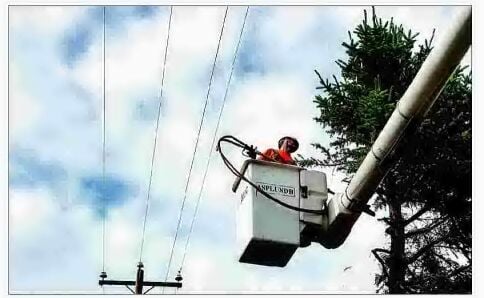
The company's efforts include trimming vegetation back from power lines and wrapping the base of power poles with wire mesh, said Sven Berg, communication specialist with the company.
To create the designated shutoff areas, the company hired a consultant to examine the potential for wildfire in an area, as well as the number of structures that could be affected, Axtman said. The consultant did this by mapping weather and wildfire history across the company's service territory, as well as building locations, Axtman said. The consultant then modeled where ignitions from overhead power lines could occur, and accounted for the type of vegetation in those areas, Axtman said.
For example, areas with more tree canopy are more predisposed to larger wildfires compared to grasslands, he said.
"It really helped us understand and helped produce data to show how fire behavior would exist in different areas," Axtman said. "We used that data to help us really understand the risk levels throughout our service territory, and these nine zones are really the highest of those risk areas that we modeled."
THE NINE MOST VULNERABLE AREAS COULD SEE POWER SHUTOFFS
Each of the nine areas has been given a name based on its location. Two of the closest areas to the Treasure Valley are the Wilderness RanchClear Creek area, located west of Highway 21, and the Placerville-Star Ranch area, which includes most of Placerville, as well as some surrounding areas.
The buildings in these areas are mostly residential, and include a high concentration of second homes, Berg said. But there are also a decent number of people who make their primary residence in these areas, Axtman said.
Atmospheric scientists who work for Idaho Power use weather stations in those zones to generate forecasts, Axtman said. They keep a close watch on conditions that could bolster wildfires, such high temperatures, low humidity, dry vegetation, and winds higher than 50 miles per hour, he said. Wind speeds that high are rare in the service area, Axtman said.
WHAT CUSTOMERS NEED TO KNOW
Such forecasts could help the company inform residents of plans for a shutoff in a given area, he said. The company has already communicated with residents through mailers, Axtman said, and they have a new rapid notification system that can send texts and voice calls to alert residents of imminent shutoffs. In general, they hope to be able to provide an average of one-to-two days of advance notice for planned shutoffs, he said.
Customers can visit the company's website to see a map of the nine areas that could be subject to shutoffs, and they can input an address to see if their property is located within one of the areas, Berg said.
How long a shutoff could last varies, Axtman said. Once weather conditions have settled and it is safe for a shutoff to end, crews will patrol the area to determine whether any maintenance needs to happen, Axtman said. The most common type of work following an event is removing tree branches and limbs that have fallen into power lines, Axtman said. Depending on the size of the shutoff area, a safety patrol can take from a few hours to up to 12 hours to inspect, he said.
"It depends on the weather event, and it depends on the type of damage that we find, you know, after we do the safety patrol and how much work we need to do before we can restore power," Axtman said.
So far, the company has not had to implement a shutoff. The window for potential shutoffs is from May 10 through Oct. 20, Axtman said.
The Idaho State Journal contributed to this report.

(0) comments
Welcome to the discussion.
Log In