

This is the second piece looking at where many of our favorite breeding birds are spending the winter. I created the species list by looking at eBird data and asking which species have never been seen in Idaho in January. I then looked at how common they are during the nesting season. The most common bird in this group — covered a few weeks ago — is the black-chinned hummingbird.

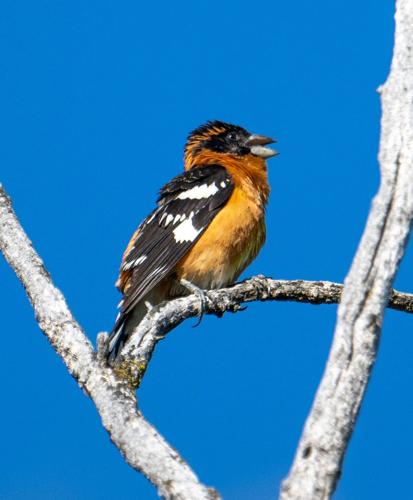
The black-headed grosbeak spends the winters in Mexico, mingling with the locals.
We’re now down to the eighth most common species — the black-headed grosbeak — which occurred on a little over 16% of the eBird checklists during the breeding season. These grosbeaks are also residents over a huge part of central Mexico. Our birds spend the winter in Mexico, both central Mexico and Baja, mingling with the locals in unknown combinations.

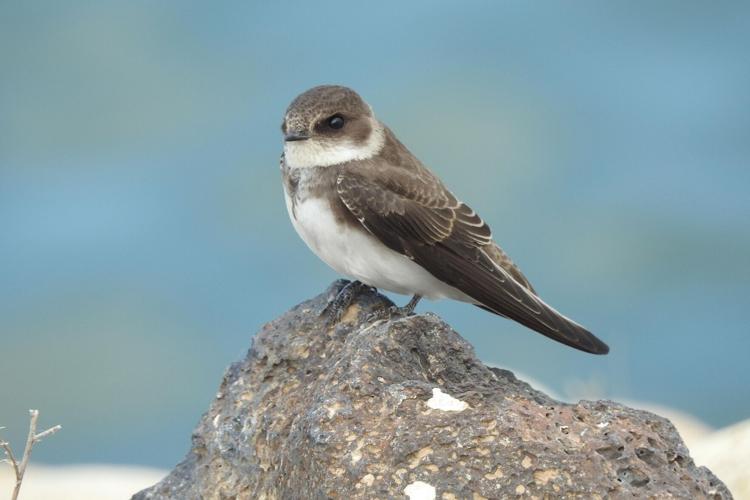
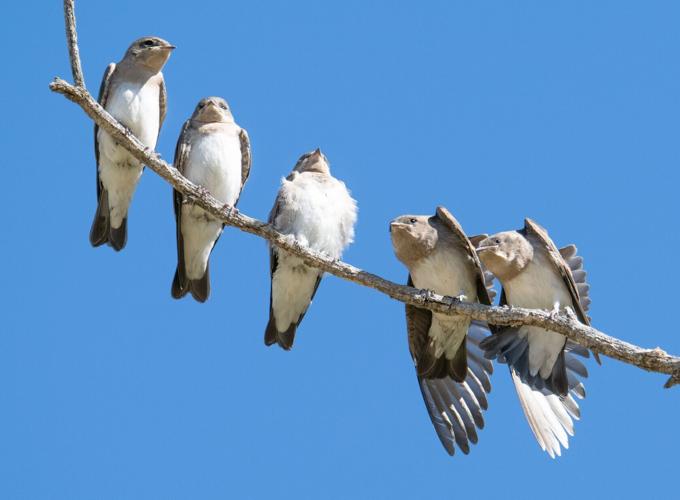
The bank swallow is one of the most widely distributed birds on earth. They are usually found in colonies.
Next up is the bank swallow, one of the most widely distributed birds on earth. In the Old World, they’re known as the sand martin, a much more poetic name. They nest in cavities in sandy banks, but also in rock cliffs, such as the one near the Foothills Learning Center. Perhaps due to their specialized nesting requirements, they are usually found in colonies.
According to Birds of the World, some of our birds winter in western Mexico, but the bulk of the population is spread widely across South America. Because they are not tied to nesting banks in winter, as they are in the breeding season, they are free to use whatever habitats they otherwise prefer. These include grasslands, savannahs, marshes and beaches.

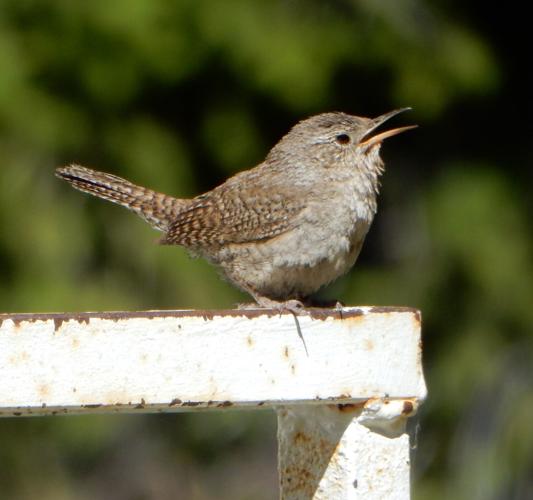
One of the most common Idaho breeding birds that is never found here in January is the northern house wren.
The next most common breeding bird never found here in January used to be called the house wren. As a result of the most recent taxonomic update by the American Ornithological Society, it is now the northern house wren. We also have the southern house wren. Before they were split, the house wren had the broadest latitudinal range of any native passerine in the Western Hemisphere, occupying most of the New World. Ornithologists have been debating this split for a long time. Whether one species or two, you have to admire this little conqueror of continents.
The 11th species is one of the most beautiful birds in North America, the western tanager, reported on about 12% of checklists during the breeding season. Tanagers winter in western and south-central Mexico and well into Central America. While down south, they can be found with summer, hepatic, flame-colored, white-winged and red-headed tanagers, depending on the geographic location and habitat.
The tanager family (Thraupidae) is a large group of around 384 colorful, mostly fruit-eating, mostly tropical species. DNA analysis and other research has led to a major reorganization of the group, with some species being added and others moved out over the years. One cool fact about the western tanager is that it breeds farther north than any species in the family. Lucky us!
A western tanager was seen in December 2020 in Barber Park and in December 2021 in Kathryn Albertson Park. These were the first-ever sightings for December reported to eBird for our area. Because this species has pioneered the North historically, we probably will see them hanging around more in future winters as our climate warms. Keep your eyes open.
Our next bird is the western wood-pewee. This nondescript flycatcher breeds as far north as central Alaska and as far south as the mountains of Honduras. And when these birds leave, they really get out of town. They don’t bother with Mexico or even Central America but go all the way to South America, especially choosing the Andes well into central Bolivia. In Peru, our pewees meet up with five other pewees, including the eastern wood-pewee from eastern North America.

The northern rough-winged swallow is somewhat nondescript and may be found in larger colonies with bank swallows. They are larger and fly with more bouts of gliding.
The northern rough-winged swallow is the 13th species in this group. Rough-wings are almost certainly underreported by birders. They are nondescript and, as bank cavity nesters, may be found with larger colonies of bank swallows where they can be easily overlooked. They are larger than bank swallows and fly with more bouts of gliding.
Although they also nest in groups, they are more apt to be found along some remote stream bank — just a pair of birds — than are bank swallows. A good place to practice identification of this swallow is the pond near the Foothills Learning Center. Among the large colony of bank swallows, there is often a pair of rough-wings nesting in the dirt bank to the north of the cliff. There is also a nice colony in Military Reserve.
This swallow breeds across North America, and they are also residents over a large part of Mexico. Our birds likely go into Mexico and Central America where they mix with the locals. But in South America, we find the southern rough-winged swallow, a bird with a more contrasty rump and a buffy chin.
Next in line is another swallow — the cliff swallow. Like many species of swallows, this species is very social. Colonies with up to around 6,000 nests have been reported. They readily nest on bridges, culverts and buildings. Like barn swallows, they build nests out of mud, which they carry one bit at a time in their beaks.
As for most aerial insectivores, they cannot survive the winters in Idaho. They are so eager to get out of town they don’t even think about spending the winter until they get to Colombia. They then continue to migrate south, and the bulk of the population winters in southeastern South America in open habitats like grasslands.
The next species — at No. 15 — is Swainson’s hawk. I love this species for a few reasons. First, they fly all the way to Argentina to spend the winter, a truly epic migration. You can see them by the tens of thousands in Veracruz in the fall, and, if you’re lucky, in Costa Rica, Panama and in other countries on the way down.
Another thing I like is that they are a sign of spring you can watch for and see without too much trouble. Unlike our tanagers, buntings and flycatchers, which keep relatively low profiles, Swainson’s hawks come sailing across the blue sky with their distinctive “V” wing profile, signaling they are not just another red-tailed hawk.
Finally, they have a large amount of plumage variation, which can at least briefly challenge the most seasoned birder.
“Our” birds are really shared birds. The tanager, flycatcher or swallow we see in the Treasure Valley in June might then be seen by someone in Chiapas, Nicaragua, Ecuador or even Argentina in January. That will definitely expand your mind, especially if you are that “someone.”



(0) comments
Welcome to the discussion.
Log In