


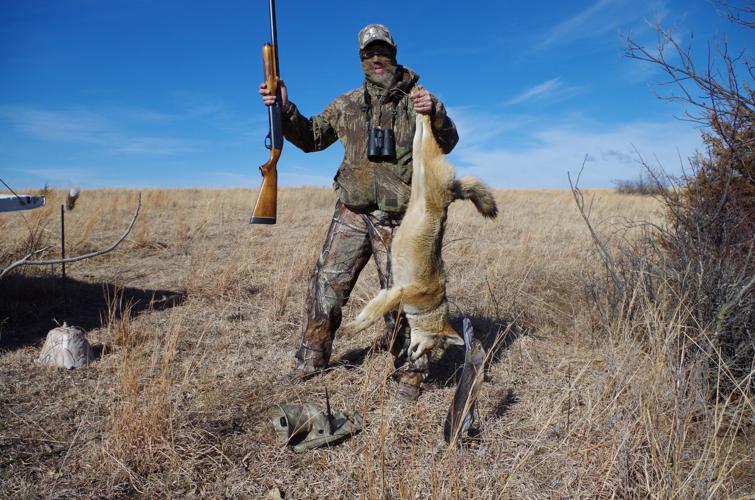


Varmint hunting is a blast and right now is the primo season. A lot of coyotes are shot inadvertently. By that I mean you’re out hunting and see one but today I want to talk about targeting them. Sixty something years ago all we had were hand calls. We were taught to blow it for 10 seconds and then set there 5-minutes. Years later we learned to blow it non-stop for best results.
Then Johnny Stewart came out with his cassette tapes. You’d plug in a tape, roll down the windows and jump in back of the pick-up. After 5-mintues you’d run a spot light around the truck about 20 feet out or on the skyline. If any eyes shined the shooter would get ready and then you’d drop the spot light down on the coon, fox, coyote or bobcat and the shooter had about one second before it scattered.
The next hot call to hit the scene was the electronic call. They’re the best. Electronic calls work great because you can set the call out 30 yards from you and run it with a remote control. It amazes me how animals can pinpoint the location of a call. I’ve had elk come from ¼ miles away and walk straight to me.
It works best to call at night but check the regs for the state you’re hunting. But-I’ve called in plenty of coyotes in the early morning.
You’ll want to be concealed when calling. A pop-up blind works great but if you’re running gunning they’re cumbersome so I just hide along a fence line or in the brush because I’ll be moving every 30 minutes. A coyote will usually come in within the first 5-minutes of calling but some drag in slower. Cats may take an hour. Many times I’ll throw a piece of camo burlap over two bushes or a fence and hide behind it.
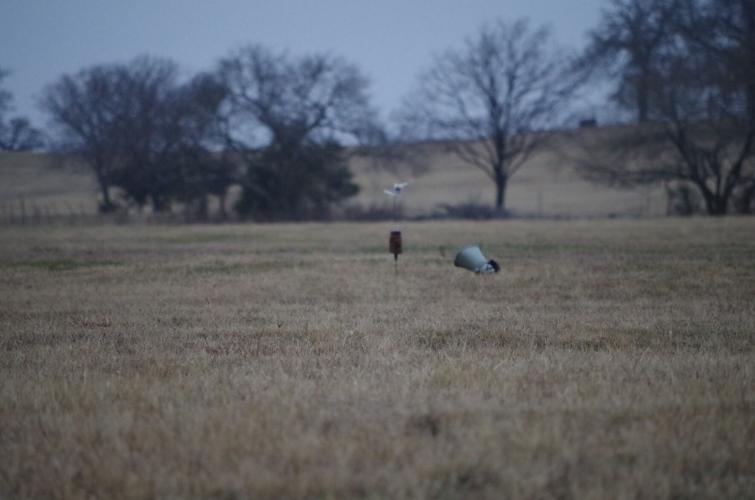
Decoys help. A lot of companies make attractant decoys. Some are just a white rag on the end of a wire that waves/flips around to attract their attention. A coyote comes zipping in expecting to see a tussle going on. It calms them down upon seeing a decoy.
A 3D decoy works great but are a major pain to carry. Montana Decoys makes a one-dimensional fold-up decoy that is fast to pack up and move. Here’s an easy decoy to make that I learned from Gary Roberson. Tie a 6-inch string to a turkey feather and the other end to a stiff wire. Stick the wire in the ground at an angle so the feather dangles and blows in the wind. They’re easy to make and fast to pack up and jump to your next set-up.
You’ll want to cover your scent. It’s guaranteed that varmints will come in downwind so have an open field downwind so you can see them when they circle you. There’s a plethora of scents on the market. You can get sprays to cover your scent or strong scents like skunk scents to mask all smells.
Used to, flat shooting bolt actions were the ticket but now ARs are the rage because they allow for fast follow-up shots. I’d recommend a 3-9x or 4-12x scope. You’ll want a lower power for close running shots.
If there’s more than one shooter, I’d recommend that one carries a shotgun. One year I counted and 40% of my coyotes were within shotgun range. Nowadays there are a few coyote loads offered that will
reach out to 60 yards. So don’t store your guns away thinking that hunting season is over. Go varmint hunting for some fast-paced action.

(0) comments
Welcome to the discussion.
Log In