











The other week I wrote about Combat Trap Shooting. You have to be wired to the max to compete in that. We’ll have three throwers throwing clays non-stop and eight shooters. Not only do you have to hit the clays but you also have to shoot better than the shooter beside you.
I love combat trap shooting but today we’re going to talk about a shooting event(s) that is more relaxed and gentlemanly (Is gentlemanly a word?). I am not an expert clay shooter and am lucky if I get to shoot them twice per year. There are three well-known clay shooting classifications:
1. Trap
2. Skeet
3. Sporting Clays
(Or a big majority of the people have their own machine and just go out shooting clays).
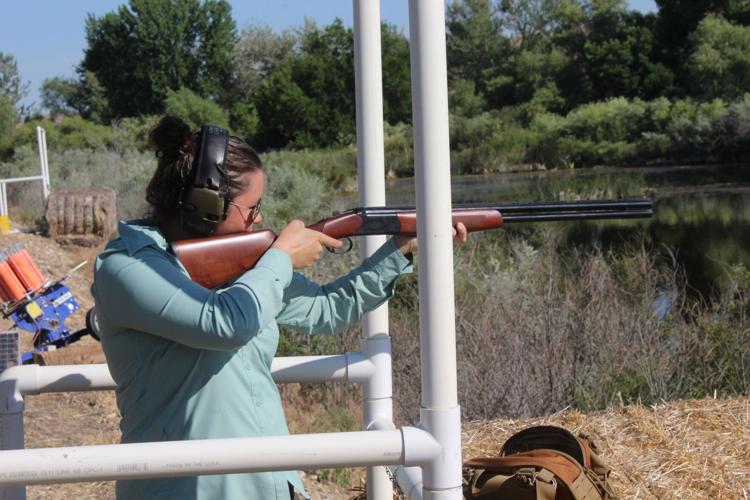
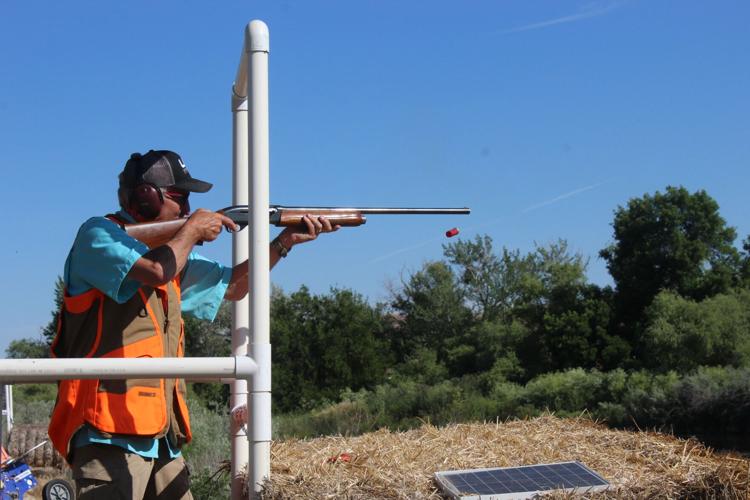
I’m not going to cover the ins and outs of the above three classifications. What I’m going to write about today is an event that I went to this past Saturday. The Treasure Valley Chapter of the Safari Club International puts on a monthly clay shooting. It takes place in Payette on the ranch of the chapter President Leroy Atwood. I’ve received a few invitations but have always been traveling but this past Saturday I was free so I thought I’d go check it out.
It was a fun event. Due to a low number of attendees, we broke up into only two groups which shot each station and then moved on to the next one. We were allowed 10 shots at each of the five stations. Each station provided different flight patterns and two of them shot out doubles. The one that was a killer for me was the one that shot one high from the right across to the left and then out of nowhere a scud missile shot across the top of the water about 3 ½-feet high at ram speed zipping to the left. At the end I checked with my teammates to see if I could just throw my shells instead of shooting at the clays, I figured I had a better chance of hitting them if I threw a shell at them.
I didn’t know anyone at the event but I got put into a group of good guys and we had a good time. They were all fun to shoot with and we had a good time. Whenever I’m in town I think I’m going to try to hit the event in the future.
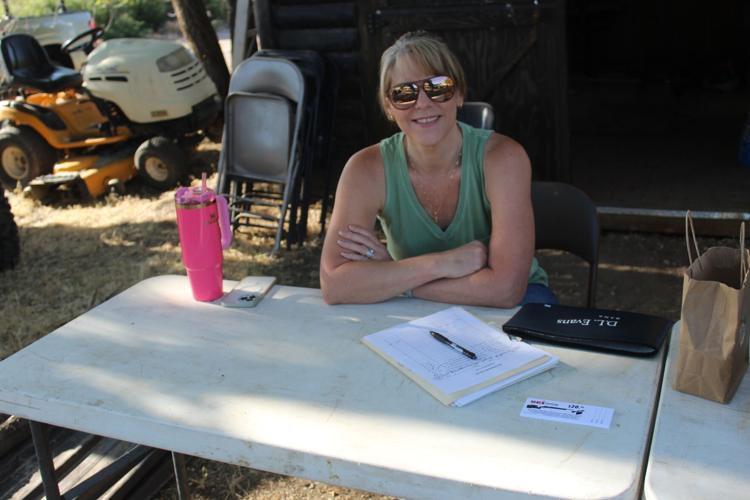
After we finished shooting, we all gathered and ate lunch that Leroy had provided. We signed in at 8:30 and began shooting at 9:00. We were done by noon. So, if you’re free for a few hours once per month this would be a good opportunity to go touch up your shooting skills.
As we wind down, I want to put in a plug for SCI. I became acquainted with SCI several years ago and have conducted seminars at their big yearly convention for probably the last 10 years. In meeting different people and attending various meetings and events I have gotten a glimpse of all of the good that they do.
If you listen to the antis, you’d think the SCI was the devil incarnate and regularly shot all manner of endangered species. That’s just not the case. Let me give a few examples.
I met a big African rancher a couple of years ago. He explained to me as to how the locals poached all of the game. He convinced them that it was more beneficial to protect the game and guide hunts than it was to raise livestock. They self-policed each other on poaching. Guiding hunters provided multiple jobs.
Guides, camp cooks, housemaids, people to build blinds, etc., etc. Then when an animal is killed the natives get the meat. Whole villages depend on this protein source.
When a Hollywood do-gooder goes on a crusade to outlaw lion hunting, trophy hunting, etc., etc. it kills the local economy plus the natives then goes back to poaching and thereby management is out the window. Buddies that regularly hunt in Africa tell me that when flying in to hunt you can tell right away when you’re flying over a managed area. You see all manner of wildlife whereas when you fly over areas where hunting is not valued or mismanaged large swaths of land noticeably have no wildlife. They see wildlife as direct competition to their agricultural herds and the wildlife is poached to the brink of extinction.
I‘m not an expert on all of this topic so talk to SCI for exact details but think about it for a minute. Let’s say you raise cattle in Africa and you make $150 per head. Or, you protect the wildlife and it costs hunters $55,000-$100,000 to hunt a lion and $40,000 to hunt an elephant. It doesn’t take a rocket scientist to know which is the easiest and most profitable route to go for the landowner and you can see how it literally financially wipes out a village when a do-gooder eliminates hunting in a region.
I’d invite you to check out SCI and consider joining it. They do a lot of good in protecting wildlife and our hunting rights.

(0) comments
Welcome to the discussion.
Log In