


Ernest Hemingway is buried in Ketchum, Idaho, yet few of my students were aware of Hemingway’s contribution to American literature or his Idaho connection. His work is now in the public domain. Hemingway, nicknamed “Papa,” became famous for his simplicity and clarity; he was a counterpoint to that other American master, the expansive Mississippi bard, William Faulkner.
Years ago, I visited Papa’s grave with a friend and local Boise guitarist, John Hansen. We found the gravestone under a layer of snow. Hemingway and his last wife, Mary, are buried between two trees. Nearby lies the grave of a friend killed in a 1939 duck hunting accident. Hemingway’s eulogy for the dead hunter supplied words for the memorial plaque below Hemingway’s bust in Sun Valley, just up the road from Ketchum. The bust in profile faces a distant valley with many golf courses, and a river not unlike the trout streams Hemingway fished and celebrated in simple but evocative prose. The words mention the fall and “high windless skies” and leaves “yellow on the cottonwoods.” In 1940, Hemingway finished “For Whom the Bell Tolls” in room 206 at the Sun Valley Lodge.
I am still partial to the first novel, “The Sun Also Rises,” which made the running of the bulls in Pamplona, Spain, immensely popular to this day. Recently, I reread Hemingway’s “A Moveable Feast,” a touching account of Hemingway’s life when he was a struggling young writer living in Paris. This was one of the last two nostalgic books he wrote (the other was about Spain) before taking his life with a shotgun — July of 1961 in Ketchum.
Perhaps Ernest Hemingway’s personal legend of macho “courage under fire” overshadowed the work, at times, but I did my master’s orals in part on his novels and short stories and felt a strong connection. In 1990, I married Karen Lea Smith Stroschein at the Hemingway memorial. Karen and I then visited Pamplona and saw the encierro, or running of the bulls. Papa’s spirit seemed to stalk those narrow-flagged streets crowded during the San Fermines Festival. To sit at the café Aruña was to evoke that powerful first novel about tragic love and a “lost generation.”
Hemingway’s Ketchum house was off limits to visitors since the neighbors didn’t want traffic from Hemingway aficionados, but there is a virtual tour of the house available. Soon, there will be writers in residence. Currently, one can visit the Keats house in Hampstead, London, and the Keats-Shelley house in Rome. Faulkner’s house in Oxford, Mississippi, draws thousands of visitors. One can enter the chancel of Trinity Church in Stratford-upon-Avon and stand at Shakespeare’s grave. William Blake has his cottage in Chichester, England, though the current owner discourages visitors. Chichester residents proudly display a plaque over a pub doorway where Blake was arrested for sedition after criticizing a British soldier.
For now, Hemingway’s memorial won’t disappoint. Look for a wooden sign by the road and then walk down a narrow path. In the summer, bring some wine and cheese and enjoy Hemingway’s bust and listen to the running brook beneath the monument and feel the breeze blowing through the leaves on the cottonwoods.
I lost my wife in 2005. On our next wedding anniversary, I plan to place her ashes in the little flowing brook. For me, the Hemingway Memorial is a sacred place.
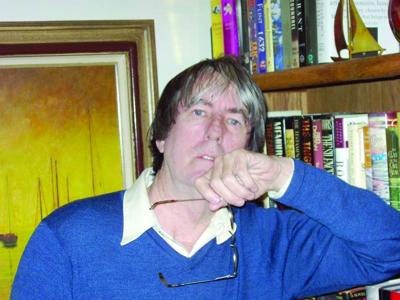
Michael Corrigan graduated from San Francisco State with a Master of Arts degree in English and creative writing. He was active in theater and attended the American Film Institute. He retired from Idaho State University as an instructor of English and speech communications. He has written several books, including “Confessions of a Shanty Irishman,” “Mulligan” and “These Precious Hours.” NPR broadcast his play for two readers: “Letters from Rebecca.”

(0) comments
Welcome to the discussion.
Log In