



My history is “spotty” when it comes to dogs. The first canine I can recall was a German Shepherd that bit me badly on the face when I was 6. Apparently that’s not an uncommon experience, as the Centers for Disease Control of Prevention reports approximately one in 69 Americans are chomped on yearly by dogs; fortunately, only a small percentage require medical treatment.
The German Shepherd that bit me haunted my dreams for years, and I always take the measure of new dogs before engaging with them. My reservation never progressed to cynophobia (an irrational fear of dogs), but my childhood experience definitely scarred me literally and figuratively.
Dog bites are the most common liability claim brought against homeowners. I have known and represented people who were attacked, and dogs are capable of inflicting serious injury and death. Chihuahuas bite the most (could it be the Napoleon complex?), and pit bulls cause the greatest injuries. Some insurance companies will not carry you as a policyholder if you own a pit bull.
We only had one dog as a pet when I was a child. It was an unruly pup with an apparent mix of Husky and German Shepherd DNA. My stepparents drove that dog out into the countryside and abandoned the rambunctious creature to its fate. The vision of her frantically chasing after our car still disturbs me.
At age 13, I was forced to help kill a vicious German Shepherd that was owned by my stepfather’s parents. The deed was done at night, and I was ordered to hold the flashlight on the dog in its pen while my stepfather pumped the whimpering animal full of lead. That dog was terrifying, and something needed to be done, but forcing me to assist with that creature’s demise was calculated abuse.
One article I read claimed 40 percent of vicious dogs can be rehabilitated, but it takes a major commitment by trained behaviorists, and the age of the animal is a significant factor with best results obtained with dogs under two years old.
I spent several days last year in a Mayan village on lake Atitlan in Guatemala with my friend Dora. We found it a bit scary, as untethered dogs would bolt from recessed doorways in sneak attacks. It was fortunate we weren’t bitten. Most problems I’ve experienced with troublesome dogs involve irresponsible owners. It was inexcusable that a client of mine was severely hurt by a dog that had already bitten several people and was not leashed at the time of the attack.
Lest you think I dislike canines, I keep a bowl of dog treats handy on my kitchen counter for my neighbors’ pets and the occasional visitor (which accidentally included my sister this past Christmas — yum, tasty). If I weren’t such a frequent traveler, I’d probably have a pet of some kind.
Human relationships with dogs intrigue me. From “man’s best friend,” to work animals and beyond, we have unique connections with dogs. They are by far the world’s most abundant terrestrial carnivores. It’s hard to believe that all 150 breeds of dogs found worldwide descend from an extinct common ancestor shared with the gray wolf; comparing a teacup poodle to a Great Dane, it hardly seems possible.
Dogs are eaten by humans in some parts of the world, but I know a fair number of people who prefer their company to that of other humans. A few women I have known left me with the distinct impression I would fare better as their dog than their mate. I assume that has something to do with reliability and unconditional love.
Sigmund Freud observed, “Dogs love their friends and bite their enemies, quite unlike people who are incapable of pure love and have to always mix love and hate.” That’s an extreme characterization, but Marilyn Monroe apparently agreed. “Dogs never bite me. Just humans,” she once quipped.
The first rock concert I attended was Three Dog Night in Salt Lake City. I learned researching this article the band’s title originates from an Aborigine phrase tied to coldness. Apparently the Aborigines would dig a hole for sleeping on cold nights in the Outback, and invite up to three dingoes as sleeping partners depending on the severity of the temperature.
There are conflicting theories as to when humans domesticated wolves, and it may have occurred several times during our evolution. No one will ever really know absent time travel, but the connection seems like it would logically have involved raising orphaned wolf pups. The wolves’ ability to keep a camp clean, to aid in hunting and to provide protection and warning from hostile predators would likely have cemented the bond.
All puppies including wolf pups are irresistible to most humans. One article I read suggested dogs began physically modifying features over time to make themselves more attractive to humans. The process is called self-domestication where the most friendly or attractive features gain favor. It’s hard to explain a drooling pug with that theory, but to each their own, and I have met plenty of humans who bear a remarkable resemblance to their dogs in appearance and behavior.
A mentally ill man in Kentucky was arrested recently having allegedly killed four of his neighbors’ dogs to make a coat. Given the amount of dog lovers in America, I wouldn’t request a jury if I were his lawyer.
I’m currently in Guanajuato exploring a beautiful part of Mexico while visiting my friend, Taty. Her family has three dogs. The largest is Chanel, a Siberian Husky. Boss is their middle-sized wiener dog, and 2-pound Paris is a Chihuahua. The larger pets quickly accepted me, but Paris snarls every time I approach (hello, Napoleon). I’d like to rename her Taco, but that probably won’t improve her attitude.
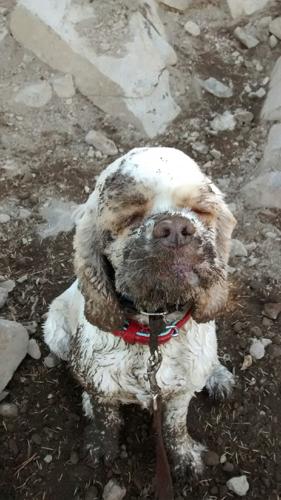
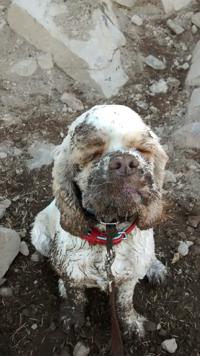
My daughter has a Cocker Spaniel named Ruby. She’s adorable, and even if she weren’t, I’d never say so. I don’t want to be cut off from seeing my only grandchild.
Jesse Robison is a Pocatello native who has lived in Mexico and other places. He was educated at Idaho State University and University of Idaho. Robison works as a mediator and insurance law consultant, but his passion is public art. He has spearheaded numerous art improvements throughout Pocatello, including the Japanese garden located at Pocatello Regional Airport, and he serves on the Bistline Foundation. Robison currently resides in Pocatello.

(0) comments
Welcome to the discussion.
Log In