

Programs intended to address air pollution in Franklin County have apparently paid off.
Officials with the Idaho Department of Environmental Quality say Franklin County is back in attainment with federal standards for an important air pollutant — PM 2.5 — after more than 12 years of exceeding allowable levels.
PM 2.5, which is particulate matter under 2.5 micrometers in diameter, includes the smallest airborne particles that can bypass the nose and throat and penetrate into the lungs, and sometimes even the circulatory system, according to the DEQ.
The county has been out of compliance for the fine particles since 2009, but the federal Environmental Protection Agency re-designated the county as being in attainment on May 21, when notice of the change was published in the Federal Register. The county’s status will be officially updated a month from that date.
Clay Woods, airshed coordinator with the DEQ’s Pocatello office, believes the improvement is the result of programs the agency has helped to implement within the community.
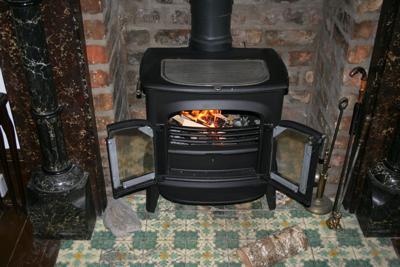
Woods said the DEQ used EPA grant funding to offer homeowners a wood stove exchange program. Qualifying households could upgrade their older wood stoves with modern, efficient models or convert to other heat sources that are more environmentally friendly.
The DEQ collaborated with Southeastern Idaho Public Health on a home weatherization program, which helped 47 households in the county make their homes more energy efficient.
Woods said DEQ purchased new buses to continue a public bus route from Preston to Logan, Utah.
DEQ also used EPA grant funding to buy salt trucks, enabling Franklin County and the city of Preston to switch from using sand to melt snow on streets during the winter to salt or brine. Woods explained salt and brine don’t leave behind residual sand that can blow into the air and elevate particulate levels.
Woods explained the federal standard is set based on the 90th percentile of air-quality sampling days, allowing communities to throw out a few of their highest daily test numbers. EPA’s standard allows for no more than 35 micrograms per cubic meter of PM 2.5 during a 24-hour period.
Woods said the community met attainment based on three years of sampling data.
Logan, Utah, and the Cache Valley have yet to achieve attainment for PM 2.5, and residents there must comply with a vehicle inspection maintenance program. They must pay an annual fee to have vehicles inspected and make improvements to reduce their vehicle emissions as needed. Woods explained Franklin County likely avoided a similar fate by achieving compliance.

(0) comments
Welcome to the discussion.
Log In