

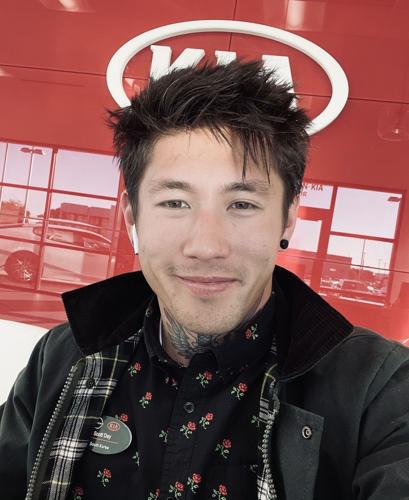

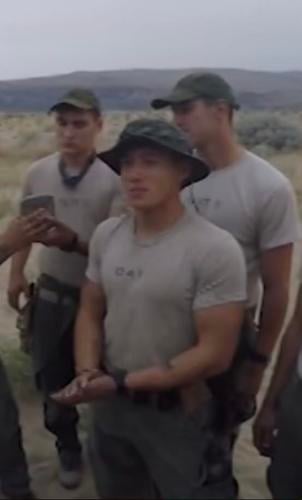
POCATELLO — Scott Day sustained himself in the desert heat of Washington's Yakima Valley on insects and rattle snakes, and he quenched his thirst by capturing water from sagebrush and his own bodily fluids.
The 26-year-old local car salesman has had to snare squirrels in a temperate rainforest ecosystem, and he's braved the winter cold in a snow cave, with a single Sterno can for warmth.
He enlisted in the Air Force in 2014, shortly after graduating from high school in Camden, Tennessee. He served as a Survival, Evasion, Resistance and Escape instructor with the 66th and 22nd Training Squadrons at Fairchild Air Force Base in Spokane, Washington.
Day taught pilots, special operations personnel and others who could potentially be at risk of being isolated how to survive in any biome.
Learning and teaching survival skills was unpleasant work, but Day took pride in knowing that the training could help other troops "survive and return with honor."
"It's very harsh and people take it for granted," Day said of living off the land.
Day was born in South Korea. His mother was a native South Korean and his father was serving there for the U.S. Army. He lived in South Korea until he was 6, and being part of a military family, he never remained in the same community thereafter for more than a couple of years, until he moved to Pocatello in 2018.
"Growing up the plan was to be in the military because my dad and my whole family was. They groomed me for that," Day said.
Day found the desert was the toughest environment in which to train. He recalls the temperature was above 100 degrees when he participated in an exercise to help troops operate while dehydrated. He was deprived of water for 48 hours and then required to walk 2 miles to a location where he could pick up a can of water.
"It's weird when you don't drink water for two days. You definitely feel the side effects. Your lips and tongue get really dry," Day said. "It's hard to speak and your mind is really clouded."
After finishing the hike, some of the soldiers in his team ignored the instruction to sip their can of water, passing out after they chugged it.
When he wasn't given water, he had to produce it by making a solar still. He explained the process entailed placing sagebrush foliage or bodily fluids in a hole, exposed to the sun and covered by a piece of plastic. The liquid would evaporate from the fluid or the leaves, collect on the plastic and drip into a cup placed inside of the hole. The technique enabled Day to collect about an eighth of a cup of water in the span of 12 hours to a day.
Day also recalls waking up in the desert with scorpions crawling on his chest.
In the temperate rainforest by the Washington Coast, Day often kept himself hydrated by tapping trees. Whenever he drank from a stream, he had to make certain there was no water hemlock, which is a highly toxic plant that can taint water, growing in the vicinity. He became adept at snaring squirrels, though the military would occasionally give the troops meals ready to eat.
Day was never deployed with the military. He's worked since May of 2020 at Cole, Nissan, Kia, which is his first job in sales. He said business has been steady lately.
"The main thing is being able to talk to everybody in the community and meet new people and grow relationships that way and helping people with their transportation needs," Day said. "It's very rewarding to me."

(0) comments
Welcome to the discussion.
Log In