

The National Fish and Wildlife Foundation announced Thursday nearly $2.4 million in grants, supported by funding from McDonald’s USA and several of its suppliers, with the aim to help complete voluntary conservation easements on working ranches across the Great Plains, Rocky Mountain West and West Coast of the United States.
The grants will unlock nearly $99.1 million in total conservation impact by leveraging approximately $96.7 million in matching contributions that support the advancement of conservation easements.
Awarded through the Grassland Resilience and Conservation Initiative, the six grants help complete conservation easements on 31 properties across 11 states, including projects in Idaho. Together, these projects will help permanently conserve more than 100,650 acres of grasslands while keeping ranching operations productive and economically viable.
In Idaho, Heart of the Rockies was awarded $78,150 to help conserve 2,384 acres of working ranchland in Blaine County.
Launched in 2025, the Grassland Resilience and Conservation Initiative is a partnership between NFWF and McDonald’s USA, some of its key beef and beverage suppliers and the U.S. Department of Agriculture’s Natural Resources Conservation Service. This landmark, seven-year initiative aims to invest more than $200 million to benefit America’s iconic grasslands, cattle ranching communities and wildlife populations that depend on healthy soils, productive habitats and plentiful water. Through this initiative, grants will promote and accelerate wildlife conservation efforts across 4 million acres of grazing lands within the Great Plains, Rocky Mountain West, Midwest, West Coast and Southeast.
“This investment from the Grassland Resilience and Conservation Initiative reflects the power of collaborative conservation to protect America’s grasslands and working lands,” said Jeff Trandahl, executive director and CEO of NFWF. “These projects are designed to safeguard critical wildlife migration corridors and working lands that are essential to ranching livelihoods and thriving ecosystems. This latest round of funding demonstrates the Initiative’s continued commitment to conserving grasslands and supporting the communities that depend upon their sustained health, resilience and productivity.”
The grants announced Thursday will help move voluntary conservation easement projects through the final stages of completion by covering transaction and due diligence costs that are essential but often difficult to fund. Conservation easements are voluntary legal agreements between landowners and land trusts or government agencies that permanently limit certain uses of a property while safeguarding its natural, scenic or agricultural value. These agreements allow landowners to retain their private property rights while simultaneously protecting intact grasslands that are the centerpiece of rural economies and the beef supply chain in the United States.
Transaction and due diligence costs can include property appraisals, baseline inventory reports, environmental risk assessments and title insurance costs — essential steps that ensure voluntary conservation easements are legally and financially sound. While necessary, these costs often fall on landowners and conservation organizations and can become a costly barrier to closing a voluntary conservation easement. By covering these expenses, the grants aim to help move nearly completed projects across the finish line and fill a gap that is often overlooked by grant funding.
The Grassland Resilience and Conservation Initiative aims to advance voluntary conservation practices on grass-dominated landscapes in active beef cattle production across the United States. Voluntary conservation easements are an effective tool for keeping grasslands intact to support both wildlife habitat and livestock grazing.
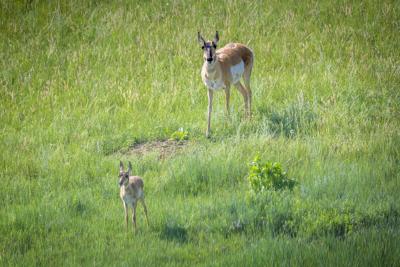
Many of the properties that will benefit from the grants face a high risk of conversion and represent areas of high biodiversity. Safeguarding these lands will help conserve critical habitat and migration routes for wildlife, ranging from big-game species like pronghorn and mule deer, to greater sage-grouse, burrowing owls, and other grassland birds such as the lark bunting and Baird’s sparrow. These efforts will ensure that ranching families can continue to steward intact grasslands for generations to come and preserve their way of life.
A complete list of the 2026 grants made through the Grassland Resilience and Conservation Initiative is available at tinyurl.com/2swu7mue.

(0) comments
Welcome to the discussion.
Log In