



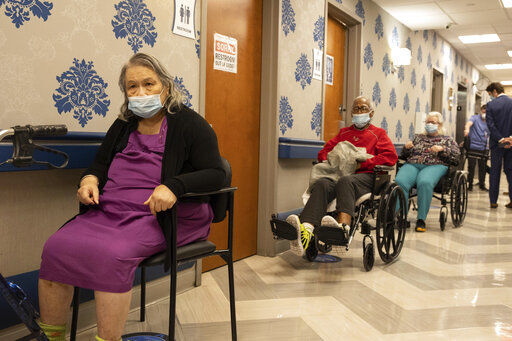
Most staff in Idaho nursing homes are unvaccinated, threatening the health of overwhelmingly vaccinated, medically vulnerable patients, according to data released last week that provides a rare but incomplete glimpse into vaccination rates in long-term care facilities.
According to the federal Centers for Medicare and Medicaid Services, 82.6 percent of residents but only 47.5 percent of staff were fully vaccinated in Idaho nursing homes by May 30. Idaho had the 17th highest resident vaccination rate but the 15th lowest staff vaccination rate in 53 U.S. states and territories.
The new data provides one of the most comprehensive views into vaccination rates in nursing homes, largely confirming surveys and reports from spring that found high vaccine rejection rates by staff. Similar to previous available data, the latest information is incomplete — leaving many families without answers to questions about their loved ones’ coronavirus exposure risk.
Differing licenses for long-term care facilities mean that the federal rule creating this data will only publicize vaccination rates for 20 percent of long-term care facilities in Idaho, according to data analysis by the Post Register. The 82 nursing homes required to report vaccination rates are only approved to house more than one-third of the more than 17,000 maximum patients for which Idaho facilities are licensed, the Post Register found.
“For this week I would take (the vaccination data) with a grain of salt,” said Robert Vande Merwe, director of the Idaho Health Care Association, which represents long-term care facilities. So far, data is only available for 73 of Idaho’s 82 nursing homes, he said on Friday.
The Centers for Medicaid and Medicare Services required nursing homes starting last month to disclose vaccination rates, which were published this month. Medicare set a goal for facilities to have 75 percent of workers vaccinated.
Residents at risk
About 38 percent of Idaho’s more than 2,100 COVID-19 deaths have been linked to long-term care facilities; 93 percent of all COVID-19 deaths in Idaho were among people age 60 and up.
The highest-risk group is also heavily vaccinated. Seventy-six percent of Idahoans age 65 and up are at least partially vaccinated.
Idaho’s vaccination campaign has slowed to a snail’s pace in recent months. Almost half of all Idaho adults were at least partially vaccinated by Friday, state data shows, compared to almost 65 percent of all American adults.
National Public Radio reported this month that Idaho was in the bottom 10 states for vaccination rates. Lagging rates stem from Idaho’s highly vaccine hesitant population and access barriers for some people, including Latinos and rural residents.
The risk to residents posed by low staff vaccination rates has decreased while coronavirus outbreaks screech to a halt in Idaho long-term care facilities. But at least one case study by the Centers for Disease Control and Prevention suggests that the protection vaccines offer to vaccinated residents can be diminished by unvaccinated staff members.
In April, the CDC traced one Kentucky nursing home outbreak to a single unvaccinated staff member. The CDC said in a public report that the worker went to work while experiencing symptoms of COVID-19, sparking an outbreak that infected 46 people, including 18 fully vaccinated residents and four fully vaccinated staff members. Three residents, including one who was vaccinated, died.
“This underscores the importance … that all persons, including those who have recovered from COVID-19, be vaccinated,” the CDC’s report concluded. For the safety of nursing home residents, CDC said “it is imperative” that both staff and residents get vaccinated.
Dr. Richard Nathan, an Idaho Falls doctor who specializes in infections diseases, said the new Delta coronavirus variant adds to the high risk residents face. Believed to be more infectious, Nathan said the Delta variant, first identified in India during the nation’s infection surge, “evades the immune system particularly well.” CDC Director Rochelle Wolensky on Friday said the Delta variant could become the dominant strain in the nation, according to ABC News.
Seniors “may not be able to mount an optimal immune response to the vaccine,” so they may not be as protected, Nathan told the Post Register in text messages Friday morning. “We are fortunate to have a lull (of coronavirus cases) in which people can get vaccinated to protect themselves and others.”
Vaccines are believed to be effective against variants circulating in the U.S.
Coronavirus outbreaks, cases and deaths in Idaho long-term care facilities have sharply declined throughout 2021. Late this spring, weekly new infections dropped to around 20 with less than a handful of deaths. At the height of facility infections in late fall, 500 new cases and around 30 deaths were reported weekly.
Almost all new COVID-19 cases in Idaho are among unvaccinated people, one of the state’s top public health researchers said this month.
Three-quarters of all Idaho long-term care facilities have reported COVID-19 outbreaks, according to data analysis by the Post Register, but the share of facilities with active outbreaks fell from 70 percent at Christmas to 6 percent this month. The decline began as coronavirus infections dropped statewide and vaccines became available.
Infections “are down for now,” Nathan said. “People will continue to get sick and die from coronavirus in Idaho because of the low vaccination rates. The unvaccinated seniors are most at risk.”
What can you do with the info?
It’s fully viewable online, broken down state-by-state. Find vaccination rates for individual facilities through Medicare’s online map at bit.ly/CMSIdahoMap.
Vande Merwe, who represents long-term care facilities, said the data should be interpreted cautiously. Numbers could be out of whack because of reporting errors, he said. If a facility’s rate worries you, Vande Merwe said it could be worth calling the facility.
Besides potential errors in the data, he worries “facilities will be judged by the decisions of their staff or residents.”
“We can encourage or educate all day long, but staff and residents still have their own choice, as do each member of the public. There’s serious vaccine hesitancy in the general public, and that doesn’t mean it’s going to be any different in a facility,” he said in a June 4 phone interview.
The new vaccination data only includes rates for nursing homes, which are federally regulated. The two other main categories of long-term care facilities — assisted living centers and group homes for people with developmental disabilities — were not included in the data.
Nationwide, there are more than 15,000 nursing homes, said Rhonda Richards, senior legislative affairs representative for the American Association of Retired Persons, a nonprofit, non-partisan organization that advocates for seniors.
“States could decide to take action in this area to help have greater transparency about vaccination in these other facilities, but consumers and families should feel free to inquire of facilities,” Richards said.
The Idaho Department of Health and Welfare does not have the legal power to force long-term care facilities to disclose their vaccination rates, spokeswoman Niki Forbing-Orr told the Idaho Capital Sun recently.
“There isn’t anything in statute or rule that requires facilities to report, and we can’t just arbitrarily require facilities to do things that the Legislature hasn’t given the department the authority to do,” Forbing-Orr said, according to the digital newsroom. “We know this is important, and we are exploring ways we might be able to get facilities to voluntarily report, but we just started those conversations.”
AARP has a webpage listing questions families can ask if their loved one is in a nursing home to determine their safety. Find that at bit.ly/AARPquestionsCOVID.
Piecemeal data
Data from surveys corroborates the low vaccination rate among long-term care facility staff.
The Post Register published an article on May 15 summarizing a late April survey conducted by state long-term care facility regulators. About half of Idaho’s 420 licensed long-term care facilities replied to the voluntary survey. Three-quarters of facilities estimated at least 81 percent of their residents were vaccinated. More than four in 10 facilities said less than 41 percent of their staff were vaccinated.
“So many facilities are struggling to get even 1/2 of their staff to agree to get vaccinated,” Jamie Simpson, supervisor of Idaho’s residential assisted living facilities program, wrote in an email to an Idaho Falls facility administrator that boasted almost all off his facility was vaccinated. “What is your secret?”
That survey had its flaws, too. About half of Idaho’s 420 licensed long-term care facilities replied.

(0) comments
Welcome to the discussion.
Log In