


When the Rev. Dr. Martin Luther King Jr. was 15 years old, he was admitted to Morehouse University, a historically black university. He still did not know how Christianity answered the long-standing and overwhelming discrimination against African Americans, but he would soon decide that the God of Christianity was just and loving and spoke strongly against violence. He would embrace this God and lead people of all colors to realize the faith that guided him.
I remember being a teenager as well, visiting my grandmother’s home in Oklahoma. The city park still had a segregated swimming pool, and around town were bathrooms and water fountains marked for “colored” and “white.” This was a fact of life in the early 1960s.
During my visit, my grandmother’s brother, a harsh and unhappy older white man, came by. Even today, I remember being uncomfortable in his presence. I write this because I want you to have the image of a person who would be the last person on Earth I would expect to look me in the eye, hold out a cassette tape player and turn on Martin Luther King’s “I Have a Dream” speech. In that speech, given at the Aug. 28, 1963, March on Washington for Jobs and Freedom, Dr. King expressed his conviction that one day “the sons of former slaves and the sons of former slave owners will be able to sit down together at the table of brotherhood.” I watched my great-uncle listen raptly to that brief speech and was shocked when, at the end, he said, “That’s the best speech I’ve ever heard.”
As remarkable as his reaction to this beautiful speech was, it was made even more poignant by the fact that his own grandfather had been a slaveholder. Although I didn’t really realize it at the time, my great-uncle, that irascible and unlikable man, was that son of a former slave owner Dr. King was talking about. In his speech, Dr. King reached across the chasm that had been built by segregation and hatred, took my great-uncle’s hand and shared a dream with him.
Rev. King went on to earn the Nobel Peace Prize, and then, on April 4, 1968, part of America’s dream was lost to a sniper’s rifle fire. As we think about the life of this remarkable man, we must remember his eternal message of love over hatred. “To our most bitter opponents, we say: ‘We shall match your capacity to inflict suffering by our capacity to endure suffering. We shall meet your physical force with soul force, with love. We will not hate you, but we cannot in all good conscience obey your unjust laws. And we will soon wear you down with our capacity to suffer and with our love. And winning our freedom, we will so appeal to your heart and conscience that we will win your freedom as well.’”
On that day, over 50 years ago, my great-uncle’s heart was won over. Dr. King had opened the door for his freedom from his own entrapment in prejudice.
The Portneuf Valley Interfaith Fellowship invites you to join us in celebrating Dr. King’s life. The annual Rev. Dr. Martin Luther King Service will be held on Jan. 19 at the First Congregational/UCC and Pocatello Unitarian Universalist Fellowship Church. The service begins at 6 p.m. and will include musical performances, speeches and an excerpt from Dr. King’s “I Have a Dream” oration.
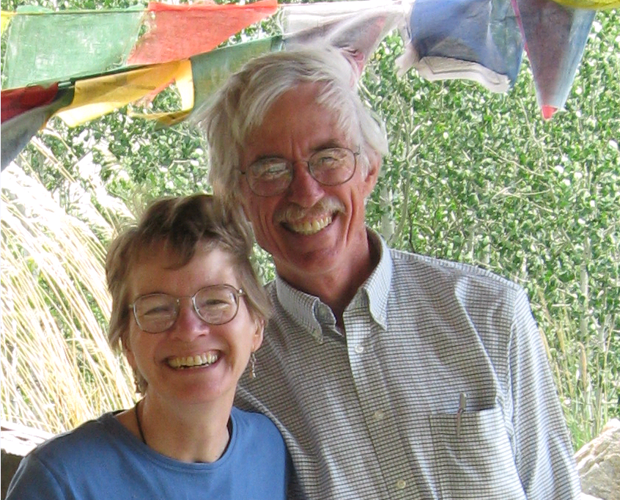
Tony Seikel is a member of the Portneuf Valley Interfaith Fellowship and helped found the Portneuf Sangha and Meditation Center in Pocatello.

(0) comments
Welcome to the discussion.
Log In