

Around a dozen years before Watson Shilling and his friends began to mark out the streets of Blackfoot, another community was growing on the banks of the Snake River. Tilford City was slowly evolving from a lone house and barn into a modest settlement of tents and cabins. Most of the men moving in were employed at the Tilford Ferry, and many had wives and families with them. Tilford Kutch was the owner of the ferry, as well as that first house and barn.
As the summer of 1867 approached, several of the women began collecting old clothing, specifically white muslin and scraps of blue and red. The best blue fabric they could find was a little on the greenish side, but beggars can’t be choosers. A good-sized rectangle was cut from the muslin, and Mrs. Kutch and Mrs. Cosgrove sewed on red stripes and a star-covered blue piece in the corner. Tilford City now had an American flag.
Someone (probably the women) began to organize a grand celebration to be held on July 4. Word was sent to the Stevens-Warren station, on the Blackfoot River about 5 miles south, and also to the Corbett Station, around the same distance north along the Snake River. People from both of these stations began to arrive around noon on the Fourth, bringing the participants to about 50 people in number.
The first event was a “Parade of Horribles.” Everyone dressed in their worst, marching up and down the central area clad as tramps or clowns. It was a time of laughter, camaraderie and joy.
Next came a flag raising with the men attaching the newly-made flag to a pole and lifting it into the air. There would have been some speeches. Tilford Kutch and Fred Stevens would both have had words they wanted to say. How inspiring it must have been to see Old Glory waving in the breeze. It would have been years since most of these people had seen such a sight.
After this was the picnic supper. It was a menu fit for a king — trout, venison, rabbit pot pie, biscuits and gravy, coffee, river water, and, maybe, something a little stronger.
Hugh Travis, who worked as a blacksmith at the Stevens-Warren station, had brought his anvil and a supply of gunpowder along. He set the anvil upside-down on a flat surface over a pile of gunpowder. A fishing pole with a torch tied to the end was used to light the gunpowder from a safe distance. There was a loud boom and a flash of light as the anvil sailed into the air, probably accompanied by cheers and hat waving.
In the evening, a dance was held in the barn, with music provided by fiddles and a harmonica.
Years went by; Tilford Kutch sold his ferry and moved to Wyoming, where he raised a large family and then died in a tragic accident with his own gun. Theodore T. Danilson, brother of W.H. Danilson, who played a large part in the founding of Blackfoot, became the owner of the ferry, changed the name of the settlement to Central Ferry, and got an official U.S. post office established there. Less than a year later, that post office was transferred to Blackfoot as it passed Central Ferry by in size.
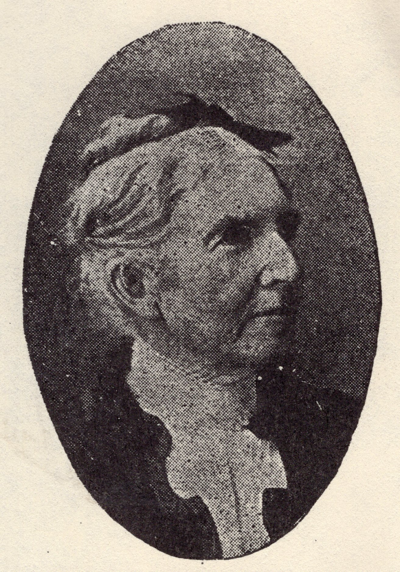
The story of that first Independence Day Celebration was recorded by two authors, whose writings we have at the Bingham County Archive. One is unsigned, but the second was printed in a little book written by Rebecca Mitchell and published in 1901. The book is titled “Historical Sketches — Pioneer Characters and Conditions of Eastern Idaho.” It is likely that she was an eyewitness to this celebration. In the introduction to this story, she writes, “Tilford City will live in history as the place where our natal day was first celebrated in eastern Idaho.” In the 159 years since 1867, we have set this memory aside.
This year, 2026, marks the 250th anniversary of the founding of our nation, and we’ve seen our community come together as seldom before in planning the events that have led us toward this milestone date. Please attend the Celebrate Blackfoot activities on June 25-27 at Jensen Grove, with the Historical Bus Tours on June 27 leaving hourly from the Potato Museum, the flag-raising and breakfast on July 4 at Patriot Field, and the community picnic on July 14. Then visit Blackfoot’s newest park — Twin Bridges Landing — at the west end of Bridge Street, and envision the river as the people of Tilford City would have seen it, as the flag waved and the anvil flew, and we will help Tilford City return to its place in history.

(0) comments
Welcome to the discussion.
Log In