


“He can add gifted poet to his already impressive resume.”
— Bonnie Raitt
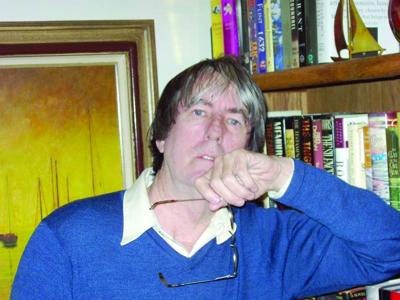
We have all heard the sinewy, distinctive voice of Peter Coyote, actor, activist and narrator of many documentaries, but another voice has emerged: Peter Coyote, the poet. His book, “Tongue of the Crow,” started five years ago when Coyote collected the poems and edited them with the aid of poet Patrick Donnelly.
“It’s pretty exciting to hold 50 years of work in my hand,” Coyote told Press Democrat journalist Diane Peterson in early October. “This is an entire lifetime … in this very thin book.”
Coyote also described his method:
“I think it just comes out of your life. You get an image, a line, a few words. It’s like a song. You just sit down, and you write that down. Then you see what comes next. You don’t know where it’s going. Something moved you.
“And all art starts like this. It starts from a hunch. Then you make a line, write a sentence, put in a dash of color. You look at it and analyze it. Where does that want to go? It’s kind of mysterious. Nobody owns it. It comes over the spinal telephone.”
For Peter Coyote, writing can be a form of meditation. His poems have a controlled yet raw, improvised feel — full of contrast whether describing a love of nature or guilt over hunting. After killing a woodchuck, the poet feels remorse:
A sharp-eyed hawk cries out
In the shadow of his circling
all my lusts go lame. Now
the hawking moon
is flecked with blood.
The poet is haunted by a brutal father and an alcoholic mother:
Make Mommy another, darling? The Cutty Sark—
“Do We All Mourn?” describes a turbulent family relationship with stanzas that reflect a brilliant observant mind:
Memory’s a room with drawn shades,
Light seeping around the edges, but
Too dark to read
In “Poppies,” Peter Coyote addresses the lure of opium:
Smaller than salt,
All history and sexual delight,
Scraped into a small sack, dreaming
Of next autumn and the sweet cloying smoke
Of my pipe rushing.
(Now an ordained Buddhist priest, Coyote’s most intractable addiction is a 1952 Dodge Power wagon.)
Here is “Sun of Honey,” a poem connecting the poet with radiant nature:
Preparing my daily rounds
after days of rain.
New sun climbs
the high garden wall,
piano notes
drip off ivy
each tapped leaf
a pressed key.
The still bright day
glissades and chords
two voices —
girl and man —
caress an aria.
Sudden heat on my cheek
love of this honey-sunned world.
I can’t move.
Pierced by beauty
as if swarmed
by bees,
everything just
this moment
arrived.
The swarm of bees adds a touch of danger.
In “The Dogs of Bucharest,” the poet sees homeless starving dogs and offers a female with pups a roll. An old tale suddenly comes to mind:
There’s a story that the Buddha
Gave his body to starving lion cubs.
The hunger of a dog—
Would a better man feed her
his fingers?
Peter Coyote’s collection, “Tongue of a Crow,” deserves a longer study since there is so much more—including a visit to the Beatles, wild sex and crows with split tongues. This “thin book” will surely delight readers.
Michael Corrigan graduated from San Francisco State with a Master of Arts degree in English and creative writing. He was active in theater and attended the American Film Institute. He retired from Idaho State University as an instructor of English and speech communications. He has written several books, including “Confessions of a Shanty Irishman,” “Mulligan” and “These Precious Hours.” NPR broadcast his play for two readers: “Letters from Rebecca.”

(0) comments
Welcome to the discussion.
Log In