

The landowner scoffed at the idea that sage grouse could be in trouble in part because of fires, wild or intentionally set to improve the range for cattle grazing. “sage grouse have dealt with fire for millions of years,” he stated emphatically. “They will just adapt,” he argued.
And in one way he was spot on. Wildfires have been a part of the natural world. And animals did adapt by moving into adjacent habitats while those areas affected by fire recovered. Recovery was likely pretty quick too because the habitat didn’t have to compete with invasive noxious weeds like cheatgrass, leafy spurge, and knapweed, or exotic grasses and forbs intentionally planted. It was a fairly simple world in that sense.
But that world has disappeared, and it is not coming back. The key to why the former world worked can be summed up in one word: options. When a wildfire tore through the prehistoric world, animals could escape into unaffected habitat. They had other places to go where they could continue with life.
Sagebrush habitat is a good example. Far from being a worthless plant as is often the view of many, sagebrush provides habitat for a number of species. Some of these, sage grouse, sage thrashers, sage sparrows, sage lizards and pygmy rabbits, are obligate sagebrush dwellers, meaning that they require sagebrush for survival. In all, 350 species of wildlife use sagebrush habitat to one degree or another.
Pioneers on the Oregon Trail referred to their journey as “800 miles through a sea of sagebrush.” Yet, 20 years ago, a Forest Service publication, entitled Big Sagebrush: A Sea Fragmented into Lakes, Ponds, and Puddles, pointed out that half of the sagebrush available 150 years ago is gone and the rest is broken into small, sometimes dysfunctional, segments. For obligate species, this is bad news. They don’t have anywhere else to go.
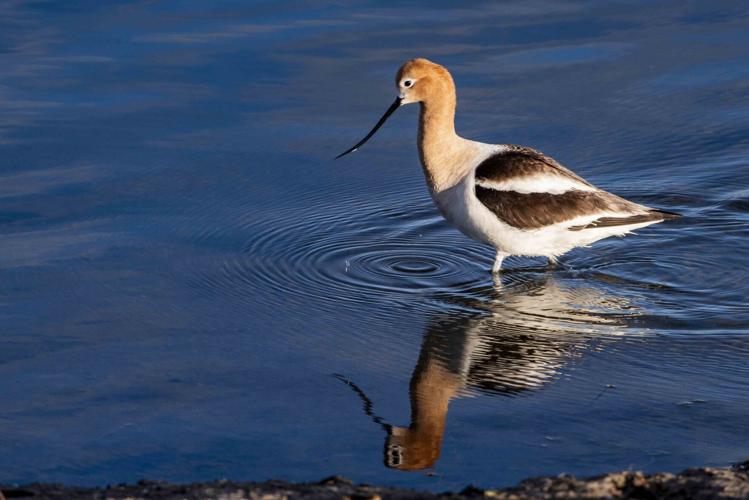
Another example is the Great Salt Lake. A recent report concluded that the Great Salt Lake is the number one body of water in the nation when it comes to supporting birds. Millions of avocets, stilts, grebes, phalaropes and gulls depend upon this lake, and as pointed out several weeks ago, the lake is dying. There are not many options for this many birds if that lake fails. Remaining habitats just can’t absorb them.
Winter ranges are another example. During a normal winter, there is enough protected winter range, at least in Idaho, for the elk, deer, pronghorn and moose. But during crunch time, when winters are long, extra cold, and with deep snow, options for these animals are limited and shrinking every year. Where their ancestors were able to push into the bottoms of the valleys and creeks, habitat there no longer exists, or they are no longer welcome. That is why we find moose in our yards, elk in farmers’ haystacks and deer dying by the thousands during harsh winters. They are out of options when the weather turns against them, and they live or die where they are or they get into trouble with their human neighbors. They have no choice.
We have tried to replace lost winter range with programs like the National Elk Refuge north of Jackson, Wyoming. Consistent feeding programs have become centers for disease, though, proving that concentrating animals is a bad idea. You can’t replace winter range with bales of hay.
Humans take the best and expect animals to adapt to what is left. Each time we create another development, be it a new reservoir, subdivision, road or gold mine, we are tightening the noose, backing wildlife a little further into the proverbial corner.
We use the mantra, “growth is inevitable,” as our excuse. Well, if that is true, there is a corollary truth that says, “for each and every action we take, there is a price to be paid, and wildlife and wildness in general are going to pay that price.”
Man, this is depressing, and I don’t really have the answer. The best I can think of begins with a citizenry that demands strong county development plans that consider wildlife an invaluable public resource worth protecting.


(0) comments
Welcome to the discussion.
Log In