

One of the key metrics we use to evaluate the future vulnerability of a bird species is its population size. Other attributes include population trend, the size of the breeding and nonbreeding ranges, and threats to the species during the breeding and nonbreeding seasons. Partners in Flight (PIF) developed this method in the early 1990s, and it’s been used and refined by PIF since then.
The problem with population size is that it’s hard to measure for most species. I’ve written in the past about how difficult it is, for example, to estimate the size of one large flock of wintering American robins. They fly back and forth in groups of various sizes, and you have no idea how many birds you’ve already seen and how many are arriving from outside the immediate area.
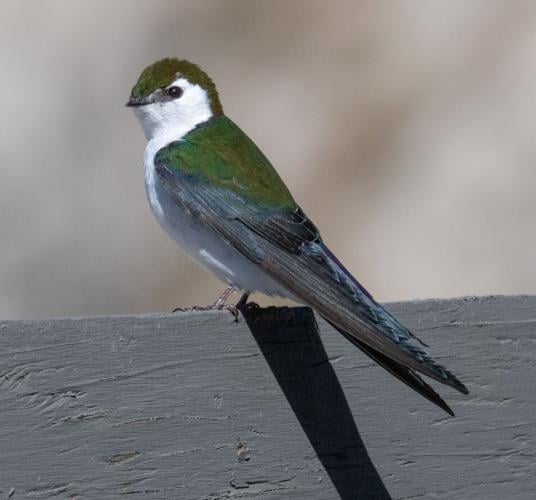
Or how about trying to count an endless river of violet-green swallows flying west over Boise in the spring? Looking up, you can only see a small portion of the sky, and the birds can go on for 20 minutes or more.
Have you seen the huge flocks of snow geese at Fort Boise in the spring? If so, have you tried to count the birds? Even if you can see a “single” flock, the numbers are bewildering.
A few years after the first IBM PCs hit the streets in Idaho in 1981, bird counting software became available. The screen would show some number of cartoon birds, either still or flying, and you would enter your estimation of the number. You could adjust a variety of factors in what was shown — size of the ‘birds,” number range, e.g., 10-100 or 100-1,000, and the speed at which they crossed the screen. That simple tool quickly improved my ability to estimate numbers.
To this day, if I see a flock of birds below, say, 200 or so, I will estimate the number and then count them. This is pretty boring stuff, but it does help keep my estimation skill somewhat in tune.
But all this is just about estimating/counting birds in one place and at one time. It has almost nothing to do with figuring out how many robins, or swallows, or snow geese there are in the world.
I say “almost nothing” because for species with the smallest populations, a total count at a few places over a few days might garner you every single individual of that species. Whooping cranes, California condors and Puerto Rican parrots, for example, come to mind.
The populations of most bird species are large enough that you can’t just go out and count them. That’s a very good thing. But it also means you need some sort of sampling methodology to gather data in the field. Ornithologists then use various assumptions to extrapolate those numbers out to the whole population.
We most commonly encounter the results of sampling in political polls whereby we want to know what people think about various issues. A truly objective sampling is difficult, and we usually get outcomes with plus and minus values. In other words, the researchers believe the “true” value lies between some boundaries.
Estimating the population size of birds is the same sort of problem. But the nice thing is we don’t have to worry about how questions are worded. We just want to get a count of the responders, if you will. I’ve always wanted to survey bird opinions, but that’s another matter.
The first big conference in this hemisphere to go deep on estimating bird populations was held in Asilomar, California, in October 1980. The resulting proceedings were published — Estimating Numbers of Terrestrial Birds (Ralph and Scott 1981). The publication contained 82 papers on everything from the theoretical basis of sampling to specific results from ongoing programs such as the Breeding Bird Survey (BBS) and the Christmas Bird Count.
Other topics covered in the proceedings were how to use banding data, using song playback to sample secretive birds, the value of line transects vs point counts vs area mapping, the effect of time of day and time of year, the effect of the type of vegetation a species uses, the effects of weather, and what we can learn from computer simulations.
A big problem in bird sampling is how to account for differences among the ability of observers. One obvious variable is how good their hearing is. But research has shown that even perfectly good birders just differ in how they detect birds. Testing observers by playing recorded bird songs of various species at various distances has uncovered some of those factors. Once the biometricians know what factors to adjust for, they can get better estimations through sophisticated statistical models.
A significant advance in recent history was made by Ken Rosenberg at Cornell University when he proposed that the massive data collected by the BBS since 1966 could be converted to population estimates. The BBS was designed to monitor population trends over time. It’s been fantastic at that. But Ken saw that the data could be converted to bird densities, and then those numbers could be extrapolated to total populations.
This conceptually simple conversion requires a slew of assumptions and adjustments in practice. The probability of detecting a species is a huge issue. Compare, for example, the odds that you will detect a common raven vs a burrowing owl. Ravens are large, noisy, social and fly around. Burrowing owls are secretive and silent, lurking around mounds in the sagebrush.
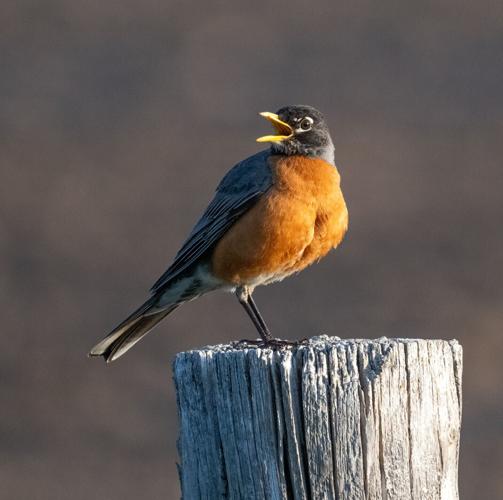
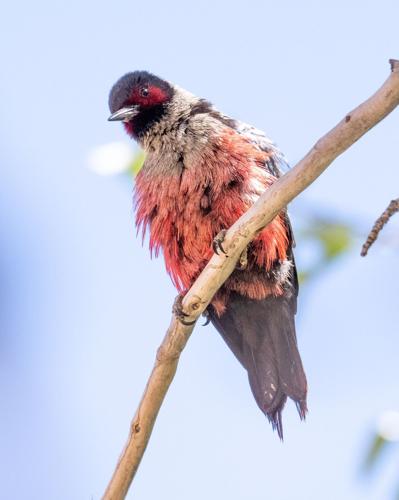
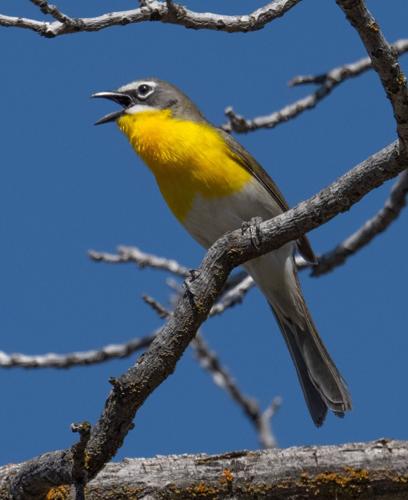
Backing out to the Big Picture, we use population size to help prioritize species for conservation action. Those with small populations are more at risk than those with large ones, all else being equal. And because conservation funding for birds is vastly less than needed, relatively few high-priority species get any funding at all. We want to make sure resources are invested in the best way. I hope you will pitch in. You can peruse population estimates at pif.birdconservancy.org/population-estimate-database-scores/. The most numerous species in the U.S. and Canada is the American robin, with an estimated 370,000,000 individuals. How does that strike you? How about 170,000,000 yellow-rumped warblers, 15,000,000 yellow-breasted chats, or 82,000 Lewis’s woodpeckers? Do those numbers comport with your ideas?
And don’t forget that large populations are no guarantee that a species will have a future. There were once 3-5 billion passenger pigeons, possibly the most abundant bird on earth. We destroyed their habitat and shot them mercilessly. We killed every one.




(0) comments
Welcome to the discussion.
Log In