



Hunters and anglers are lucky in that they spend a considerable amount of time outdoors.
Since their excursions often go to the same places at the same time for decades, these visits provide insight into the changing conditions of forest and streams. This thought came to mind a couple weekends ago while deer hunting in southern Utah.
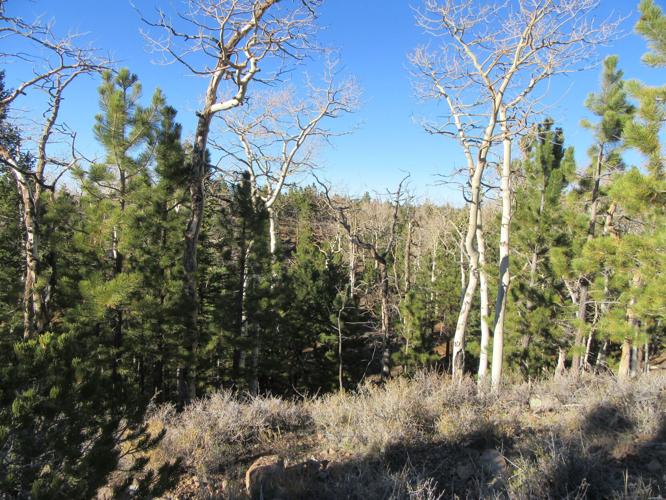
This area had a much different appearance than when I first visited in 1984. Then most the trees were widely spaced and less than 10 feet tall. Now most of these ponderosa pine trees have grown to over 40 feet in height. Other changes include several clones of aspen dying out as they have been overtopped and are now shaded by conifers. This cycle of growth had been completed before as many 70- to a 100-year-old decomposing stumps remain under this growing forest.
The biggest driver in how this timberland looked was the lack of low intensity fires. Mature ponderosa pines have thick bark which makes them resilient to fire, thriving when the flames come and burns the young trees in the understory. These days such fires are rare as they are extinguished quickly.
A longstanding Forest Service rule has been all detected fires must be extinguished by 10 a.m. the next day. This is a good rule when implemented to protect areas of human habitation. Further away from cities, putting out fires allows more small trees to survive, adding fuels that make these forests subject to higher intensity fires.
This lack of fire has different effects in different areas. Where I’ve hunted in southern Idaho for the last three decades, the hillsides are a mix of sagebrush, maple, juniper and other shrubs. These zones have not changed much. Locations with a mix of aspen, fir, pine and spruce have become more prone to burn but do not cover large contiguous areas.
It was nice the Dixie National Forest was thinning some of the areas I hunt. Many of the recently harvested units were seeing more use by deer as opening up these stands was increasing forage production. These harvest activities were also sending lumber to the mill.
There was considerable evidence of prescribed fire as federal management agencies are now burning more than 2.5 million acres a year across the west. The problem is this is not enough to substantially reduce wildfire. The presence of high intensity fires is evident across southern Utah. Last year there were nearly 900 fires in Utah that burned more than 160,000 acres. Nearly 70% of these fires were caused by humans.
In southern Utah, there are fewer deer hunters if for no other reason than there are fewer tags than 40 years ago. That does not mean there are fewer people. Far more tourists are now headed to Bryce Canyon and other southern Utah scenic wonders than in the 80s. Utah and Southeastern Idaho have more elk and turkeys but fewer deer than a few decades ago. The miles of roads open to motorized vehicles have stayed about the same but they receive less maintenance. This is not a huge problem as most people now travel these dirt roads in utility vehicles.
During the mid-day of my deer hunting excursions, I fish. It is clear many aquatic systems have changed as well. The most obvious reason is the increasing presence of beavers. The dams these animals build raise the water table, connect streams to their floodplains and provide overwinter trout habitat. As a result, these moderate sized mammals have improved conditions in many streams.
The other novelty is tiger trout. This designer fish — a cross between brook and brown trout — are visually stunning and has been stocked in numerous Utah and Idaho reservoirs over the last decade and provide anglers with more opportunities.
Hunters and anglers have a front row seat to watch changing wild land conditions. It would be easy to define many recent changes as negative. When you acknowledge the populations of Idaho and Utah have more than doubled over the last 40 years, it becomes easier to argue that many western wild lands have been maintained or improved. The biggest difference is we now share the woods with more hikers, bikers and campers and are more likely to be denied access to areas due to large fires.
For the most part, wild land managers have been able to do what the father of wildlife management Aldo Leopold suggested was necessary; keep all the pieces. This may become a more difficult task if too much effort is focused on resource extraction and there are not enough staff or funds to maintain the recreational infrastructure on these lands.

(0) comments
Welcome to the discussion.
Log In