

It’s been a busy week for Iranian diplomacy that may have come to nothing.
Iran's president and foreign minister visited New York for the U.N. gathering of world leaders and proposed a deal with the Trump administration that would end the fighting and open the Strait of Hormuz in seven days. That’s if the U.S. ends its military blockade of Iranian ports, releases frozen Iranian assets and waives sanctions on Iranian oil sales, among other conditions — none of them new.
What’s different after past failed attempts is the speedier timeline. Iran’s pitch to President Donald Trump said a quick deal might help him in the midterm elections in November.
On Saturday, Trump told reporters he rejects Iran’s proposal to reopen the strait. Hours earlier, the U.S. president posted an image on social media calling the crucial waterway the “Trump Strait.” Around the same time, Iran’s state media reported that President Masoud Pezeshkian was on his way back to Tehran.
Here’s where things stand as Iran and the U.S. each try to outlast growing economic pain following seven months of war.
The two sides hold their first indirect talks in months
The U.S. said its envoys and the Iranians held three hours of indirect talks via mediators Tuesday, their first since the countries’ previous agreement to end the fighting and launch nuclear talks collapsed within days of its signing in June.
The latest talks were good and the U.S. was open to more, Secretary of State Marco Rubio said Wednesday. But Trump used his speech to the U.N. gathering on Tuesday to threaten to “annihilate” the Islamic Republic. In his own speech a day later, Pezeshkian said Iran would fight “until our last breath.”
In the final seconds of his speech, however, Pezeshkian said Tehran remained open to diplomacy.
Behind closed doors, Iran describes a new proposal
In a private gathering Thursday on the sidelines of the U.N. meeting, Iran’s top diplomat described Tehran’s new proposal to the U.S. The conditions for Washington largely echo the ones agreed to in the June deal that fell apart.
At stake are the biggest sources of frustration for both sides.
Opening the Strait of Hormuz, over which Iran asserted control after being attacked by the U.S. and Israel, would ease global markets and relieve some pressure on the U.S. military, which has been guiding commercial ships through the waterway at risk of Iranian attack.
Lifting the U.S. naval blockade of Iranian ports, as well as waiving sanctions on oil sales, would allow Tehran to ship out more of its crude and help its battered economy as its currency hits record lows and inflation soars.
Iran makes another push before heading home
In a sign of Tehran’s apparent sense of urgency, Pezeshkian hosted the prime minister of Qatar, the mediator in the indirect talks, early Friday before much of New York rolled out of bed.
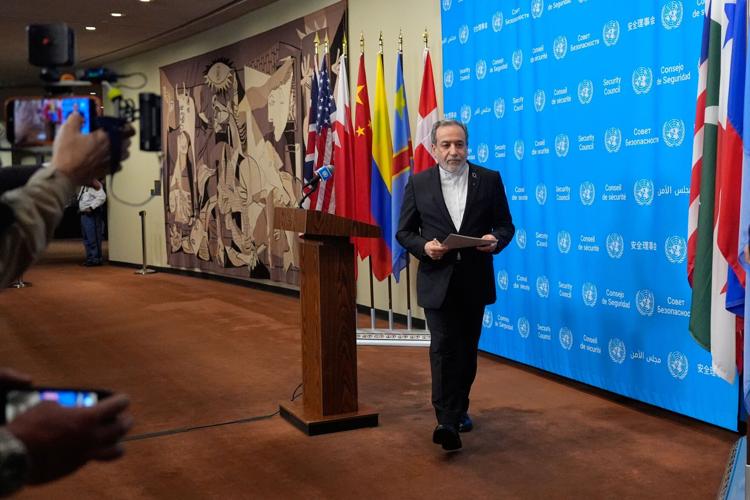
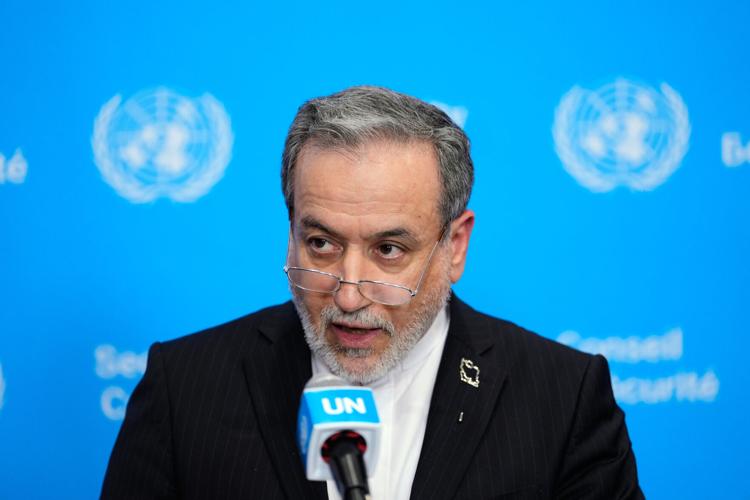
“The choice now rests with the United States,” Iranian Foreign Minister Abbas Araghchi told journalists Friday evening.
On Saturday, Trump said Iran wants an agreement because they’re “losing so badly.”
“They want to make a deal and I think that’s fine,” Trump said. “I’d like to make a deal, too. But that deal would not be acceptable.”
Trump made the comments to reporters outside the White House before leaving for a college football game.
Before his comments, the White House had said U.S. officials were having positive and constructive conversations with mediators.
Tehran has spent long weeks in discussions with Oman, on the other side of the strait, on how to manage shipping traffic. Its new rush for a deal with Washington, analysts said, reflects its eye on the midterms. Trump might decide an agreement has political benefits. But his rejection risks a return to fighting that would drive oil prices higher just as he needs happy voters.
“Washington may believe that time is on its side: Maintain pressure through November, avoid another major military escalation before the midterms, and reassess afterward. Tehran may reach precisely the opposite conclusion," Danny Citrinowicz, a senior researcher at Israel’s Institute for National Security Studies, said on X on Saturday.
Trump has said he's in no rush for a deal as the U.S. strains Iran's economy with sanctions. The White House had yet to expand on his “Trump Strait” social media post overnight.
As for Iran, there was no immediate sign its top diplomat had left New York. At home, Iran's security forces have warned they still have targets left to strike.

(0) comments
Welcome to the discussion.
Log In