

For years, being tone deaf meant being relegated to mouthing the lines of a song, or freezing up the moment you are thrust into the limelight and expected to sing Happy Birthday on the spot.
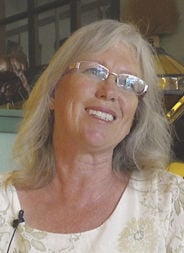
Yet stemming from an accidental discovery she made in her classroom nearly twenty years ago, musician and music educator Laurel Pumphrey has developed a way to help those who suffer from tone deafness.
The Pumphrey Method® is a music training system, otherwise known as amusia therapy. It hones-in on pitch and rhythm deficits students may have, and helps the student develop a musical ear.
“This is actually really life-changing for individuals,” she said. “...We find a way to bring them up to a skill level so they can live their lives with confidence.”
The method in particular is a unique one, as tone-deafness has not been a common area of study until the last few decades.
“As far as I know, I’m the only therapeutic method at this point that exists for this specific issue,” Pumphrey said.
In that classroom 20 years ago, Pumphrey observed that her out-of-tune students were one-by-one slowly “slipping into tune” and after two years, every student was able to accurately match pitch and sing in tune.
“I hadn’t heard this was possible,” she said. “I hadn’t had any training that taught me about that, so that’s really where it started.”
Pumphrey then opened a private voice studio in Old Town Pocatello in 2001, continuing her own vocal studies with international opera singer Kristine Ciesinski. As students entered her studio that struggled with this issue, she thought back to her earlier classroom and started to try and figure out how to help these students.
Over time a method was born. Pumphrey never imagined that this would become her life’s work.
The method is appropriate for ages 10 to over 70. It focuses on three areas: the ability to listen and focus on tones, cognitive training, and neuromuscular patterning.
Pumphrey explains that the process is light-hearted enough that it removes the negative feelings of judgement and discomfort that tone-deaf people may associate with singing.
“It just strips that all away and reaches right to their level and you slowly build up these skills,” she said.
Pumphrey, who currently lives in Lava Hot Springs in a cabin she and her husband hand-built, now looks to pass on the method to other teachers so that this system can reach a wide expanse of aspiring musicians.
She held her first teacher training in Boise in March and will hold two workshops in Pocatello this summer. The March workshop thrived, according to Pumphrey, and the feedback she has received was highly positive.
Pumphrey, who still teaches private voice lessons in her Old Town Pocatello Studio at 315 W Center St, explained that this feedback is what influences her to pursue getting the method out there.
“For me, that’s the reward,” Pumphrey said. “Putting (the method) into the hands of other educators and having them have success. That’s kind of my new passion.”
The Level II workshop is on Aug. 20 and 21 from 9 a.m. to 5 p.m. She plans summer workshops in Boise, too, with the Level II workshops on Aug. 15 and 16 from 9 a.m. to 5 p.m.
Contact Laurel at 208-234-7464 or email her at laurel@pumphreymethod.com. Find more information at https://www.pumphreymethod.com.
Idaho State University’s Continuing Education and Workforce Training (CEWT) is interested in supporting businesses and entrepreneurs with opportunities to get their story out there. For more information, visit cetrain.isu.edu or call 208-282-3372.

(0) comments
Welcome to the discussion.
Log In