

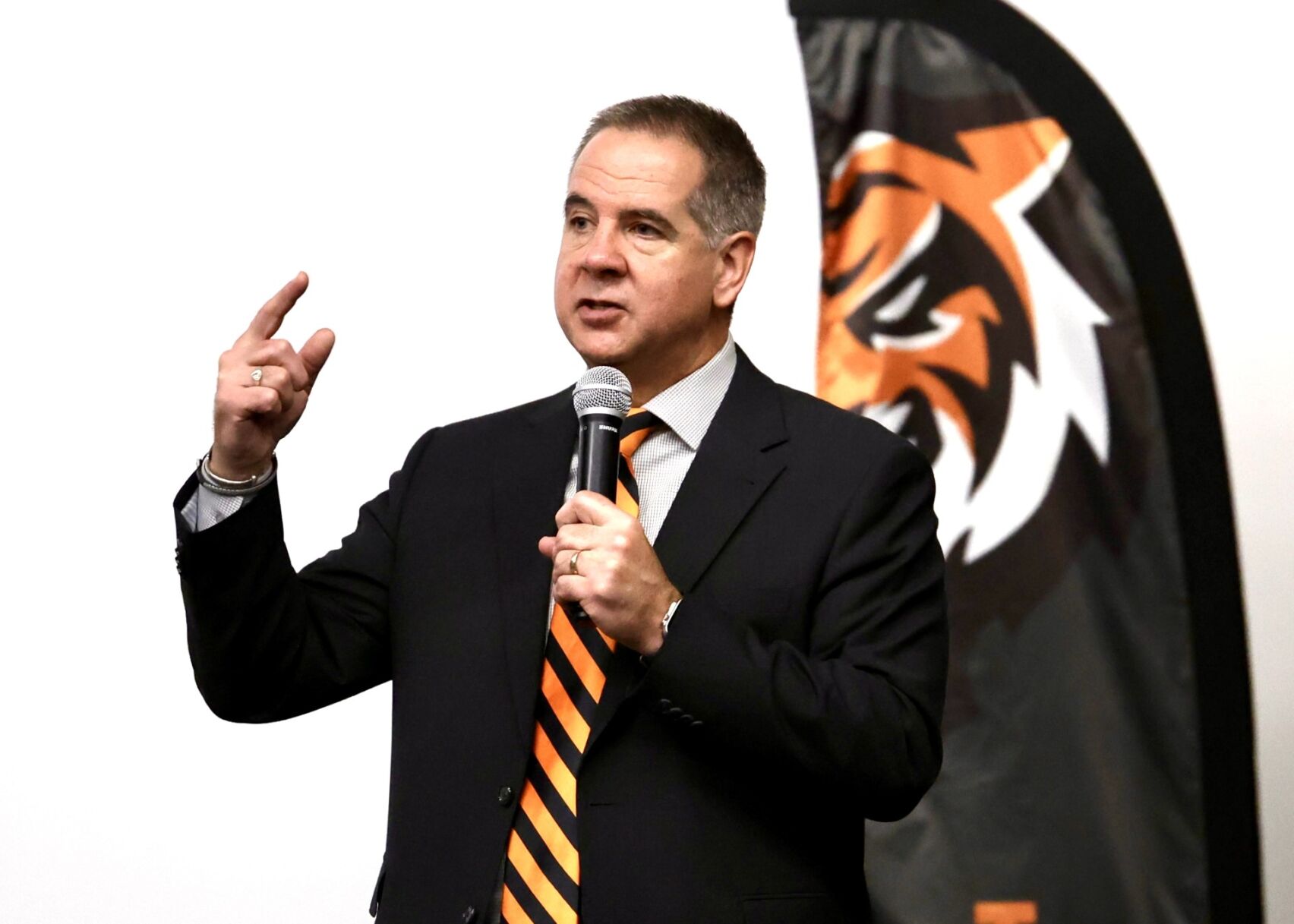
The Idaho State Board of Education on Thursday voted unanimously and with little discussion to name Robert Wagner as the new president of Idaho State University.
The board had previously announced Wagner was among five finalists for the position. However, it appears the final decision on who would replace retiring ISU President Kevin Satterlee was all but finalized before Thursday’s vote, seemingly skirting Idaho’s Open Meeting Law. A board spokesman disagrees, saying the process was typical and in-line with the law.
The law allows for closed meetings to “consider hiring a public officer, employee, staff member or individual agent, wherein the respective qualities of individuals are to be evaluated in order to fill a particular vacancy or need.” Negotiations over a contract may also be held outside of public meetings.
However, the law states that, “No executive session may be held for the purpose of taking any final action or making any final decision.”
On Monday, Lewis-Clark State College President Cynthia Pemberton, a finalist for the ISU presidency, wrote in an email to LCSC faculty and staff that she was notified she would not be selected and another individual would be selected, the Lewiston Tribune reported.
Another candidate, ISU College of Business Dean Shane Hunt, was also notified early in the week that he had not been selected for the ISU president position, multiple sources told the Idaho State Journal.
State Board of Education spokesman Mike Keckler told the Idaho Press on Tuesday that all the ISU president candidates had been notified “that the board will be considering the proposed appointment of one of the five finalists named on November 29, 2023.”
Betsy Russell, president of Idahoans for Openness in Government, said the state board’s procedure in hiring Wagner didn’t seem to follow the intent of the law.
“It seems clear that the board made this decision during a closed session, as it directed its executive director to notify the unsuccessful candidates and begin negotiations with the selected one after that closed meeting,” Russell wrote in an email. “To pretend that nothing has been decided until a unanimous vote is taken later with no discussion flies in the face of the spirit of the Open Meeting Law.”
Asked about the procedure, Keckler said the board met in executive session to discuss the qualities of each candidate, as allowed by law. The board’s executive director then began negotiations with the candidate who “appears to be most favored” based on the discussion.
“Based on what he heard in that discussion, Matt Freeman, the board’s executive director entered into negotiations with one of the candidates,” Keckler said in an email. “No board action was taken in executive session.”
Keckler clarified that Freeman did not receive direction from the board on whom to negotiate with.
If negotiations are unsuccessful, Freeman moves on to the next candidate, Keckler said.
Keckler responded to questions about if the meetings and decision were within the bounds of the law by noting that the process has been the same for other university presidential searches. He said no concerns about the process were ever raised in previous searches.
“Once a finalist has agreed to negotiated terms with the board’s executive director, the other finalists are personally notified as a professional courtesy before a special board meeting rather than first learning about the status of their candidacy in the media,” Keckler wrote Friday. “When the meeting convenes, the board has the discretion to approve or reject the negotiated agreement. If you look at previous board meetings, members often go straight to motion on action items listed on the agenda, so the actions taken (Thursday) weren’t unusual. The board, as a group of volunteers, trusts the work of its professional staff.”
Russell said that there could have been at least one more public meeting in the process that may have added to the openness of the state board’s decision-making.
“Immediately after the closed session, the board could have taken a public vote on its decision to notify and enter negotiations, even without revealing the name of the favored candidate at that point. Why not be transparent?” Russell wrote. “... Rather than split hairs about the point at which the final decision occurs, it best serves the public to be transparent all along.”
Keckler highlighted that all five finalists participated in open forums in Pocatello, Idaho Falls and Meridian. All of these forums were open to the public and live-streamed.
“The entire ISU president search process was as transparent as possible,” he wrote.

(2) comments
From the story: "Keckler clarified that Freeman did not receive direction from the board on whom to negotiate with." If you believe negotiations started with the negotiator not knowing who the top choice was, I want to talk to you about my Nebraska beachfront property.
The SBOE process was a sham.
Welcome to the discussion.
Log In