

EDITOR’S NOTE: This is part two in our series titled After the Fire: An in-depth look at life at Highland High School following the destructive 2023 blaze. This multi-part Idaho State Journal series will continue weekly with part three to be printed in next Saturday’s newspaper. Part one was published in the March 9 print edition of the Journal. The series will conclude on April 13.
POCATELLO — The burden that many teachers across the nation carry is one of important significance.
The next generation is being guided by our teachers — those who have devoted their lives to educating students and providing them with the tools they need to be successful in life.
These educators push through adversity on a daily basis but the challenges are even more pronounced when a large portion of your school has been gutted by a fire.
While the fire that demolished Highland High School’s D Wing and left the school’s cafeteria, band, choir, locker rooms and main gym in ruins last April has had a significant impact on the livelihoods of Highland students, the burden placed on the school’s educators is just as substantial.
These teachers have worked tirelessly to get back to a place of normalcy for the students they educate, spending their own money and time to ensure that their classrooms are reflective of a true high school educational experience.
Many teachers at Highland are bearing not only their usual responsibilities and challenges during the year but the additional trials and tribulations related to the blaze that has crippled the school.
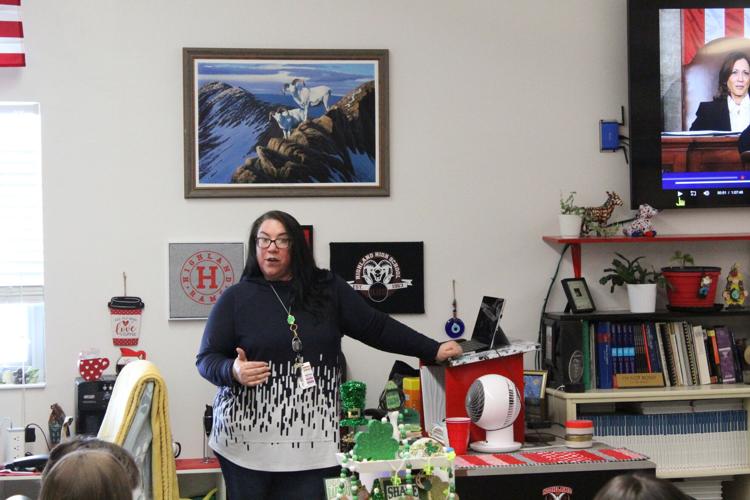
Several Highland teachers met with the Idaho State Journal this week to reflect on one of the most challenging years in their education careers.
A common theme of the teachers’ comments was that the perseverance of their students as the school year’s progressed has been inspirational.
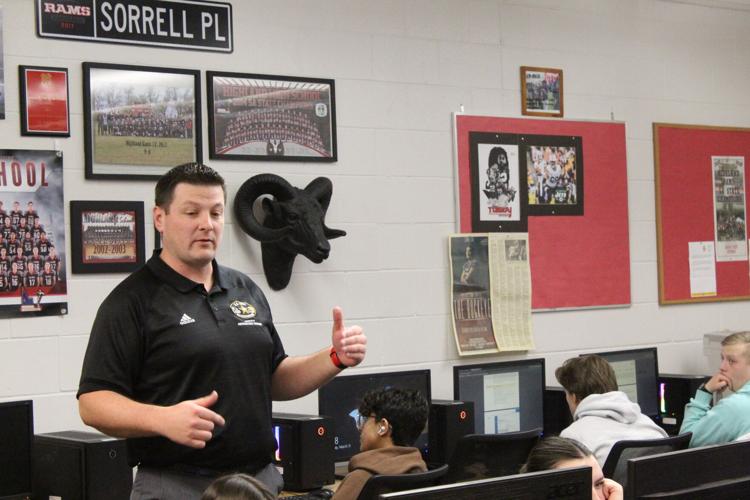
“From a teaching perspective I think that my kids have done a pretty good job of adjusting through everything,” said Nick Sorrell, who is Highland’s football coach and teaches a variety of subjects. “There are some chaotic moments, especially when you have kids come in from other locations. That gets a little bit disruptive and then trying to remember which kids have to leave early so that they can get to their class on time. It’s one of those things where it’s extra organization and management on top of everything else that we have going on.”
Sorrell then spoke about how those extra adjustments can take away from the learning experiences of the students along with a depleted sense of school spirit from the lack of assemblies and the fragmented nature of the students’ social interactions in the wake of the COVID-19 pandemic and then the fire.
“You try to hide it from the kids,” Sorell said. “But it takes a toll on you personally because there’s so many other things that are going on that you have to coordinate. You’re drained physically by the end of every day, week, whatever it might be, and then it’s a quick turnaround and you got to start all over again.”
Staci Orr, a Highland teacher who primarily focuses on biology and helps coach the cheer team, echoed many of Sorrells’ sentiments, adding that the monetary costs teachers take on can be significant. Orr spent over $1,000 of her own money trying to restore her classroom to what it once was, relaying that there wasn’t enough time to get everything she desired for her classes and she wanted her space to feel “normal” and for the kids she teaches to feel at home.
“I think it was kind of a coping mechanism for me to be able to recreate that,” Orr said. “But I feel like the part that has been so hard is that I’m not only dealing with my portion of our science inventory, but also all of the cheer inventory in which we lost every single item that had been in there for years. There were uniforms in that closet that I wore 30 years ago. There are many items that aren’t going to mean a whole lot to a lot of people but for these kids that are in these programs, whether it be sports or band or cheer or dance, that’s these kids’ identity and that has been really painful to watch them grapple with that.”
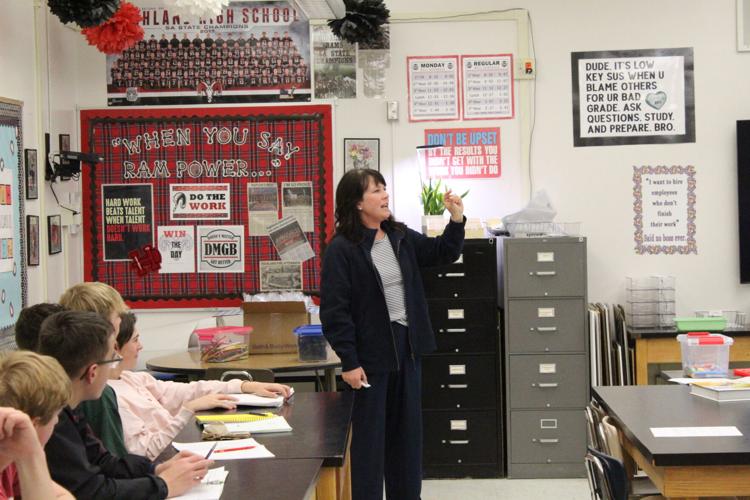
Pamela Fleischmann, who teaches government and the dual enrollment politics classes, considers this to be one of the most challenging years she has experienced as an educator.
“It’s honestly been one of the toughest years besides being a new teacher in those first four years,” Fleischmann said. “You have to grind every day when you’re in those first few years. I’m just thankful to hear when other teachers say they go home tired, because after 32 years, I’m going home asking myself, why am I so physically exhausted? We’re trying so hard to give them a space that looks normal when nothing up here is normal.”
With so many Highland students traveling to alternative locations, gyms and other schools because of Highland’s diminished capacity, there is a significant amount of time that the students are missing for socialization, additionally losing opportunities to talk with their teachers and grow that important bond.
“I don’t get that time to connect with them, so I can’t be their best teacher,” Fleischmann said. “Because when you develop that, you do that in those passing periods. That’s how I get to build those relationships with them. There are kids that are (slipping) through the cracks. It’s not intentional, it’s just because we’re all spread out. I think it has taken its toll. We’ve entered (into the year) as a staff with a really hopeful and positive feeling. We all dug deep and we’re going to make this the best we can. But I really am starting to see the toll by third trimester on us. We don’t sit and talk so I didn’t know other teachers are going home exhausted. But it’s a hard year and different kind of hard. It is a physical exhaustion not a mental one.”
The frenzied pace at which the teachers have been moving at since the beginning of the school year has been almost non-stop. Many Highland teachers like band instructor Andrew Wilson and physical education teacher Camille Long lost everything in the fiery inferno that engulfed the D Wing last April and have had to start from scratch.
Long’s office was right off the primary gym and was totally destroyed. Every piece of equipment was incinerated and the space she called her second home was transformed into nothing but a blackened ruin coated with ash. The students now must amble across the school to access the remaining physical education areas. Long also has had to limit the number of students in her physical education classes, taking opportunities away from students for elective credits since there is no room in the current space.
She said her biggest loss in the fire by far were the heartfelt notes and messages from prior students that she had kept in her office as keepsakes.
“All my graduation announcements from all the kids I’ve taught over the years, every letter a child wrote to me, every single sentimental thing I had as a teacher, I lost,” Long said. “I care about our equipment, we need that, but those (other) things hurt me the most as a teacher.... That’s 10 years’ worth of graduation announcements that I had and that makes me really sad. That’s 10 years’ worth of letters and cards from kids that I loved that I will never get back... I’ll always have those memories, but that was hard for me.”
The teachers said that despite their best efforts, they’re aware that Highland’s students are not having what could be defined as a normal high school experience.
“I think it’s brought some aspects of the students closer together,” Sorrell said. “But you don’t have those opportunities to go sit as a student body and look at all the great things that are going on. What I miss the most are those assemblies where you get to be a judge and judge the spirit of each section. Getting to experience ‘Highland Idol’ where you get to go and watch the talent that this school has. It hurts me because I like to do that and I like to see kids outside of the classroom. That’s where you get to know them and who they really are. You build that relationship with them. Once you get that relationship it makes the learning environment so much better. They get more out of it, you get more out of it, and you have a lot more fun teaching. I think that because we don’t have that release where we can go and enjoy our time outside of the classroom, maybe that’s where a lot of that exhaustion comes from.”
A common theme among Highland’s teachers is the increased stress they’ve had to contend with after the fire.
“Everyone’s job has increased,” Wilson said. “All the teachers, the administration, the office staff here at Highland and in the district, we all have so many additional responsibilities because of the fire on top of our teaching. We’re trying to do a good job teaching. We’re trying to provide that good experience for our students. We also have to take care of our inventories and provide the documentation for that, ordering supplies and almost every teacher has to deal with that. There’s over 100 people that have many more things to do and we signed up for and we’re happy to do it because we need to take care of our students and make sure that we can continue to provide those opportunities. But it’s pretty stressful trying to keep on top of everything and we don’t have any more hours in the day, but we have to do all these extra things. It’s stressful.”
There is also a sense among Highland’s educators that they feel many local residents falsely think life at Highland High School has returned to normal.
“When any tragedy hits, everybody’s sympathetic for a little while and they’re genuine,” Fleischmann said. “Then their life goes on and their normal resumes and they forget that our normal will not resume for maybe three or four years. We have students that are coming in this year that will never have a normal high school career, based on the projections of rebuild. Or we will have teachers who retire and will never see this building completed. We’re not going to be in a normal (state) immediately starting next year to begin with. I think that just a little bit of grace and a little bit of understanding that it’s not normal for us (is important). While we’re going to do our best, it’s taken its toll, the burnout is real and that worries me.”
But Highland’s teachers are also quick to point out the ways members of the community have stepped up to help the school in the fire’s aftermath.
“The community has helped us so much and in miraculous ways. A lot of what we’ve been able to do this year would not be possible without them,” Wilson said. “So a huge thank you for all the help and support we’ve gotten. But as (the other teachers) said, we still need help. We still need help and support and it’s not over. Every time a decision is pushed back, we know it’s probably three or four years from that decision date. It’s a long time coming. So please, please don’t forget us.”
Wilson continued, “There’s been several days when I come to class, happy to be there, but ask myself, ‘How can I do this today?’ But class starts, I see their smiling faces, and they’re working hard and doing awesome things. My attitude shifts immediately. Sometimes, I don’t know if I’m there as much for them as I should be, but they’re there for me. That helps me get through it. From minute one in the classroom my attitude changes and I get through the day, and it goes great. I’m really proud of these students because they really are being positive. They’re accomplishing wonderful, hard, amazing things. It motivates me when sometimes I can’t find the motivation myself.”

(0) comments
Welcome to the discussion.
Log In