

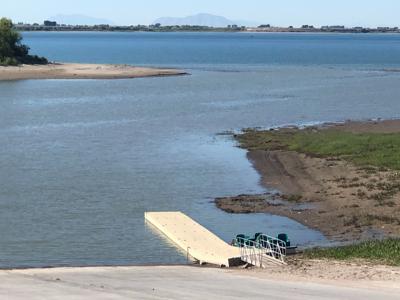
A wet spring and June’s precipitation levels have turned around Idaho’s bleak water outlook that was predicted earlier in 2022, but water experts say recent weather activity is pushing water reservoirs to their limits and that could have negative implications for 2023.
“It’s been really tight for everybody,” said Tony Olenichak, Water District #1 Master of Water at the Idaho Department of Water Resources’ eastern office. “It didn’t turn out to be terrible this year but it was a lot tighter than everybody would’ve liked.”
The Upper Snake reservoir system is 44 percent full and 115,000 acre-feet greater than this time last year, according to a July 29 Upper Snake River and reservoir operations update. Natural flow above Milner Dam has declined from conditions that were above 80 percent of normal in late June to now being approximately 62 percent of normal, which is near what water levels were at last year.
Brian Stevens, Snake River area office river and reservoir operations manager, said the American Falls reservoir system is projected to drop between 4 to 5 percent full by the end of September. He said that’s right around where the reservoir is expected to be because water officials typically draft American Falls as low as they can and store water in the Jackson Lake and Palisades reservoirs.
“This was looking like a really bad drought year and it hasn’t greatly improved, but it did improve in June with the precipitation we had,” Stevens said. “That extra precipitation doesn’t really change the pool level in American Falls but it does help Jackson and Palisades.”
Jackson Lake is expected to reach 24 percent capacity and Palisades at about 5 percent this fall, Stevens said. Before June, the outlook for those reservoirs indicated they would be nearly empty.
Olenichak said this year has been one of the driest in recent memory, with similar droughts occurring in the early 2000s. He said irrigators will drain the reservoir systems the furthest they have in the last 20 years, leaving less carryover for 2023 and more pressure to have a good snowpack and wet spring to fill the reservoir system.
“The problem with this year is not only getting through this year, but also freeing up a lot more empty reservoir space than we typically do to fill into next year so this year could cause an even bigger problem next year if we get a below average snowpack,” Olenichak said.
Recent historical data suggests a below average snowpack in 2023 could be likely. A recent draft of the Idaho Fish and Game state wildlife action plan says summer and winter temperatures are increasing more than spring and fall. Precipitation patterns are becoming more variable with more severe storms and while winter precipitation is increasing, less of it is coming from snow.
The October to May precipitation as snow percentage has been on a steady decline since the 1950s, according to the action plan draft. The percentage was close to 60 percent in the early 1950s and that figure now hovers around 45 percent in recent years.
“Idaho is experiencing a changing climate, which is felt as stressors in the form of (1) warming average temperatures, (2) prolonged and severe drought, (3) changing precipitation and snowpack trends, and (4) shifting seasonal water runoff patterns. Consequently, Idaho’s climate is expected to become overall warmer, drier in summer, wetter in winter, and more variable during the next 50 to 70 years,” the action plan draft says.

(0) comments
Welcome to the discussion.
Log In