



POCATELLO — The Idaho Human Rights Commission is investigating the Pocatello Marathon for allegedly discriminating against disabled participants, according to documents recently obtained by the Idaho State Journal.
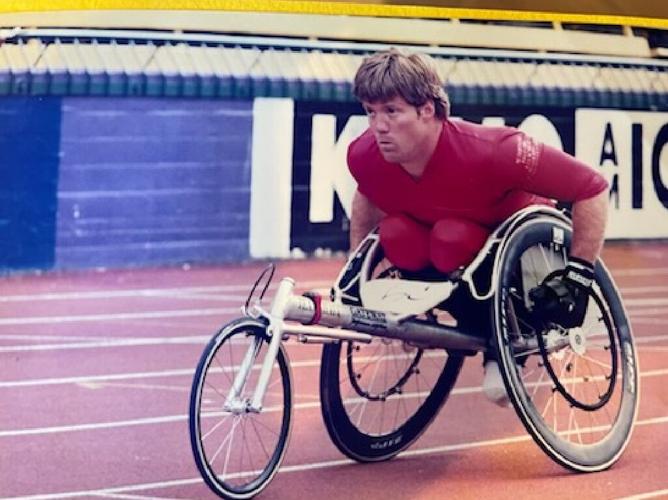
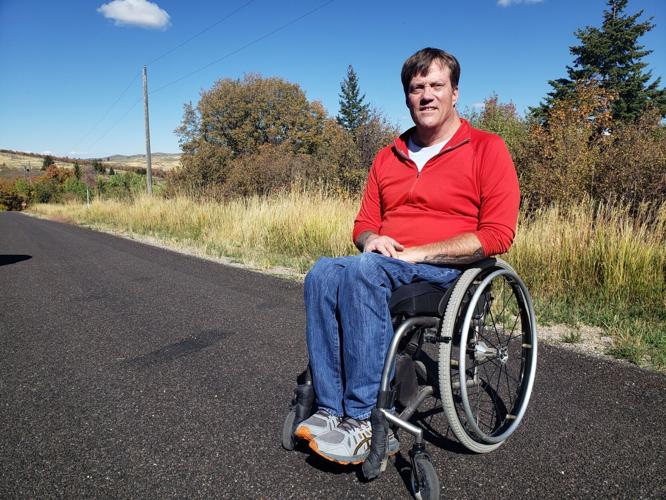
The investigation is the most recent development in the saga involving local disabled veteran Tom McCurdy and his fight to convince Pocatello Marathon officials to allow wheelchair and hand cycle users to participate in the full marathon race category.
A little less than one year ago, McCurdy, who suffered a spinal cord injury while serving in the U.S. Army in Germany in the mid-1980s, initiated what he described as a public pressure campaign a few weeks after the 2022 race, held annually on Labor Day Weekend, to see if Pocatello Marathon Director Mike Calley would reverse course on the decision to prohibit wheelchair users from participating in the full marathon.
Wheelchair users have always been able to participate in the 5-kilometer, 10-kilometer and half marathon race categories since the race was created in 2000 but have been barred from racing in the full marathon since 2018, McCurdy says, adding that he believes the prohibition is in violation of both the Idaho Human Rights Act and the Americans with Disabilities Act (ADA).
“I think closing the (full marathon) off to wheelchair/ hand cycle participants like they have done is illegal, against Title III of the ADA as well as against the Idaho Human Rights Act,” McCurdy said in a recent statement emailed to the Journal. “I am willing to pursue this debate and test my position.”
Calley disputes McCurdy’s assertion that the Pocatello Marathon is discriminating against disabled individuals and believes the marathon’s parent non-profit organization, the Pocatello Sports Committee, has attempted to make accommodations for disabled individuals that have been unsuccessful but enough to ensure that the race is not in violation of the ADA or the Idaho Human Rights Act.
When McCurdy couldn’t persuade Pocatello Marathon organizers to reverse course on their ban on wheelchair racers from competing in the full marathon, he brought the issue to DisAbility Rights Idaho and then filed a complaint with the Idaho Human Rights Commission (IHRC), the state’s top administrative law agency tasked with investigating discrimination claims.
DISABILITY RIGHTS IDAHO COMPLAINT
McCurdy rejuvenated his fight in January when he reached out to DisAbility Rights Idaho, or DRI, a private non-profit organization that aims to “educate, advocate, investigate and litigate to protect and advance the rights of Idahoans with disabilities.”
McCurdy explained his position to the group, which resulted in Kathryn Durrant, an attorney with DRI, sending a letter to Calley and the Pocatello Sports Committee explaining elements of the ADA and Idaho Human Rights Act and urging officials to make appropriate accommodations for wheelchair users with regards to the full marathon race category.
“DisAbility Rights Idaho asks that the Sports Committee be more inclusive and again add the wheelchair/hand cycle to the full marathon registration within 30 days and send a letter stating the (Pocatello Marathon race) will continue to be compliant with the ADA in the future,” the Jan. 25 letter from the DRI states.
Calley responded to the letter, explaining that the Pocatello Marathon allowed wheelchair users to participate in the full marathon category from 2000 through 2009 and during that time “there were numerous situations which burdened the logistics, resources and the safety of our volunteer course workers.” He stated that race setup begins at 4 a.m. on race day and involves dozens of volunteers working in the near darkness to deliver aid station materials and drop off volunteers to operate the stations.
“Given the early start, typically under darkness, and (race) profile, downhill over the first half of the marathon distance, wheelchairs and hand cycles have resulted in numerous close calls with the delivery and aid station volunteers due to the darkness, high speeds and little to no warning of approaching/passing wheelchairs and hand cycles,” Calley wrote in his response.
Calley stated in his letter that the Pocatello Marathon Committee considered “moving the start time for the marathon wheelchair and hand cycle divisions to later in the day, but this still creates issues if not more burden on our volunteers needed across the entire course.”
The communication between Calley and DRI would have culminated in a meeting to try and mediate the issue, Durrant told the Journal during a recent phone interview, however McCurdy explained to DRI that he intended to sue the Pocatello Marathon for discrimination, which was something that DRI would not get involved with.
IHRC COMPLAINT
McCurdy’s next step happened early last month when he reached out to the IHRC by sending a five-page letter detailing his concerns he had with the communication between Calley and DRI and again explaining why he thinks the prohibition of wheelchair users in the full marathon category is a violation of the ADA and Idaho Human Rights Act.

Tom McCurdy has filed a complaint with the Idaho Human Rights Commission alleging the Pocatello Marathon is discriminating against disabled individuals by prohibiting wheelchair and hand cycle users from participating in the full marathon race category.
On July 17, IHRC sent a letter to Calley detailing how the the prohibition of wheelchair users in the full marathon is unlawful, adding that, “If the Sports Committee is unwilling to comply with state and federal law, the (IHRC) is prepared to move forward with other enforcement actions as needed to ensure equal access to this public event for disabled individuals.”
“The ADA and Idaho Human Rights Act are clear: businesses and private organizations — including 501c3 non-profit organizations — must provide equal access to disabled individuals for events that are open to the general public,” the IHRC’s letter to Calley states. “Arguing that making legally required accommodations will result in challenges for the event coordinators and volunteers is unpersuasive; making accommodations almost always requires additional effort and resources to ensure equal access and this is both the spirit and letter of the law.”
The IHRC’s letter also states, “The Idaho Human Rights Commission is an administrative law enforcement agency of the state of Idaho that enforces the Idaho Human Rights Act. The Commission insists that the Pocatello Sports Committee reconsider its position on disallowing disabled individuals from participating in the full marathon in violation of the Idaho Human Rights Act and the Americans with Disabilities Act.”
The IHRC then sent Calley another letter on July 20 detailing five recommendations the Pocatello Sports Committee could implement to avoid further enforcement actions, which included allowing disabled individuals to participate in the full marathon, announcing the change on social media and the marathon’s website by the end of July and a request for both parties to enter into a conciliation agreement for both the 2023 race and future races to ensure continued access for disabled individuals.
On July 30, Calley sent an email response to IHRC essentially doubling down on the Sports Committee’s decision to eliminate the wheelchair and hand cycle full marathon race division.
“... The Pocatello Marathon is unique among almost all marathons in that the first 13 miles are downhill on a winding and curving road that allows non-motorized vehicles to travel at high speeds,” he wrote. “... There was a wheelchair/hand cycle division for the marathon until 2019 when the committee decided that it was simply too dangerous to allow this category to continue. The risk to the volunteers who were working in the early morning hours, pre-dawn, on a steep downhill course which allowed wheelchairs and hand cycles to travel at very high speeds created the risk of collision between volunteers and participants and consequent injury. The decision to eliminate this one category was made after many years of continuing problems.”
Calley also explained in his letter that after consulting with an attorney he doesn’t believe running events like the Pocatello Marathon are subject to the laws outlined in both the ADA and Idaho Human Rights Act.
“There is no provision in either law that addresses participation in running events,” Calley wrote. “Further, there is no evidence to indicate that either Congress or the Idaho State Legislature intended the acts to govern participation in running events.”
Calley continued, “This event is a little more than 30 days away. We are not changing categories now. The marathon and half marathon have hit entry caps. Further, the committee is not interested in entering into negotiations for a written agreement requiring a wheelchair/hand cycle category in the marathon as well as other conditions regarding the management of the Pocatello Marathon.”
This year’s Pocatello Marathon is set to be held on Saturday, Sept. 2.
CALLEY’S POSITION
During a recent phone interview with the Journal, Calley provided a bit more context about particular accommodations the Pocatello Sports Committee has attempted in the past and further justification for why these accommodations should be deemed as a reasonable attempt to address McCurdy’s claim of discrimination.
Calley explained the committee has attempted to incorporate safety lights and flags for wheelchair and hand cycle users to no avail.
“We have tried accommodations in the past,” Calley said. “... We tried to make them work. I tried to indicate to the Idaho Human Rights Commission that we have tried the accommodations they recommended but they are not listening to us. … It’s like (the IHRC) is forcing us to accommodate, period. It doesn’t matter what we’ve tried in the past.”
When asked what would happen if the IHRC were to pursue further enforcement actions if the full marathon category is not provided to disabled individuals, Calley said, “We’d get our Labor Day back. After 23 years, I’d get my Labor Day back. … If that’s the action they’re going to take, what do we do?”
Calley later added that if the IHRC does take further action, then “We’re going to have to meet as a committee, have some visits and think of any alternatives that we haven’t thought about yet. Is there something else that we could do?”
IHRC RESPONSE
The Journal reached out the IHRC for comment on what the next steps would be in this situation and was provided the following email statement from IHRC administrator Ben Earwicker:
“The Commission does not comment on pending investigations or other enforcement actions under any circumstance. The communications between myself, the commission, and the race coordinator were not meant to be made public, though sometimes parties to a case may share those with media outlets, as appears to be the case here.”
McCurdy provided all of the documents associated with the case to the Journal.
Earwicker’s statement continued, “Personally, I hope the race coordinators will return to the precedent of many past races and allow disabled participants in wheelchairs full access to the public events, including the full marathon, in compliance with the Idaho Human Rights Act and the Americans with Disabilities Act. I had hoped that our informal efforts and technical assistance would assist the Pocatello Sports Committee in achieving compliance with state and federal laws. Unfortunately, the committee has not reconsidered its position, and disabled participants have been barred from full participation in this important community event.”
MCCURDY’S POSITION
Ultimately, McCurdy is hopeful that his recent complaint to the IHRC does not spell the end of the Pocatello Marathon. He said he simply wants to be able to participate in an event that he has completed before with friends and other disabled individuals.
He takes issue with Calley’s assertion that there have been numerous close calls during the years he was allowed to participate, and instead is of the belief that the Pocatello Sports Committee is ill-equipped to deal with the added logistics that would come with making the event fully available to those with disabilities.
“The Pocatello Sports Committee has a pattern of behavior emerging that is the real reason for the banning of the wheelchair/hand cycle participants from the full marathon event,” he said, adding that he previously assisted in organizing the event’s wheelchair and hand cycle race divisions. “It gets banned every time I’m not around to help out. It falls to the race director to find another helper or take this responsibility and deal with it himself. He simply does not want to be responsible with the wheelchair/hand cycle logistics and support so he eliminates the category.”
McCurdy said he is of the belief that the IHRC will serve the Pocatello Sports Committee with an official complaint that demands the restoration of wheelchair access to the full marathon.
Whether or not the IHRC takes further action or the Pocatello Sports Committee reverses course and decides to provide full access to the marathon category for disabled individuals in the future remains to be seen.

(0) comments
Welcome to the discussion.
Log In