

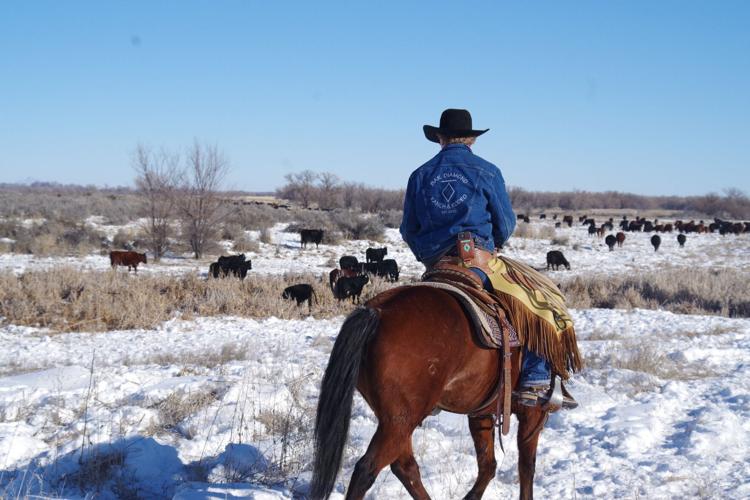
It’s a chilly winter day at the Sterling Wildlife Management Area near Aberdeen.
Dallin and Chase Carter and ranch-hand Cole Lewis mount their horses and gather 400 cattle to drive them to another grazing area in the Sterling WMA.
The ranchers round up the cattle in a matter of minutes and drive the cattle down a snowy road to the next pasture.
Chase Carter rides alongside the cattle in adjoining farm fields, making sure the cows stay on the road.
After traveling about a mile, the ranchers herd the cattle into the next pasture and the cows begin grazing.
Maria Pacioretty is the habitat biologist at Sterling WMA for the Idaho Department of Fish and Game.
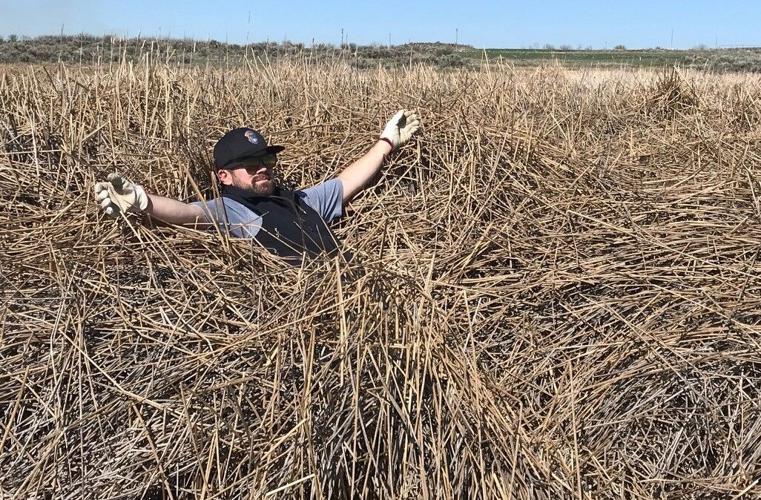
She’s been searching for answers on how to deal with a heavy overburden of dead cattails and bulrushes that have been accumulating in the Sterling WMA.
“We have a biomass problem, where we have acres and acres of decadent vegetation and accumulated growth on the ground,” Pacioretty says. “It’s really thick, almost impenetrable, so it makes it really difficult for wildlife and people who want to use the WMA whether it’s hunting or hiking.
“It’s almost suffocating in a sense.”
The Sterling WMA was established in 1968. It encompasses 4,100 acres on the west shore of American Falls Reservoir. One purpose of the WMA is to provide habitat for breeding and migrating waterfowl.
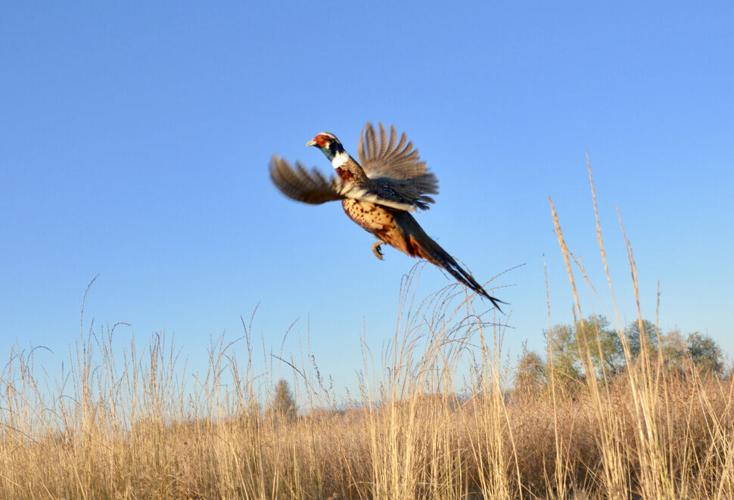
It’s also open to hunting and trapping. Sterling WMA provides habitat for upland game birds and pheasants; it’s the most popular place to go pheasant hunting in Southeast Idaho.
Pacioretty did a lot of research on how to fix the problem. The overload of vegetation reduces the overall productivity of the wetland.
“We started thinking about unique ways to attack this problem,” she says. “So we got in touch with some local ranchers and started working up a plan: How could we use cattle to maybe help break this up, open these areas back up so we can have some rejuvenation of the vegetation here?”
Cattle grazing occurs in the winter so it doesn’t conflict with other uses. The Carters are using herding and solar hot-wire fencing to focus the cattle on specific areas that need attention.
This method is called “targeted grazing” or “intensive grazing.”
“So what we’re trying to do is take a big group of cows, and graze a small area, for two, three, four days, and then move them,” says Dallin Carter, who, with his brother Chase, runs the family’s cattle business, based in Pingree.
“Ideally, we’d like to move them every three days. That’s our goal, and that seems to work really well.”
So far, they all like the results.
“They eat quite a bit,” Dallin Carter says. “What they don’t eat, they trample into the ground, they clear out a lot of that biomass and let next year’s growth come up through that. Sunlight can penetrate through, and things just grow better. So that’s a big deal.
“And we’re removing a lot of biomass too, so that’s a big deal. Things just grow better when you clear things out.”
Vegetation monitoring, pre- and post-winter grazing, documents the results.
“I think it’s working splendid,” Pacioretty says. “We’re really excited to see what we’re seeing in the last season, the response has been noticeable for us on the ground."
The Carters were pleased to discover that Idaho Fish and Game needed their help at the Sterling WMA. They typically try to lease pasture from local farmers in the winter.
“They grow hay or they grow corn and so we did that a couple of years," Dallin Carter says. "It’s always hard. It’s hard to find farmers that’ll let you. Logistics can be hard. How do we find water, electric fence, etc.”
Idaho Fish and Game has a service agreement with the Carter brothers to formalize the targeted grazing project. The Carters provide the livestock and manage the cattle in the WMA in return for being able to graze there. Targeted grazing allows IDFG to manage habitat in a cost-effective way, where few other tools are available.
“It’s really nice for us to have excess pasture that we can use," Dallin Carter says.
If the Carters had to feed their cattle hay during the winter on the home ranch, it would be much more expensive.
“The big issue is bailed hay; there’s just no way to get that cheap,” Dallin Carter says. “It costs $200 to $250 a ton right now, depending on the quality. It’s almost double what it was last year.”
Under the agreement with Idaho Fish and Game, the Carters graze their cattle in the Sterling WMA for about a month in January or February.
“You get a lot of impact quickly, then this area won’t see any more cows for 360 days, right?” Dallin Carter says. “So there’s still lots of habitat for wildlife and birds in our grazing system.”
Pacioretty envisions it will take years of intensive management, including a variety of management tools, to increase the productivity of the Sterling WMA wetlands. She estimates about one-fourth of the WMA would benefit from this type of grazing program.
“It’s going to take a while. It’s going to be years,” she says.
She has been in touch with refuge managers at the Seedskadee National Wildlife Refuge in Wyoming, who also are using targeted grazing to improve wildlife habitat.
“Our tool box can’t just be small. We have to have all of these different ways to manage habitat,” Pacioretty says. “It’s a big job. We have to figure out different ways to do it.”
Dallin Carter says it’s been great to use targeted grazing techniques to benefit wetland plants and wildlife. He went to a University of Idaho grazing school to learn about intensive grazing.
“The reality is that most places, well-managed grazing is a great environmental tool,” he says.
“This has been a really great partnership,” Pacioretty says. “It just kind of shows that reaching out to someone you don’t even know and what it can develop into. It’s turned into such a win for everyone involved. Our wildlife are really coming out ahead, our users are coming out ahead with the habitat we’re doing, and the ranching community is really benefitting, so we’re really proud of this.”
Steve Stuebner is the writer and producer of Life on the Range, a public education project sponsored by the Idaho Rangeland Resources Commission. More at idrange.org/life-on-the-range

(0) comments
Welcome to the discussion.
Log In