

It’s safe to assume a trip to New York City, which at a point was one of the nation’s leading hot spots for the novel coronavirus, doesn’t top most people’s list of desirable activities for 2020.
But for Idaho State University College of Business professor Jeff Streets, a trip to New York City last month was not just desirable, but it was also lifesaving as he underwent open heart surgery at one of the best cardiology hospitals in the country.
“It was a crazy and challenging experience,” Streets said. “Honestly, it’s miraculous that I was able to board my flight, get to the place I was staying at in New York City and undergo surgery without there being any problems at all.”
Street, a 59-year-old grandfather, spent the majority of his life not knowing he was born with a congenital heart defect — a bicuspid aortic valve. Street’s aortic valve consisted of only two leaflets instead of the typical three, which impacts the way blood flows through the heart.
“I did not discover the heart valve defect until I was 37,” Street said. “I had surgery to replace that valve, but that was 23 year ago.”
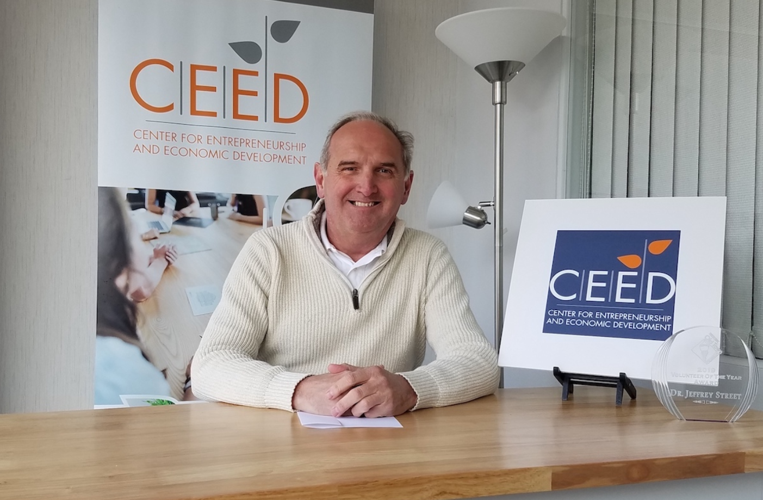
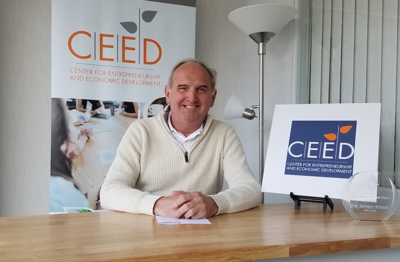
Street, who’s also the director of The Center for Entrepreneurship and Economic Development, or CEED, noticed during the holiday break this past winter that he wasn’t feeling normal and was somewhat lethargic and out of energy. He called Portneuf Medical Center and scheduled an appointment with a heart specialist for March.
And then COVID-19 infections struck the Gem State.
Because of the virus, Street had to wait about a month to see his local doctors in Pocatello. During that appointment, Street underwent an echo-cardiogram and was confronted with quite troubling news, he said.
“The doctor looked at the exam results and immediately scheduled me for a heart cauterization,” Street said. “He discovered that I had an aneurysm on my aorta. The next day I got a call from Dr. Jacob DeLaRosa at Portneuf, who said he might be able to do the surgery but something like this really requires a full team that he didn’t have.”
DeLaRosa reached out to a few of his medical counterparts across the country and recommended Street see a specialist at Mount Sinai Hospital in New York, New York.

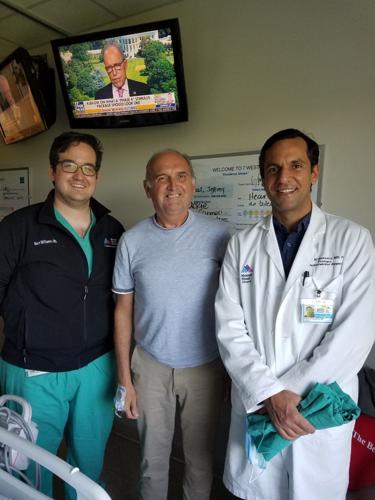
Jeff Street, middle, stands between the surgeons at Mount Sinai Hospital, Dr. Elbert Williams, left; and Dr. Ismail El-Hamamsy, right, who performed life-saving heart surgery on Street in New York last month.
“I had a day or so to think about when I got a call directly Dr. Ismail El-Hamamsy, the surgeon in New York,” Street said. “Out of the blue he called and told me he had completed tons of these surgeries and that this was his specialty. He said he could fix me 100 percent and after that I was convinced Mount Sinai was where I needed to go.”
While Street was ready for New York, it was nowhere near ready for him. By the end of March, one in seven New York adults had COVID-19, according to a May study sponsored by the New York State Department of Health. At the time, Street knew his heart surgery was essential, but he had no idea he was a ticking time bomb on the verge of his heart exploding.
It wasn’t until early June that Street made his way to New York, arriving at a time where the city was in the first stage of its plan to reopen, which meant hotels were closed and most transportation services had suspended or significantly reduced their operations.
Mount Sinai Hospital staff helped Street secure an Airbnb near Central Park about a 10-minute walk from the hospital, Street said. They also helped arrange travel to and from the airport.
On June 9, Street underwent an operation to replace the part of the aorta that had the aneurysm and replace the faulty valve.
Street was on the operating table when surgeons discovered his heart had already dissected. This type of tear in Street’s heart can lead to severe internal bleeding, organ damage or even death.
“Absolutely it was a life-saving surgery,” Street said. “I did not know that my aorta already had a small leak on it. The only thing holding it together was the scar tissue from my previous surgery 23 years ago.”
The surgeons repaired Street’s heart and his recovery has been next to perfect, he said. Aside from the reason he was in New York in the first place, Street says the two weeks he spent in quarantine in the Big Apple were wonderful.
“I got to walk in Central Park every day, had everything I needed within a couple minutes of walking distance and because everyone was staying at home it was as quiet as you could imagine,” Street said. “It was probably the cleanest it has ever been and was very safe with all the people inside. It was a great place to recover.”
Street has been walking every day and is looking forward to when he can get back on his bicycle. Between the health care professionals on opposite sides of the country and the colleagues who brought him food and watched his dog during his absence, Street is more than thankful for those who lended a helping hand his way.

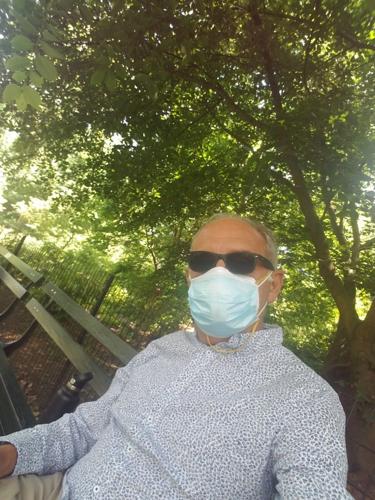
Idaho State University College of Business professor Jeff Street sitting on a park bench in Central Park in New York after undergoing life-saving heart surgery last month.
“You know it’s cliche, but that expression that it really does take a village has never meant so much to me.” Street said. “Between the people in small town USA and the experts in New York I was definitely taken care of.”
In spite of the COVID-19 pandemic, Street is excited about the upcoming fall semester, which has also left him feeling a little introspective about last year’s instruction, considering he wasn’t operating at 100 percent.
“I have more energy and my blood flow is much better,” Street said. “I’ve been joking about it, but I am not sure the blood flow to my brain was all that great next year, so I might owe a refund to the student’s I taught last academic year. I’m not sure what was coming out of my mouth back then but I sure feel a lot better now.”

(0) comments
Welcome to the discussion.
Log In