



The verdict is in.
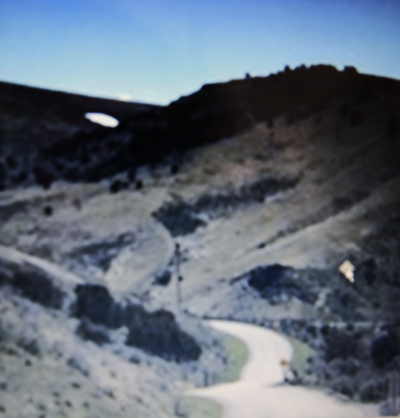
The Bureau of Land Management has completed its assessment of Burns Industries’ Plan of Operation to mine limestone in Wolverine Canyon and transport it to the company’s concrete batch plant in Idaho Falls — a distance of about 25 miles with about half of the route on Wolverine Road and half on Highway 91, going through Firth and Shelley.
Burns Industries owns 262 acres just north of Wolverine Road and east of the Rattlesnake Landfill. The company wants to mine limestone in 20-acre phases over the next 100 years. After each phase of the project, called Burnstone Quarry, Burns will reclaim the land as it moves to the next location. There will also be 51 acres of permanent facilities, roads, storage, processing areas, loading areas and laydown yards. Those areas will also be reclaimed eventually, in 2124.
Because the BLM administers 78 percent of the Burnstone Quarry acres, the agency’s permission to proceed is crucial. The remaining land is split between a private surface owner, a federal mineral estate, and private land. Burns has a permanent easement agreement with the private landowner, though not with the private surface owner. What Burns does own are the mining claims for the land.
It has been two years since Burns Industries filed for permission to proceed on BLM land. An Environmental Assessment was started and went through extensive public comment periods before being refined and completed late last fall. Over the winter Pocatello BLM Field Manager Blaine Newman reviewed the Environmental Assessment; assessed federal, state, tribal and local laws concerning protecting the environment; and considered over 200 public comments. He determined three key points and issued the BLM’s Finding of No Significant Impact report, known as FONSI, and the agency’s formal Decision Record.
In the FONSI, Newman declared the project “will not significantly impact the quality of the human environment.” Secondly, he also declared that an Environmental Impact Statement is not needed. An EIS is a deeper assessment of conditions and is generally used when there are complicated conditions or for larger operations.
Part of the FONSI assessment was considering the project’s impacts over time — temporary effects that involve the first two years of construction and development, short-term effects covering the first 20 years of operations, long-term effects for the planned 100 years of mining, and permanent effects that will remain after all reclamations are completed.
By using this time-based balancing of effects, BLM could agree that there would be short- and long-term impacts to wildlife due to loss of habitat and displacement. The BLM acknowledged that when each phase of 20-acres is restored, the wildlife habitat will be different. However, the BLM balanced that negative with the potential positive that the current invasive cheatgrass will be removed during mining and then the land will be reseeded with native vegetation. With an ongoing weed control protocol to allow the native grasses to flourish, the mining could permanently improve the wildlife habitat, the BLM determined.
Using this procedure of balancing effects, the FONSI assessed concerns of air quality; economic and social values; public safety and transportation; recreational use; soil, minerals and geologic resources; vegetation; visual resources; water quality and quantity; and wildlife.
Only two of these concerns involved further permits beyond BLM’s decision.
The Army Corps of Engineers expressed concerns about Whiskey Creek and will require monitoring of any effects on the stream bed and adjacent wetlands.
The FONSI also acknowledged that Burns Industries will need a Conditional Use Permit from Bingham County to address public safety issues with traffic on Wolverine Road and Highway 91.
In the Decision Record, Newman declared the third key point — that the mining causes “no unnecessary or undue degradation to the public lands” and therefore will be allowed.
Since Burns’ project passed the FONSI criteria, complies with all federal laws and land policies, and meets BLM’s regulations, Newman couldn’t really deny the application. His decision can be appealed within 30 days.
Newman also required that all applicable Environmental Protection Measures be incorporated in Burns’ Plan of Operation and he added seven specific BLM conditions. He is requiring Burns Industries to monitor erosion and sediment control structures and the condition of the reclaimed areas.
To ensure compliance, the BLM will inspect Burns’ operations twice a year and require copies of any Army Corps and Idaho Department of Environmental Quality reports.
Other BLM conditions include requiring an updated plan of operation with each new phase, clearing land outside of the bird nesting season and conforming to DEQ air and water standards.
All BLM documents regarding the project can be found at https://eplanning.blm.gov/eplanning-ui/project/2023532/510.
Idaho Conservation League Central Idaho Director Josh Johnson responded to the BLM’s decision with this statement: “We are still in the early stages of reviewing the BLM’s Final EA and Decision Notice, but what is immediately apparent is how many people in the local community are concerned about this project. Virtually all of the hundreds of public comments the BLM received on this project express some form of opposition or concern and highlight key issues such as impacts to wildlife, public safety and transportation, and air quality. We strongly believe that a project of this scale and public concern warrants further review under an Environmental Impact Statement.”
The Idaho Conservation League has not yet determined if it will file an appeal.
With the BLM’s decision, the way is now cleared for Burns Industries to apply to Bingham County for a Conditional Use Permit. The main issue is the sufficiency and condition of Wolverine Road and traffic and pedestrian safety on Highway 91 through Shelley and Firth.
Wolverine Road is a canyon road that occasionally doubles as a cattle road when herds are being moved. It isn’t designed for the weight and size of dump trucks filled with limestone. For safety it would need to be widened, something that would cost the county about $11 million and would take years to acquire easements, design and construct.
Burnstone Quarry, when at full production, will generate heavy dump truck traffic on Wolverine Road. Dump trucks will make 66 roundtrips to Burnstone Quarry on Wolverine Road every day. If they haul during business hours that means a dump truck will pass every 4 minutes. Even if they travel around the clock, a truck will pass every 11 minutes. Currently Wolverine Road is not built to withstand that level of heavy traffic.
BLM and Burns Industries’ solution to the traffic is to require a driver safety policy and reduce the trucks’ speed. Will the Idaho Transportation Department allow a slower speed on the highway? Usually such deviations cause more accidents because motorists get impatient and try to pass. What about traffic and pedestrians crossing the highway in Firth and Shelley with a frequent stream of dump trucks?
The planning and zoning board’s challenge will be to see if these safety concerns can be mitigated through conditions in a way the county and taxpayers can afford. Development fees are sometimes required to help with roads and bridges around new subdivisions. Or, could they require Burns Industries to build its own more direct road and not use Wolverine Road or bypass Shelley or Firth?
Controversial planning and zoning meetings have sometimes lasted until 2 a.m. The yet-to-be scheduled meeting concerning Burns’ project promises to be a long one.


(0) comments
Welcome to the discussion.
Log In