



Breanna Hansen doubts she’d be alive today if she’d been forced to go through puberty as Benjamin — a little boy who dressed in girls’ clothing, loved the color pink and played with Barbie dolls.
“I remember going to the hairdresser and telling them, ‘I want luscious, curly hair,’” Breanna recalled of a past life.

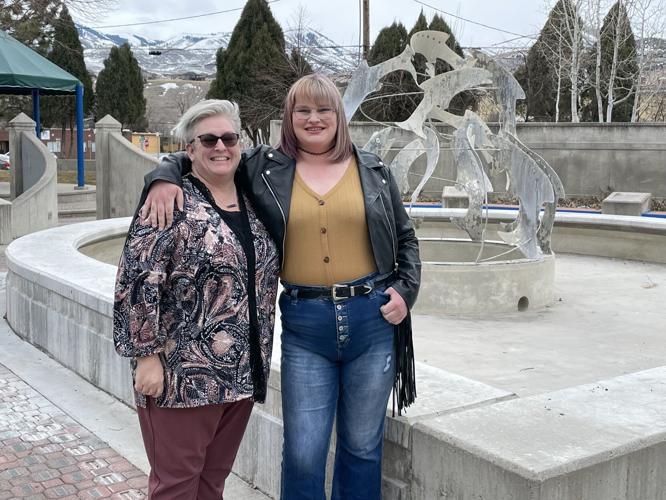
Mary Anne McGrory, left, and her daughter Breanna Hansen pose at Simplot Square in Pocatello. McGrory is a co-founder of Pocatello Trans Affirming Group of which Breanna is a member.
Breanna, of Chubbuck, is now a successful 22-year-old woman working in health care, and she’s retired her birth name.
She explained her mind and body are in alignment thanks largely to the medication she started taking at age 12 to prevent the onset of masculine characteristics, followed later by hormone therapy to stimulate feminine features.
But she and other members of a local support organization for transgender people, called Trans Affirming Group, fear other transgender youth in Idaho could soon be denied the same opportunity. A bill that passed the Idaho House on Tuesday seeks to make it a felony for Idaho medical professionals to conduct gender-affirmation surgery or to prescribe hormones or puberty-blocking medication to anyone under age 18.
The bill passed 55-13, with no Democratic support.
“I think the bill is absolutely treacherous,” Breanna said. “It’s never too late or too early to become who you are.”
She believes the consequences of the state intervening in what she considers a personal and family medical decision would be devastating.
“It’s a matter of life and death for trans people,” Breanna said. “I would have killed myself.”
The bill was introduced by Rep. Bruce Skaug, R-Nampa.
“This bill is about protecting children, which is a legitimate state interest,” Skaug said, according to the Associated Press. “We need to stop sterilizing and mutilating children under the age of 18.”
Rep. Marco Erickson, R-Idaho Falls, is among the cosponsors of the legislation, H675. Erickson operates a teen center which he said provides a safe place for youth, including transgender children.
“We don’t have anything against them. We always have support for them as individuals,” Erickson said.
Erickson is concerned, however, about allowing a child to make a long-term medical decision.
“I’ve seen situations where a young person would want to switch. ... Within a year, that wasn’t the right choice for them,” Erickson said. “Had they gone through with a surgery or something like that it could have been detrimental to an individual.”
As a lawmaker, Erickson said he understands there are clearly two sides to the issue, but he said he wants to err on the side of protecting families.
“I think at 12 years old you do not have higher cognitive functioning to do that without some adult coaching you along. I think you’re too young to make that kind of life-altering decision,” Erickson said. “I get that there are adverse affects on either side. The way I see this, I just focus on waiting until you’re of a mental age to make these kinds of decisions.”
Help for a vulnerable population
Threats of violence by strangers are all too common among members of the transgender community.
Breanna recalled a scary moment at a local shopping center, back when she was Benjamin. A man saw the little boy in girls’ clothing and followed him throughout the store, threatening to tie the child to the back of his car and drag him around town.
In high school, Breanna was given a key to the special-needs bathroom. Trouble arose when she stopped using it.
“As a trans woman I was really embarrassed; I used the women’s restroom,” Breanna said. “I had a kid who handed me a razor blade and told me to do everyone a favor and kill myself.”
Dealing with torment and self loathing can be too much for a transgender youth to handle. According to a 2021 national survey by the Trevor Project, 42 percent of LGBTQ youth and 52 percent of transgender youth seriously considered suicide within the preceding year.
Breanna’s mother, Mary Anne McGrory, who teaches at Alameda Middle School, helped organize Pocatello Trans Affirming Group, also known as TAG, about three years ago to provide positive role models and support for transitioning youth.
Her cofounders in the organization were Russell Fagnant, a registered nurse and medical case manager with Health West, and Dr. Neil Ragan, a family physician at Health West who specializes in transgender care.
McGrory said she has encountered many transgender youth as a teacher, and each local high school has a Gender Sexuality Alliance that raises awareness about TAG. She also shares information about TAG with area social workers and counselors, and Ragan invites his transgender patients.
TAG meetings have been hosted via Zoom amid the COVID-19 pandemic. Starting with its next monthly meeting on March 21, TAG will resume meeting in person at Idaho State University Family Medicine Residency, 465 Memorial Drive.
“I think the meetings have helped, especially the young people who are coming,” McGrory said. “They are seeing adult trans people who are very successful in their lives, to know their life can be just like everyone else’s.”
McGrory said a past in-person meeting drew 55 transgender participants and their friends and family.
Fagnant added, “There is a very real condition called gender dysphoria. Can you imagine waking up every morning hating who looks back at you from the mirror?”
Ragan has about 200 transgender patients who come to him from throughout the region. As a gay man, he felt a responsibility to support the transgender population, knowing they’re stigmatized and often marginalized. He’s concerned about transgender legislation in other states, and he testified a couple of years ago against Idaho legislation similar to the pending bill.
Ragan believes the politicians backing the Idaho bill are well intentioned but misguided.
“My position as a physician is I wish politicians would stay out of it and let parents and teachers and people work their own way through it,” Ragan said.
Ragan explained it’s not common for transgender youth to have gender reassignment surgery. However, he explained there’s a narrow window of time to administer puberty-blocking medication.
“With a transgender girl who was born male, once you’re 18, estrogen will only get you so far. It will do some fat redistribution, some skin softening and some thinning of body hair. But you don’t change the shape of the body. You don’t take away the Adam’s apple. It won’t elevate the voice,” Ragan said.
Ragan worries the bill in the Idaho Legislature would “put the skids on care” for transgender youth and elevate their risk of suicide.
“That scares the pants off of us,” he said.
Transitioning later in life
Jess Attebery was 17 when she learned about transgender people, and it wasn’t until a few years later that she realized she, herself, was a woman in a male body.
“When I was born, the doctors and everybody in my family went, ‘It’s a boy.’ In my mid-20s I realized I was not a boy,” Jess said.

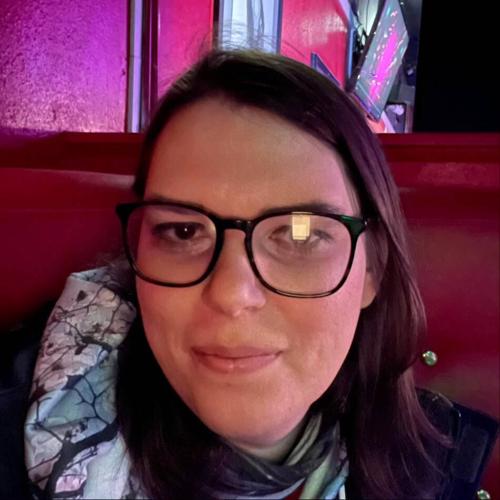
Jess Attebery, 30, was in her mid-20s when she started taking medication to bring her body in alignment with her gender.
Jess, now 30, started taking hormones at age 27. By that time, however, she’d already developed masculine features. Ideally, she would have started her transition at age 15, when she could have effected the greatest change. At some point, Jess plans to have gender-affirmation surgery.
“There is that sense — I try not to look back; we are who we are — but in a kind of wishful thinking scenario I would love to go back and tell my younger self, ‘Here’s the deal. You are transgender and you might want to consider starting on hormones that will stop the process of your body masculinizing itself,” Jess said.
Jess, whose job entails providing closed captioning on phone calls for people who are hard of hearing, is the founder of Queer Club Idaho. She started the organization a couple of months ago as a replacement for Lambda QI, which promoted sexual health among the LGBTQIA plus population and folded in late 2021. Her organization has about 50 members and provides an environment for LGBTQIA plus people to make friends and be their authentic selves, free of judgment.
Queer Club Idaho hosts a regular coffee night at College Market from 6-8 p.m. every Tuesday.
“We’re hoping to add more events soon like movie nights, game nights and maybe a queer book club,” Jess said.
Jess went through a phase before learning she was transgender during which she thought she might be an effeminate, gay man.
“That’s a pretty common confusion people have,” Jess said. “Sexual orientation is who you date and who you love. Gender identity is who you are.”
Jess explained that living with such a big lie is bad for one’s psyche. She’s found a place in which she can be her authentic self and help guide younger people making their transition in the TAG group. Her mental wellbeing is also vastly improved since taking action to align her mind and body.
“I feel so much better than I did. I did feel sort of dead inside and suicidal for a time,” Jess said. “I would say my life has improved more than I could put into words.”
Regarding the pending state legislation, Jess sees nothing but downside. If the state wants to take some action to help transgender people, Jess recommends that Idaho simplify the process of legally changing a name.
“We’re just people who want to live just like anyone else,” Jess said. “We want to live our lives in a way that seems to suit us best.”
Jumping on the bandwagon
In Texas, the Legislature failed last year to approve legislation that would have made it a felony to provide minors with gender-affirming care, including puberty blockers and hormone therapy. But the state’s attorney general recently released an opinion that such care constitutes child abuse under existing state law.
Texas Gov. Greg Abbott has asked the public to report any apparent instances of minors receiving gender-affirming care.
During the first week of 2022 alone, laws limiting the rights of transgender youth were introduced in Arizona, Alabama, Indiana, Kentucky, Oklahoma, New Hampshire and South Dakota, according to ABC News.
“I feel like Idaho is jumping on this bandwagon to single out trans youth and put them in a spot that could be harmful,” said Jodi Dunn, 38, who is a member of the Pocatello-based TAG group.

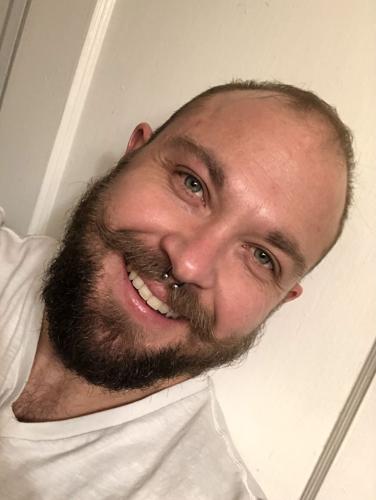
Jodi Dunn, 38, said there was little awareness about transgender issues when he was younger.
For the past nine years, Jodi, who was born a girl and retained his birth name, has been taking hormone therapy to make his body more masculine.
Jodi was a tomboy growing up in Pocatello in the 1990s. There was little awareness about transgender issues at the time, but Jodi acknowledged, “I was aware of me wanting to live my life differently than what other people portrayed me as.”
He was a standout girls’ soccer and softball athlete at Pocatello High School, and after graduating in 2002, he participated in collegiate sports at an Oregon community college.
It wasn’t until his sophomore year in college that he finally met an openly transgender person. Jodi was fascinated and thoroughly questioned the person — a woman who was born male. He also started reading a blog on transgender issues.
“It gave me the language to articulate how I felt inside,” Jodi said.
In February of 2005, he enlisted in the U.S. Army and started basic training under the “Don’t Ask, Don’t Tell” policy, which required that he keep his sexuality a secret. The policy was repealed in 2011, about a month after he got out of the military.
“I felt like I couldn’t connect with people in an authentic way because I was hiding something from them,” Jodi said.
Jodi feels fortunate that his mother, his big sister and his younger brother have all been extremely supportive of his transition. Many youth making the transition who don’t have family support end up homeless and suicidal, he said. He’s found society is generally more accepting of trans-masculine people who are born girls than trans-feminine people making the transition from boy to girl or man to woman.
“We live in a very patriarchal world. I think that’s part of it,” Jodi said.
He also believes the Pocatello community has become far more accepting of LGBTQ youth within the past decade.
Jodi earned a bachelor’s degree in 2013 and a master’s degree in 2016, both in sociology, from Idaho State University. He currently works for Starbucks and teaches fitness classes at Gold’s Gym.
“I wasn’t unhappy as a kid, but I’m a lot happier now,” Jodi said. “I’m able to be more comfortable with people, more vulnerable and have better relationships with people.
“I grew up as a little girl and transitioning as a man gives me a unique perspective not all men have in common.”

(0) comments
Welcome to the discussion.
Log In