

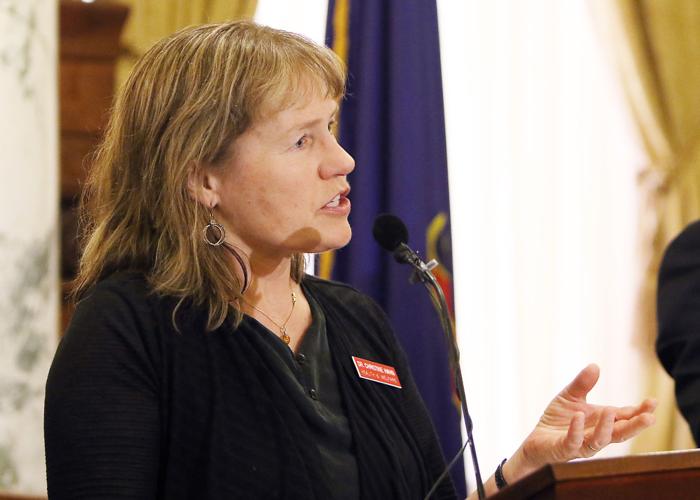
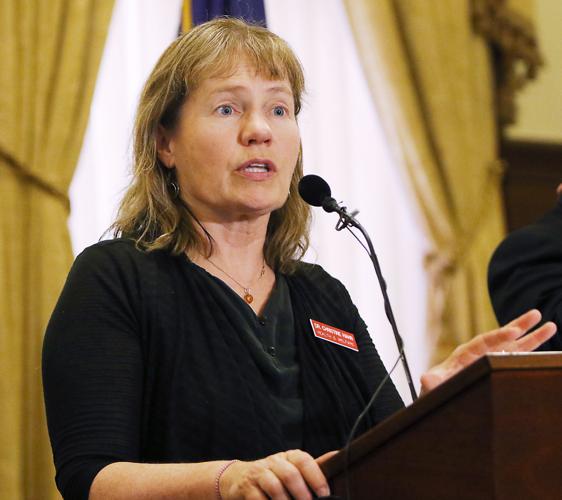
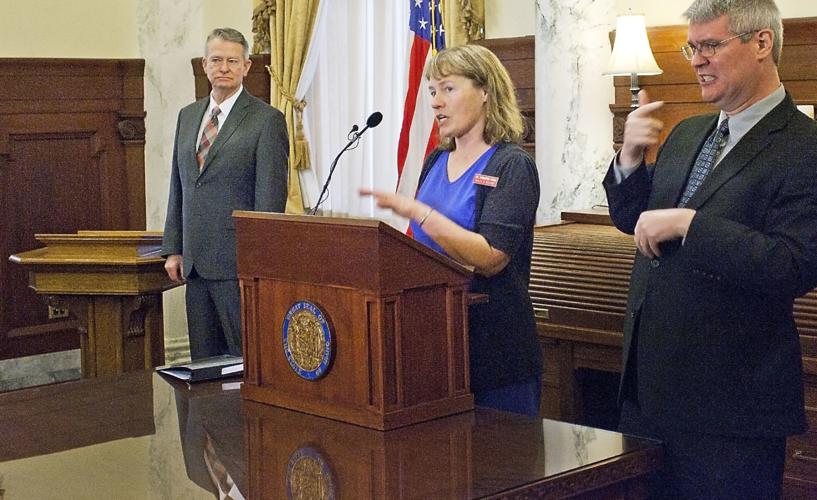
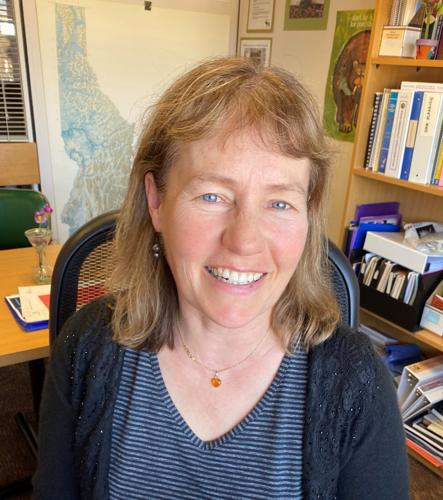


BOISE — Since becoming the Idaho state epidemiologist in 1997, Dr. Christine Hahn has seen a number of public health scares that have kept her pretty busy.
There was the anthrax scare that came in the wake of the 9/11 attacks. Her office was getting calls nearly every day from people who discovered white powder in their mail or from cereal boxes. Concern in 2003 that Iraq’s President Saddam Hussein had gotten his hands on the smallpox virus, and the West Nile virus coming to Idaho in 2006, were other times that have stuck out in Hahn’s mind.
Through all these scares, Hahn knew that eventually one could come along that would hit as hard as the current COVID-19 outbreak.
“I keep thinking of it as embers falling,” said Hahn. “You think of it as a fire just because we’re so used to fires here in Idaho. I think of the dry grasses and pine needles with embers falling on it all the time. One ember drops and it fizzles out, another one drops. But you know one of those embers is going to take, and there’s going to be a fire. And that’s what it’s kind of like. Trillions and trillions of viruses are circling around the world in sewage and water and animals and human. They’re moving all the time, and if you think of it that way, it’s inevitable that these things will occur. It’s a matter of when.”
Hahn has certainly found herself more busy and more in the spotlight in the past month, since the first confirmed case of COVID-19 was detected in Idaho. As of Friday evening, the state was reporting 1,396 cases of the virus with 25 deaths.
Hahn is spending long days trying to learn as much about the virus as she can from reading medical journals and relaying that information to colleagues in the Idaho Department of Health and Welfare, Gov. Brad Little and the public. Additionally, she’s working on how to improve testing in Idaho, improve data that the state is releasing and helping to plan ahead, including giving advice to Little as it pertains to extending the stay-home order, set to expire Wednesday.
“It feels like there is no normal day, of course,” Hahn said. “…I always feel like I have a list of things I need to get to, things I’ve written down the day before that I really need to get to that day.”
A Michigan native, Hahn first came to Idaho after finishing infectious disease training at Duke University in 1995 on a two-year training program with the Centers of Disease Control and Prevention, called the Epidemic Intelligence Service. Unsure of which direction to go with her career, she had three professors at Duke who had trained through the CDC. They all suggested it for her.
Participants in the EIS, a highly competitive post-graduate fellowship, can either study at the CDC base in Atlanta, or work for state departments. Having never been out west, she applied for Idaho, Utah and Colorado. She was assigned to Idaho.
The state was so impressed with her work, that while she was still in the program she was hired as deputy state epidemiologist.
“The CDC and the state of Idaho worked it out,” Hahn said. “I could finish my training experience, but I was actually hired here in 1996.”
The next year, after finishing the training, Idaho’s state epidemiologist left to take a job in New Hampshire. Hahn was promoted and has been in that role since.
That same year, the H5N1 avian influenza virus appeared in Hong Kong. The infection was confirmed in 18 patients with six dying. It resulted in the slaughter of 1.5 million chickens in Hong Kong. It created a stir in the public health community, Hahn said.
It was the first time, she said, that she realized public health officials have been warning about another pandemic ever since the 1918 influenza outbreak.
She said the COVID-19 virus first drew her attention in December, as cases were popping up in Asia. Like SARS and MERS before it, Hahn knew the virus was a potential threat, even though SARS and MERS never had a solid foothold. The first confirmed case of COVID-19 in the United States occurred in January in Washington state.
“It seemed like they got that under control; there didn’t seem to be any spread from that patient,” Hahn said. “But then cases started popping up, not only in Washington, but in California. I think that’s when we realized across this country, kind of like my embers analogy, maybe that first ember — the guy who showed up from Washington — maybe they got that under control. But then, nope, there’s someone else that traveled into the country. Then slowly, but surely, it started taking off.”
The first confirmed case of COVID-19 in Idaho was announced March 13. Twelve days later, Little issued a statewide stay-home order. Hahn applauded the governor’s leadership and willingness to listen to public health officials in the decision to keep Idahoans safe.
On April 2, a little more than a week after the order was issued, Idaho saw its peak of 222 new confirmed cases in one day. That dropped to as low as 22 new cases on Wednesday, but that rose back up to 121 confirmed and 13 probable cases Thursday.
“We’re hopeful that the orders are having an impact,” Hahn said. “We’ll know a lot more in a week from now. We always said it’s going to take a few weeks because we have two weeks of incubation, we know, for the virus. There were people who were already infected, so we had 14 days of people coming in that we knew we couldn’t prevent because they were already infected. Now, we’re starting at two weeks, but there’s a delay in reporting. … So remembering those kind of lags, we figured it would take about three weeks to get a full feeling on how effective this was.”

(0) comments
Welcome to the discussion.
Log In