

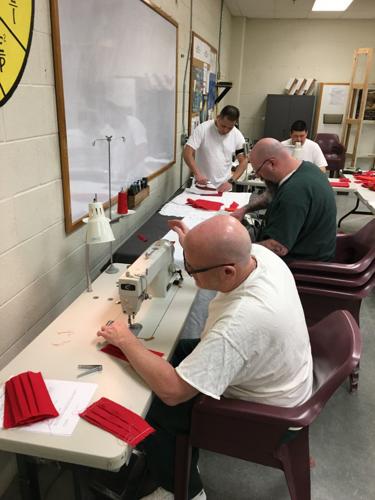
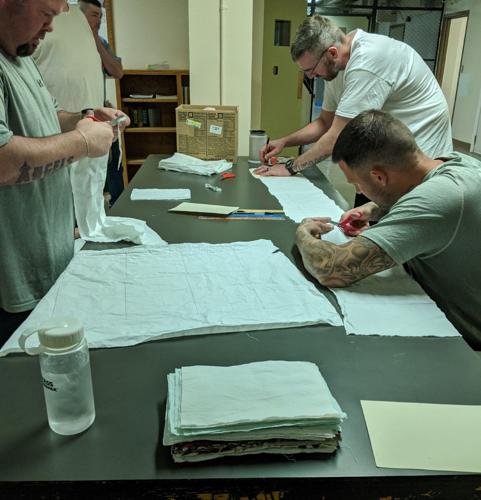
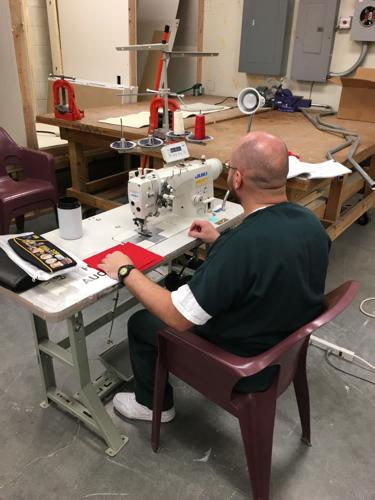
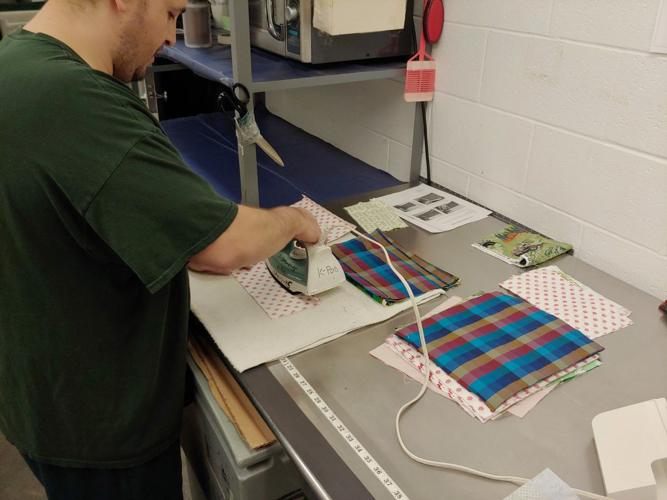
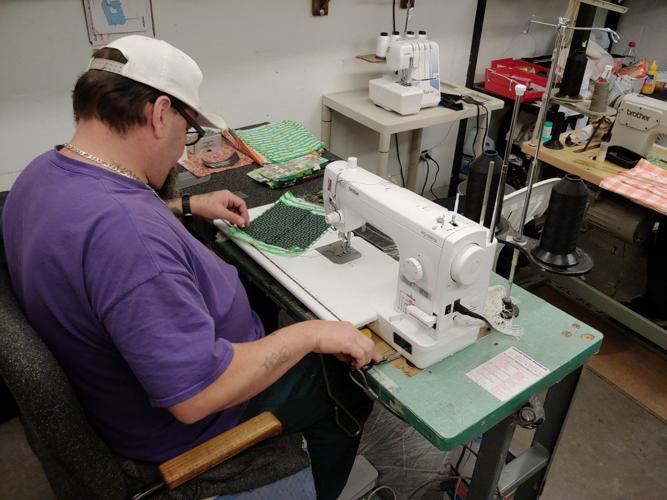
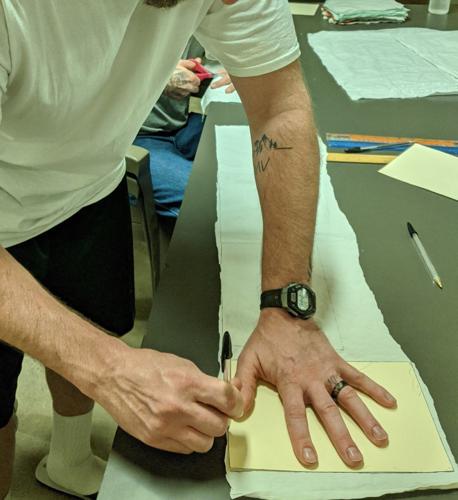
Inmates at all of Idaho’s prison facilities have volunteered to make cloth face masks for prison staff members, themselves, and the general public, in an effort to slow the spread of the new coronavirus.
The mask production effort began Wednesday; Idaho Department of Correction officials are hoping the inmates can make at least 30,000 masks, which would be enough for each inmate and staff member to have three masks, which would mean they’d have masks to wear even while other masks are being laundered. That number will also cover the more than 600 Idahoans incarcerated in Eagle Pass Correctional Facility in Eagle Pass, Texas.
Initially, department officials were considering asking inmates to volunteer to make masks for the general public, said Ross Castleton, the department’s deputy chief of prisons. However, once the Centers for Disease Control and Prevention earlier this week changed their recommendations and advised face masks for everyone, prison officials decided it would be best to produce masks for staff members and inmates first, Castleton said. Inmates aren’t being paid to make masks, but Albert Ciccone — who is incarcerated at Idaho State Correctional Center — said he wanted to help anyway. He’s a member of a certified American Legion post within the facility, and he asked other men there to help in the effort.
“I had 10 volunteers before I knew what to do with them,” Ciccone said. “All of us were volunteering, we were ready to go, and the staff here accommodated us right away.”
That was a common reaction among the prison population, Castleton said.
“We asked for volunteers and it’s been amazing,” Castleton said. “The population has just really been excited to jump in and be part of the project. There is no shortage of volunteers.”
As of Friday, according to a web page set up by the department to provide information about the virus, 22 inmates have been tested for COVID-19; 21 of those tests have returned negative results, and one is still pending. At Eagle Pass Correctional Facility in Eagle Pass, Texas, where more than 600 Idahoans are imprisoned, six inmates have been tested; all of those tests have been negative.
At an Idaho Board of Correction meeting Wednesday, Idaho Department of Correction Director Josh Tewalt said, so far, 135 staff members have called in sick or been told not to work after a health screening, to help prevent the spread of the virus. Of those, 45 staff members have been cleared to return to work, he said. He said another 465 staff members are telecommuting.
Two staff members — one who works in the department’s division of probation and parole, and one who works in a prison — have tested positive for the virus, but doctors don’t believe they spread the virus to anyone else in the department or the facility, Tewalt said.
While department officials respond to the flu every year, the new coronavirus is different because it's an external threat, said Jay Christensen, warden at the Idaho State Correctional Center. The priority is keeping the virus out of the facilities as much as possible.
After the 30,000 masks are produced, department officials plan to donate extra masks to the general public.
The department’s facilities already had some sewing machines, Castleton said, and each facility has an area where inmates can work on the masks — at the Idaho State Correctional Center, it’s an unused vocational training classroom. Since the novel coronavirus arrived in Idaho, Idaho Correctional Industries has purchased more sewing machines to assist in the effort to make masks. Inmates are making masks out of 100% cotton materials, he said, and using donated materials.
Those materials have come from as far away as Louisiana, where Nicole Maronge, who has a friend in an Idaho prison, donated enough material to make about 20 masks, she said. She was troubled by social media posts from people who indicated they felt inmates deserved to get the virus because they committed a crime.
“I’ve seen people commenting like, ‘they’re there, it’s their fault, whatever,’ but they still need to be taken care of,” Maronge said.
As of Friday, Castleton said inmates were making about 250 masks each day, but he expected production to increase by next week, as the effort became more routine. Jay Christensen, the warden at the Idaho State Correctional Center, said right now some people in the facility are wearing masks, but once there is a confirmed case of COVID-19 in the prison system, mask wearing will become mandatory. The push to make masks is an effort to be prepared for that event.
Ciccone said he felt making masks provided a positive way for inmates to give back to the community.
“It makes you feel like a citizen of this world, because we all want to come together and help out,” he said. “That’s redeeming in here.”

(0) comments
Welcome to the discussion.
Log In