

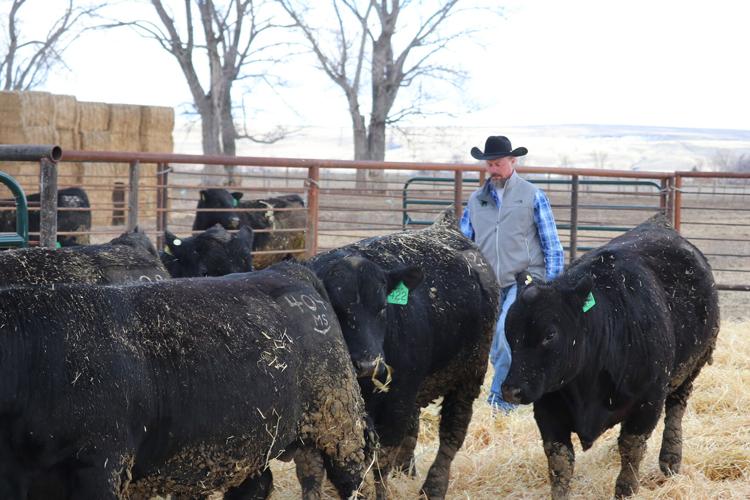
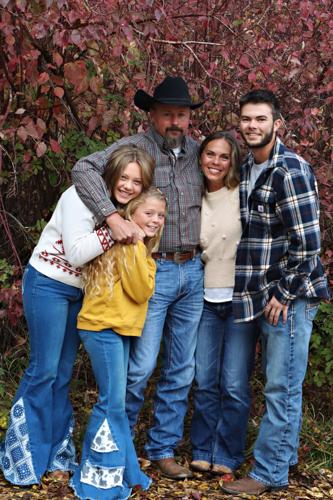
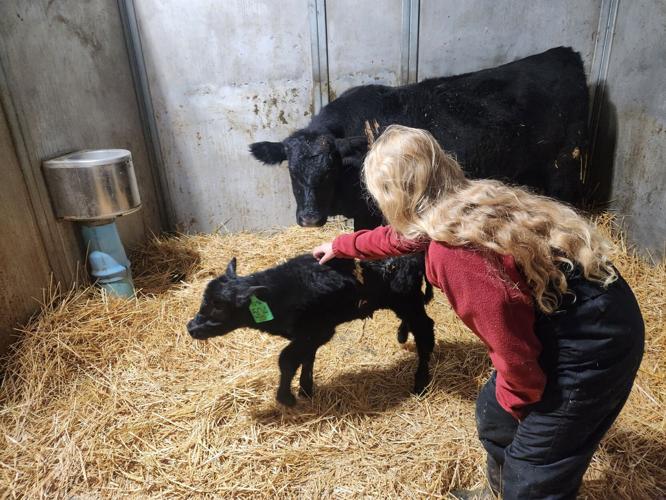
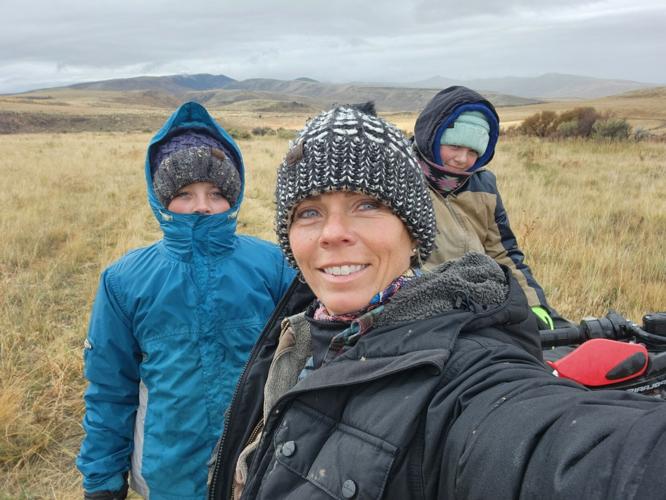
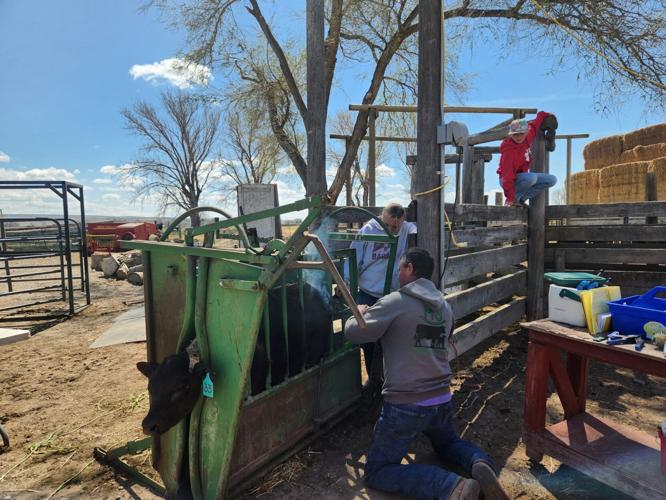
Thomson Land and Livestock is a family owned and operated registered Black Angus operation based in Blackfoot. Matt and Sarah Thomson have a son Braden who lives in St. George, Utah, and two daughters — Avalie (12) and Kendalyn (13) — who are still at home and helping with the cattle. The girls have been in 4-H for several years, showing horses and steers, and enjoy working with their animals.
“We started our cattle business on a small place near Rigby,” said Sarah. “We started buying some yearlings to graze in 2011. Our place was small but we leased our neighbor’s 40 acre-pasture, and some other pasture for the yearlings during summer. This got us started and in 2013 we decided to buy 60 heifers to breed and sell,” she said.
That didn’t work so well. “We lost some pasture and had to sell the heifers, which led us to rethink and regroup. We then decided to buy some registered Angus mother cows and build our own herd instead of year-to-year buying yearlings or heifers and feeding them to sell.” They started buying Angus cows, and Sarah and the kids were very involved in taking care of them, since Matt has a fulltime job.
“Then in 2019 our neighbors decided to sell their place, and we would no longer have that pasture right next to our property. We tried to purchase and subdivide our neighboring property with no success. That’s when we randomly came across the small farm that would fit our needs in Blackfoot. We listed our place in Rigby and were able to sell it and purchase the farm in Blackfoot all within 30 days, like it was meant to be.”
The family has been very happy with their farm at Blackfoot. “We raise hay on our place and on a neighbor’s place that we lease. We still have to buy some hay, but we can bring all our cows here for the winter to feed and calve,” said Sarah.
They pasture on several other places in summer, including some range pasture near Humphrey and some range in the Tex Creek area near Bone — in Bonneville County, near the Bingham County line.
“We have a growing herd consisting of mostly registered Angus cows and a group of commercial recipient cows we can put embryos in to raise registered Angus calves. We bought a few really good donor cows to flush (to obtain embryos). We’ve tried to build the herd, selecting for really good maternal cows that raise a good calf and are good mothers,” Sarah said.
“We start calving our heifers the end of December. Most of our cows calve in January and February, and a few calve in the fall.” Last year was their first annual bull sale and the next sale will be March 13.
The main reason for such early calving is so the yearling bulls will be mature enough to sell and be used for breeding in the spring. “We also have a few fall-calving cows, so for our next sale, we’ll have a small group of bulls that were born in the fall and are little older than the yearling bulls.”
Weather can be variable for calving in January-February. “The first winter we were in Blackfoot, it was so mild we were out there calving in sweatshirts and no coats. I thought it was so great; we’d just come from Rigby and the winter before that we had 6 feet of snow in our pasture. We had to plow snow to get to the cows, so we thought the Blackfoot weather was fantastic,” she said.
Every year has been different but January the past five years has been mild. “We’ve been hit hard with late winter storms, however, at the end of February and into March. That hurts us because the calves are pretty young and vulnerable and it gets really cold at night,” Sarah said.
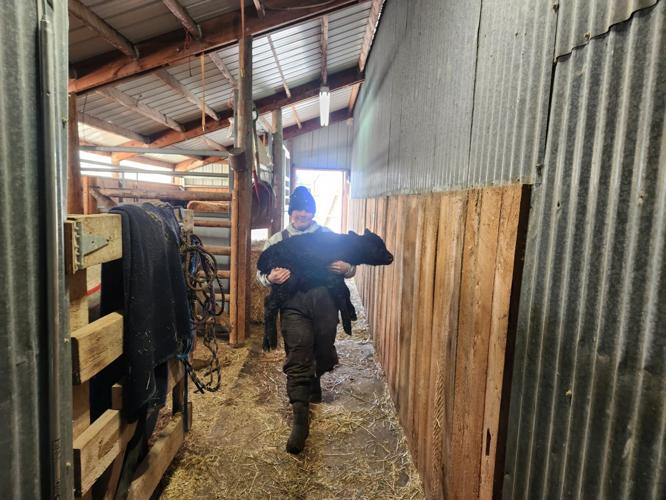
They calve all the cows through a barn. “It’s a small barn but we can make stalls for seven cows at a time, which is generally adequate. It’s handy calving in the barn because we can be there when they calve, weigh the calves at birth, etc. If it’s really nasty outside we might leave the calves in for a couple of days, if room allows, before they go out to the pasture. It varies with the calves; some are quick starters and some are a little slower.”
When you live with the cows this close and personal, you get to know them very well, and know which mamas are more user-friendly. “We cull hard on disposition because most of the time it’s just me and the girls taking care of them during the day. We do not want to have anyone at risk with a really mean cow.”
The girls enjoy helping with the cattle, checking on them in the summer riding their horses or 4-wheelers. “We go at least twice a week to the mountains and we have a great time doing that,” Sarah said.
She and the girls do a lot of the daytime work, since Matt has a diesel repair shop in Idaho Falls. “The girls have their own horses and also enjoy barrel racing but they haven’t done much of that this past year. Avalie’s horse is more than 30 years old; that’s our best estimate after talking with the vet and the previous owner. He is such a good horse; it will be a sad day when we is gone. He barrel raced successfully up until last summer, and ran a very steady 20 seconds, which is really great for his age,” Sarah said. That horse will do anything Avalie wants him to.
Kendalyn has an old horse, also, and he has some arthritic joints. “The girls didn’t do much barrel racing this year but hopefully next year. Kendalyn has a thoroughbred mare that’s good at barrel racing but she does not want to do anything else; she is kind of a knot-head and doesn’t want to work cattle, but she’s fast and agile and she’ll run poles and barrels.”
The horses live at pasture with the cattle and don’t get any special treatment. “We have to put that mare separate, however, when the cows are calving. She thinks every baby calf is hers. She will run the mama cow away from the calf. She won’t work cows but she loves calves,” said Sarah.
Avalie bought a young horse that’s now a 3-year-old. “She bought him when he was only 3 months old-from some friends who raise horses — because she just fell in love with him. We sent him to a trainer and just got him home again. It will be a little while before he barrel races but he’s a nice easy-going horse with a good mind, and very gentle. We’re hoping he will be a good horse for her for a long time.”
The Thomsons feel very fortunate and blessed to be able to raise their family and run a successful business in production animal agriculture. “We feel like this lifestyle teaches our kids responsibility and the rewards of hard work and perseverance.”

(0) comments
Welcome to the discussion.
Log In