

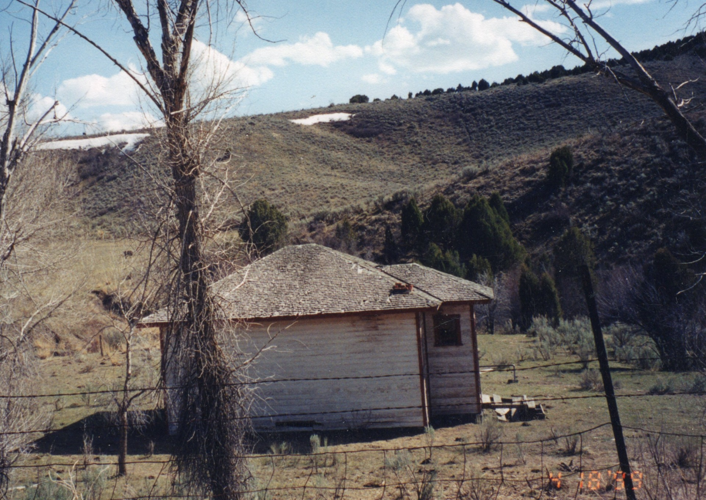

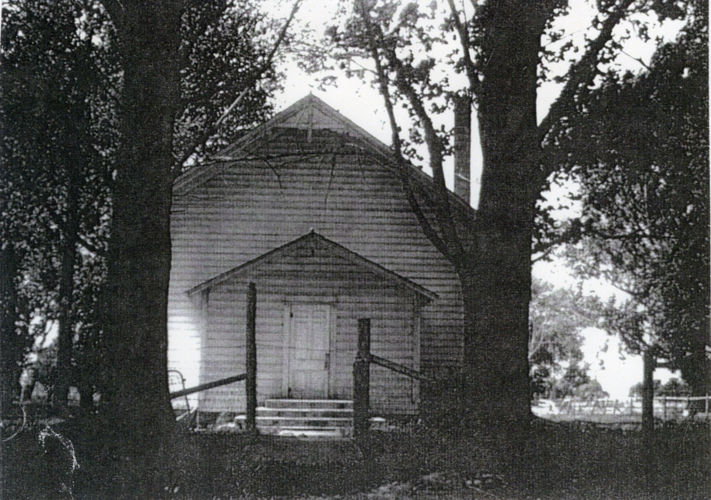
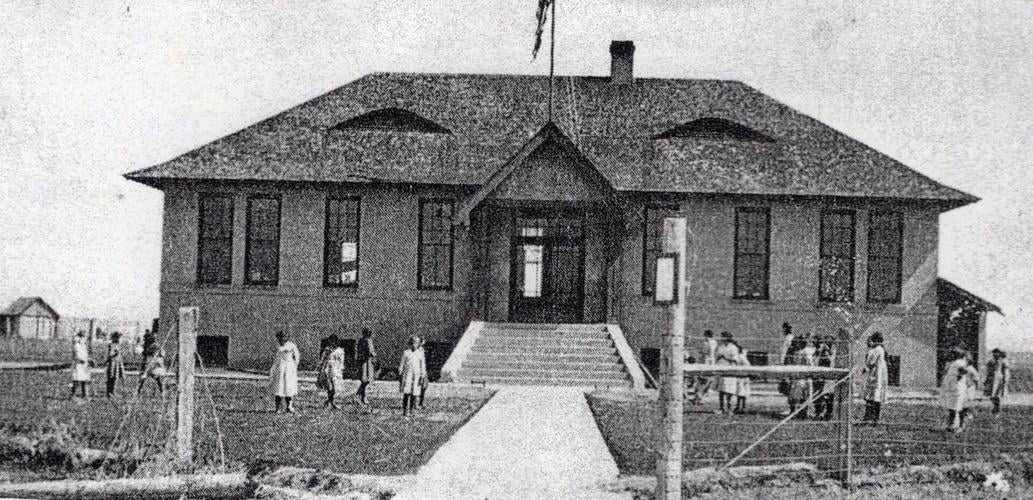
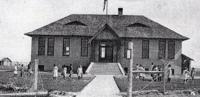
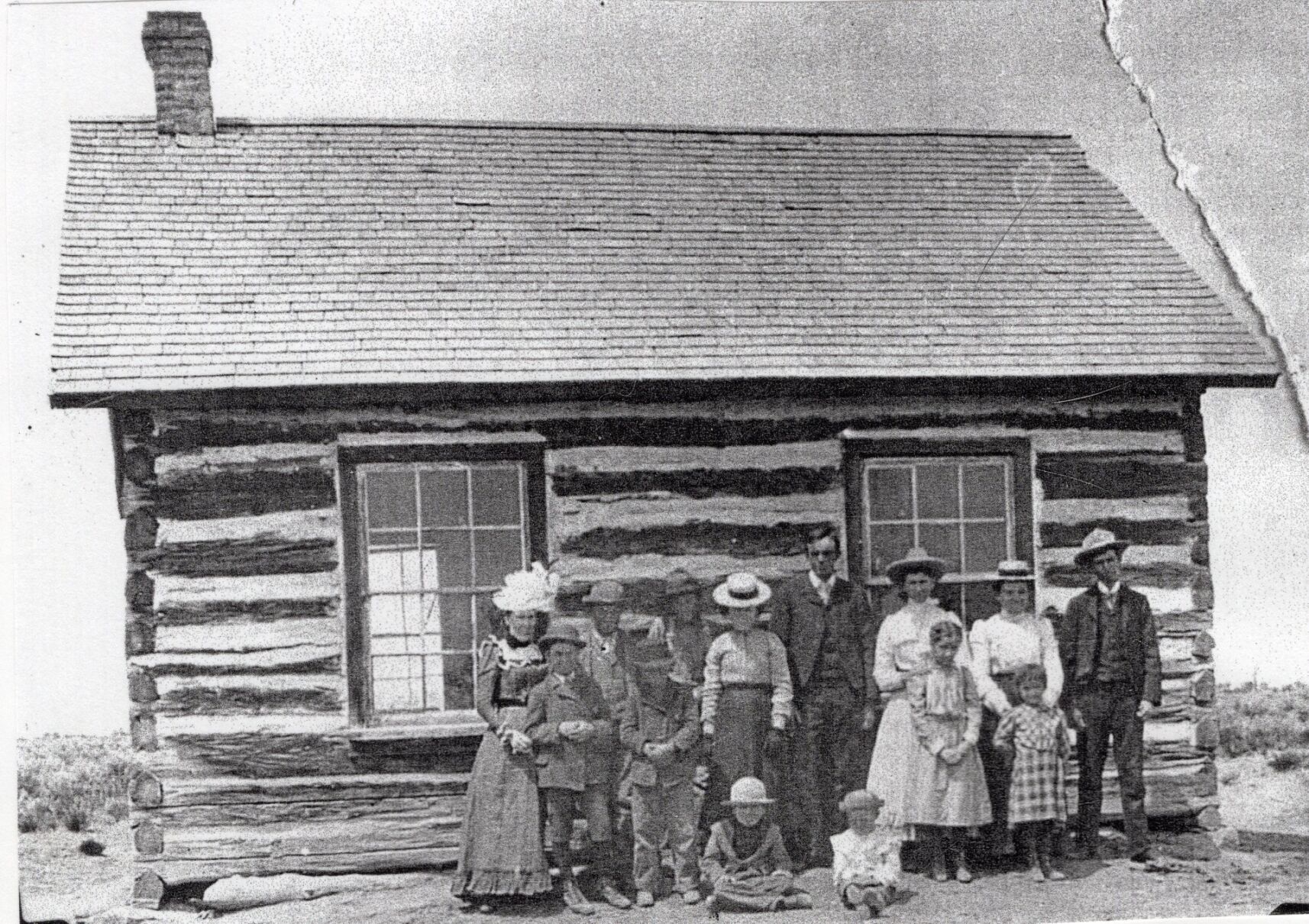
I wrote an earlier article about the schools built in the Blackfoot townsite, but by the late 1800s, settlers had spread out for large distances, especially to the north and to the west. These outlying families were also very motivated to have their children educated and took it upon themselves to make it happen. Upper Bingham County saw numerous country schools spring up — small, roughly constructed schools, with one teacher covering as many as eight grades. Often, a school contained the children of only four or five families who lived within walking distance of the building. Later, several schools added a hitching post, corral or even a barn for horses, allowing their borders to extend a little farther out into the countryside.
Attendance had to be flexible in the beginning. The children were needed at home, especially during planting and harvest times, so the schools made accommodations. The school years were shortened, meaning most of the teaching was done during the winter months. It was not uncommon, in those years, for school to begin in October and close in March. Also, children were often placed in grades by their reading level, so a 6-foot-tall boy who had been unable to attend school regularly could find himself seated with the second or third graders.
Pre-1900s schools around included (but are not limited to) Basalt, Goshen, Upper Presto, Rich, Riverton and Wicks. The Basalt school began in 1898 with two tiny buildings, but by 1904 had put up a fine four-classroom brick building. It had a belfry with a rope used to ring the bell each day. The Goshen one-room school, built in 1899, was a 20-foot-by-40-foot frame building located 1 mile north of the Goshen community. It grew to 70 students before it was replaced in 1908 with a four-room rock building. Upper Presto followed the same pattern, a small frame building replaced in 1909 with a rock structure. The Rich School, near Tilden Bridge and named for the landowner, Joel H. Rich, was built of lava rock from its beginnings in 1896. Riverton began as a log cabin in 1898. Of the 12 original students, 10 were from three families. John Wicks gave land for a one-room structure in 1888, which was replaced by a two-room brick building in 1910, and named the Wicks School. The teacher boarded with the Wicks family. Today, there is a nice stone and wood sign at the location of this school on Wicks Road.
In the first decade of the 1900s, Groveland, Kimball, Lava Side, Lower Presto, Riverview and Thomas schools opened to students. Groveland began with a two-story, four-room frame school, which cost $5,000 to build at the time. John Yancey built its brick replacement in 1921. The 1904 Kimball School was built with a bond of $1,600 and included a blackboard. This first school was located at the top of Kimball Hill, where the old store currently stands. The newer school, age unknown, was built farther south on Kimball Road and is still standing, having been remodeled into a home. The first Lava Side School was a tiny frame building on the west side of the river near Firth. The first teacher, Adelia York, taught all eight grades in a four-month school year. Many of the children spoke only Swedish. Lower Presto School stayed a one-room building until 1931, when a second room and two cloakrooms were added. This school is also still standing and has become part of a family home. Riverview School was built in 1907 to ease overcrowding in the Lava Side School. This one-room building was constructed by Adolph Johnson, the founder of Johnson Brother Building Products, still in business in Idaho Falls. The 1908 Thomas School was a two-story lava rock building. It was replaced later with a brick-over-lava-rock structure that had a gymnasium.
Between 1911 and 1920, more schools were added. Alridge School was built high up near Cedar Creek for those students who lived in the Wolverine area. In 1999, this building was rescued from total loss and moved to the North Bingham County Park, where it was lovingly restored and put on display in the frontier town. The Deer Creek School from 1919 was moved into the Blackfoot townsite and has become apartments at 511 N. Ash. Pingree built a four-room school in 1913 with two brick outhouses.
By the 1950s, all these schools, and many more, had been consolidated into the Blackfoot and Snake River School districts. Kids were bused to town schools, except Groveland and Wapello, which, with newer school buildings, were able to keep up the tradition of a neighborhood school through sixth grade. Snake River District came up with an elaborate system where kindergarten and first graders go to Moreland, second and third graders go to Riverside, and fourth graders go to Rockford. The middle school in Thomas covers fifth and sixth, and the junior high and high school are in the middle of that territory to cover the rest.
Ther Bingham County Archive is working hard to compile a complete record of all the country schools. If you have information or memories of these or other old schools, please contact us Wednesdays or Thursdays at 121 N. Shilling Street. We would love to talk to you.



(0) comments
Welcome to the discussion.
Log In