


Art Furman is a nomad. He and his wife recently finished up their careers teaching at Butler University in Indianapolis, sold their house and hit the road in their Ford Escape, jumping around to different timeshares like young backpackers.
It wouldn’t be crazy to think Furman would despise travel after all the moves he endured in the 20th century. Before his kids were born and even when they were young, Furman hopped around the country — even the world — for new jobs, and his career path did not fit into a life of stability. College coaching rewards those who keep extra shipping boxes handy.
And so, the Furmans traveled around. To the Midwest, to the Pacific Northwest, but rarely to a warm-weather college town. One of Furman’s longest stays was at Eastern Oregon University. He endured the rainy days for 11 years, then spent some time in Ohio as Bowling Green’s Director of Basketball Operations under head coach Dan Dakich before trekking to chilly Indianapolis and taking a teaching job.
All that is to say Furman rarely had a say in where he ended up. He either needed a job or needed to take a job offer. His career path was often at the behest of presidents or athletic directors or whoever was willing to give him a contract.
His destination these days is much more fluid. The options he weighs are much more inconsequential. Where do he and his wife want to spend a few months? Does anyone want to see them? Where is it sunny?
“I just absolutely love it,” Furman said. “I love to travel. I’ve been all over the U.S., lived in like 15 different states. I have a son now and I told him, ‘If you go in this crazy coaching profession, you’re going to move a little bit in your lifetime, so get ready for it.’”
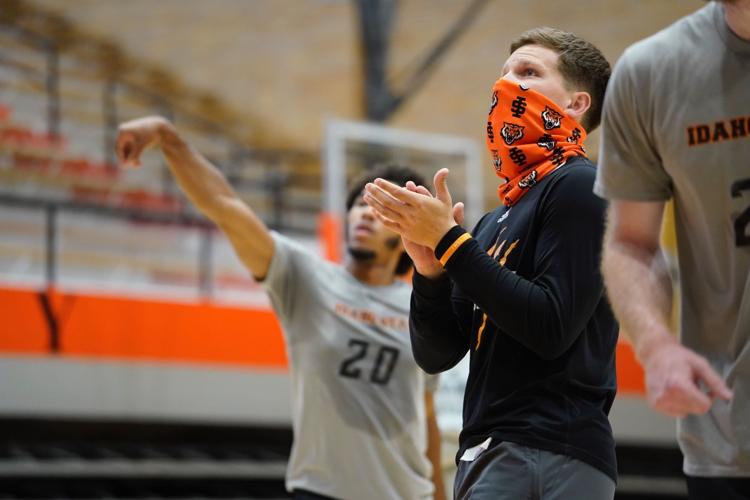
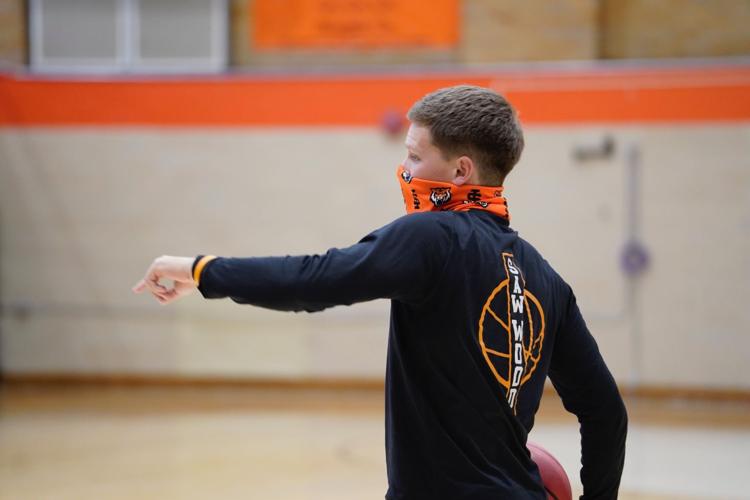
That son is Davis Furman, the 25-year old Idaho State men’s basketball assistant coach who has followed in his father’s coaching shoes and, because of that, has also doomed himself to a life as a vagabond.
****
Davis Furman had the basketball potential to play at some small school in some small town. He chose to be a student manager for the Butler basketball team instead. Why someone would want to be the rebounder, chauffeur and cheerleader for a Division I team instead of playing themselves is a conundrum a lot of young basketball players don’t grasp.
They don’t see the bigger picture.
Davis always wanted to be a coach. His memories of his dad’s profession came from the same naive perspective kids generate opinions from. He didn’t know much about all the paperwork, or administrative duties, or poor job security, or frequent moves. He remembered riding around the hallways of Eastern Oregon’s gym on a Razor scooter.
He remembers getting yelled at for shooting baskets at halftime of Mountaineers’ games. He remembers giving his friends the behind-the-scenes look of a college program.
How could one not want to go into coaching after all that?
“I wanted to get a different perspective and see how a successful program operated,” Davis said. “That was the big thing for me at Butler. Nothing that I was doing was leading to us winning, but I got to see how coaches interacted with players, how they recruited, who they recruited.
“Also, none of the stuff I was doing was helped us win, maybe, but the stuff I was doing was important and everybody has a role. Being able to say, ‘Hey, I did the dirty work for four years as a manager’ carries some weight, too.”
Yet, for all his experience, finding a job coaching after college wasn’t a cakewalk. During his senior year, Davis interned with the Butler basketball program in addition to being a student manager. He remembers the long hours in the office, many of which were spent firing off emails to any coach he had any remote connection to, inquiring about possible openings all across the country.
This is where his dad came in handy.
“I kept telling him, ‘The key to coaching is you have to network, you have to build relationships, you have to work your butt off,’” Art said. “He just took advantage of every situation and then I had given him a list of 200 coaches I knew ... you know, (Miami Heat coach) Erik Spoelstra played for me when I was at the University of Portland as an assistant coach.”
Around Christmas of his senior year, Davis sat with his dad and compiled a spreadsheet, the father and son each scrolling through their rolodex and entering every coach or possible lead into the spreadsheet. That winter, Davis sat in the Butler offices and, one-by-one, sent introduction emails to coaches in seemingly every city in America.
Still, coaching offers weren’t flying his way.
“I almost took a camp counselor job for Impact Basketball Academy,” Davis said. “What I’ve started to realize is there are so many different avenues in how people get into (coaching). There’s really no right way to script it.”
Yet few could script it better than Davis has so far. That all because Ryan Looney called.
****
Davis Furman was still a toddler when Ryan Looney approached Art Furman about a job. It was 1998 when Looney, now the Idaho State head coach, finished his playing career at Eastern Oregon with Art as his coach. He had stayed around La Grande, Oregon after graduation and coached at a small high school. On the side, he made pennies working at a local grocery store.
He was desperate to break into coaching, to get enough on his resume for a graduate assistant role somewhere. So he found his old coach and asked if he could set up a spring basketball league, bring in teams and take half the money he collected. Art gave him the green light. Not long after, the responsibilities grew and Art sent Looney on a six-week recruiting trip to Boise.
Looney put it all on his resume. When a coach from the University of Wisconsin–La Crosse called Art in 1999, he vouched for his former player and nascent coaching protege.
Nearly two decades later, Art was vouching once again. This time for his son, who had seen Looney’s name on the spreadsheet and fired off an email.
“When Ryan called (then as the coach of Point Loma Nazarene) and said, ‘Hey, tell me about Davis. I’ve heard things through friends of mine that know you and know Davis,’” Art recalled, “I kiddingly told Ryan, I said, ‘If he can get to your point, he’ll be great.’”
“He would always give me a heads up in regards to when Davis was graduating from school,” Looney said of Art. “And we just happened to have an opening at Point Loma at the same time … He had quite the entry into college basketball.”
That’s for sure. Davis took Looney’s offer as a Sea Lions’ assistant as a 23-year old straight out of college. His first season in San Diego, they won the Division II National Championship. A few months later, Looney took the Idaho State head coaching job and brought the young coach with him to Pocatello as a graduate assistant. Then an assistant left at midseason last year and freed up a full-time spot on Looney’s bench.
At 24-years old, Davis Furman became a Division I assistant coach, which has to made him one of the youngest in the country who can claim that.
“I try not to think about that too much,” Davis said. “I just want to do the best job I can at the level I’m at. I know if I do that and continue to connect with people that good things will happen and that I’ll be able to advance forward in this profession.”
Art doesn’t want to project his son’s path. The only advice he’s given him is to stick by Looney’s side for as long as possible, to understand his philosophies and be a sponge to his information. If it takes doing a million scouting reports to continue to grow next to Looney, start watching film.
There’s an obvious edge Davis has going forward: he’s recruiting kids who aren’t much older than him. On a recruiting level, it can help to be a millennial when recruiting millennials. And it can make coaching millennials fun, too.
Though the Bengals roster has been known to tease the young assistant — calling him Tommy Jr. because he looks like a younger version of freshman Tommy Ball or ding-dong ditching his house late at night — there’s a sort of familiarity they have with Davis.
“It’s awesome,” guard Austin Smellie said. “We tease him and stuff, joke around with him, but at the same time we have a good respect for him. He know he knows what he’s doing. We listen to him.”

(0) comments
Welcome to the discussion.
Log In