



We are down to the ninth most common bird on feeders in Idaho last past winter. That was the second invasive species in the Top 25 — the Eurasian collared-dove. Collared-doves did not even appear on Idaho’s Top 25 Feeder Bird list until 2010. They have increased steadily to reach No. 7 three winters ago. But the winter before last, they dropped back to No. 9. They were in the same position last winter, which suggests that their population may have finally leveled off. As always, we need to look at other data before reaching any conclusions, but the signs here are good.
It’s not clear if collared-doves have had some negative impact on, say, mourning doves. Because they don’t usurp cavities, they’re not nearly as bad as European starlings or house sparrows. But one ecological principle that I stick with is that species introduced where they don’t belong are bad news, sometimes very bad news. Perhaps the most famous example is the introduction of European rabbits into Australia about 150 years ago. Check it out.
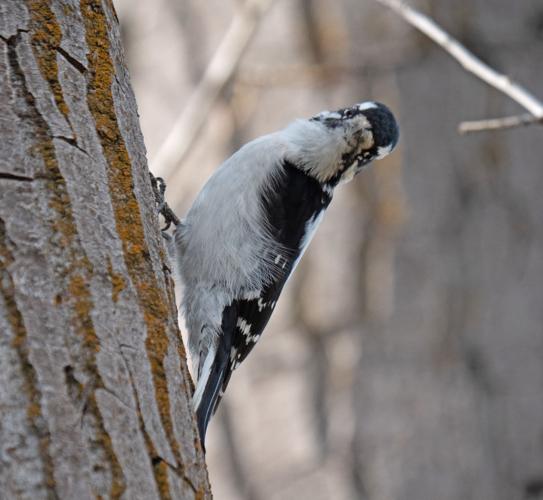
Next up is the downy woodpecker at No. 10. They were tenth two winters ago as well — the highest rankings since 2006-2007. There is a slight, and probably significant, increasing trend over this time period. I hope so. Along with northern flickers, these are our most common woodpeckers year-round in the valley. Males can be distinguished from females by a bit of red on the nape. Otherwise, they look the same. They are also attracted to suet so be sure to get some blocks out there.
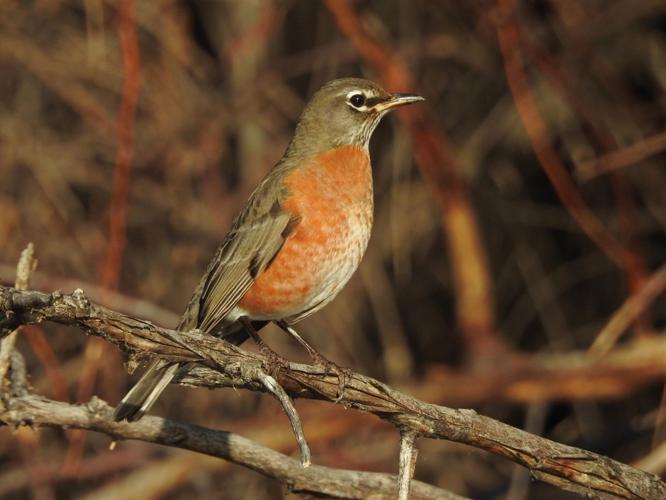
Number 11 was the American robin. Robins typically don’t eat the seeds in our feeders but are more often counted because they are attracted to fruiting plants in yards. They go for the mountain ash and juniper berries around our house, and I’ve seen them pounding hawthorn fruits in the neighborhood. They eat a lot of other fruits as well. Apparently, you can get them to come to feeders stocked with fruit. I’ve tried raisins, currants, and dried organic blueberries with no luck. If you’ve had a better experience, please let me know.
The American robin population in Idaho varies a lot from year to year. Since 2006-2007, they’ve ranged from No. 3 to No. 13. They have a slightly increasing trend over this time period, but it’s probably not significant due to all the variation. You’ve likely noticed that robins become social in winter, no longer having to defend a few lawns for their earthworms. Rather, they team up to find patches of food, much like the Boreal Forest finches I talked about earlier. I’ve been seeing groups of a few dozen this fall in northwest Boise. I hope this is a sign that we will have a lot of birds through the winter.
We lived in Pocatello from 1974 to 1979. The robins in the Portneuf Valley moved up slope into the mountains for winter where they found enormous supplies of chokecherries and juniper berries. Many of our other feeder birds are altitudinal migrants who leave their high-elevation nesting habitats for the lower elevations in winter. Robins are one of the rare species that exhibits reverse altitudinal migration in the Pocatello area, at least in some years.
In position No. 12 was the mourning dove. This native dove has been on a fairly steep downward trend since at least the winter of 2007-2008. Last winter’s ranking was a bit of a rebound from its No. 14 rank two winters ago. People often wonder if mourning doves are declining because Eurasian collared-doves are increasing. I have yet to see research that reveals a cause-effect relationship here. As I’ve written before, they seem to have somewhat different habitat preferences. I never see collared-doves away from human habitations while mourning doves can be found far out in the boondocks. I’ve also never seen interaction between these species, and I see both in my neighborhood almost daily. However, I have heard from local birders who have witnessed collared-doves bullying mourning doves around feeders. If you have observations on this interaction, I’d love to hear your experience.
At No. 13 was the European starling, the third invasive species in the top 25, and the worst bird species we’ve introduced. They are aggressive cavity nesters, and displace bluebirds, chickadees, tree swallows, house wrens, woodpeckers, and other native species that use holes for nest sites. One of my favorite local places to bird is Barber Park, but with all the starlings nesting there, I always wonder how any other cavity nester succeeds.
I’ve watched starlings try to evict American kestrels from a nest box. Although the kestrels kept their box, I was amazed at the audacity of that starling. I’ve also seen a starling and a northern flicker literally wrestling in the dirt along the Boise River Greenbelt. The starling flew off after a few seconds, and the flicker flew to a perch a few feet away and called loudly. I assume he won. A starling is about 15% lighter than either of these species. They are tough.
Next up is the mountain chickadee at No. 14. I always smile when I hear the “chickadee” call of this species because it’s so wheezy. You just want to tuck them under a blanket, give them some tea with honey, and fire up a humidifier. But — no problem — that call works perfectly well for this species. So many ways to be a bird.
This is one those species that’s on the Top 25 list because of reports from northern and eastern Idaho. They’d never make it this high on the list in the southwestern part of the state. I’ve occasionally had a bird in winter in our neighborhood, but I’ve never had one on my feeder. We moved into this house and put up feeders in 1992.
Mountain chickadee counts have varied a lot — from 9th to 22nd. As a result, the slightly downward trend over our time period may not be significant. I hope it’s not. For me, chickadees are like bluebirds. Every time I see or hear one, I just feel better.
The song sparrow comes in next at No. 15, one of the most reliable species in the Treasure Valley on any day and in any year. I have as many as eight singing in the urban neighborhoods of my three-mile dog walk in northwest Boise in spring. I’d have to check, but I bet I have this species on every single eBird checklist along the Boise River or in the foothills around here. They reportedly don’t flock, like white-crowned sparrows in winter, for example. But I think they do clump up a bit in the non-breeding season.
I’ve only had a single bird in a few past winters, dashing out from cover to grab seeds from the ground beneath my feeders. Despite their commonness and their adaptation to urban environments, they seem pretty cautious, very much unlike the house finches, goldfinches, juncos, and other feeder fans. Song sparrow populations, according to Project FeederWatch data, appear to be stable. I guess they know what they’re doing.
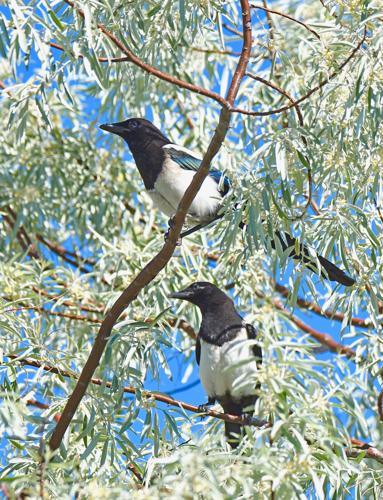
Number 16 was the black-billed magpie. I have these birds around my neighborhood on most days, but I can’t get them to come to my new peanut feeder — at least not yet. What will bring them into the yard is a red-tailed hawk perched in our old-growth cottonwood tree. They love/hate that hawk!
Magpies have varied from 11th to 18th over the period I’m looking at, but they do have an increasing trend over that time. I hope they are increasing. I enjoy magpies every time I see them, but especially after the young have fledged and a family group flies in a line across the landscape, the young trailing the adults easily identified by their short tails. Once they all perch, there invariably follows a lengthy and noisy “discussion.” Oh, to be able to understand magpie.
We are used to seeing magpies around Idaho and probably don’t fully realize how beautiful they are. They are big, have long tails, and are a striking black-and-white in most light. But if you catch them just right, they are spectacularly iridescent. If this species was rare and hard to find, people would be going far out of their way to see them. Just because they are common doesn’t mean they aren’t fabulous!
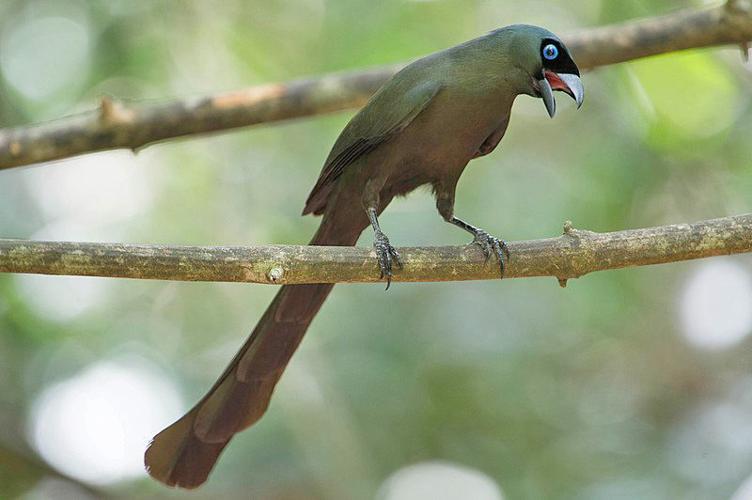
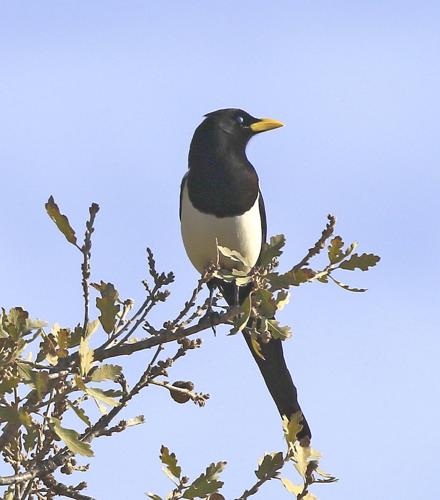
There another six species of magpies around the world that are basically black and white, including the yellow-billed magpie of California. There are an additional nine species of “blue and green” magpies and two species of “azure-winged” magpies in the Orient. There is a similar group in the Corvidae called “treepies.” Bring them all on!
Watching birds on feeders is one of the easiest ways to bird. Even on Sundays when I may watch two or three football games, never mind college football from dawn ‘til dusk on Saturdays, I keep an eye on our feeders. For an ornithologist, that’s kind of like working. Right?



(0) comments
Welcome to the discussion.
Log In