

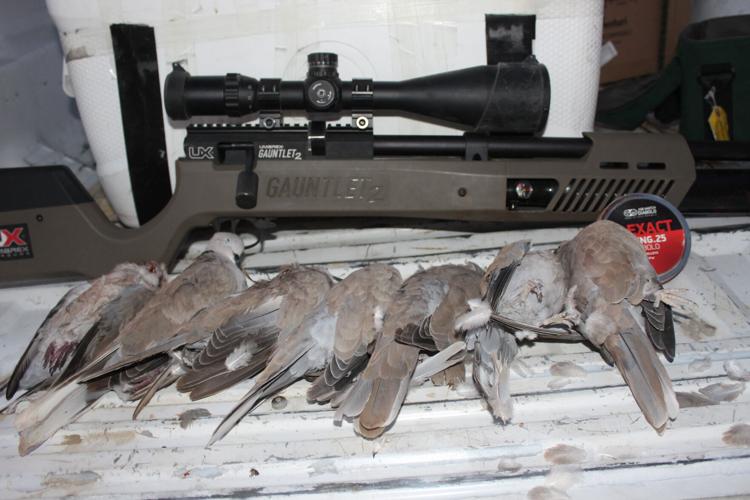
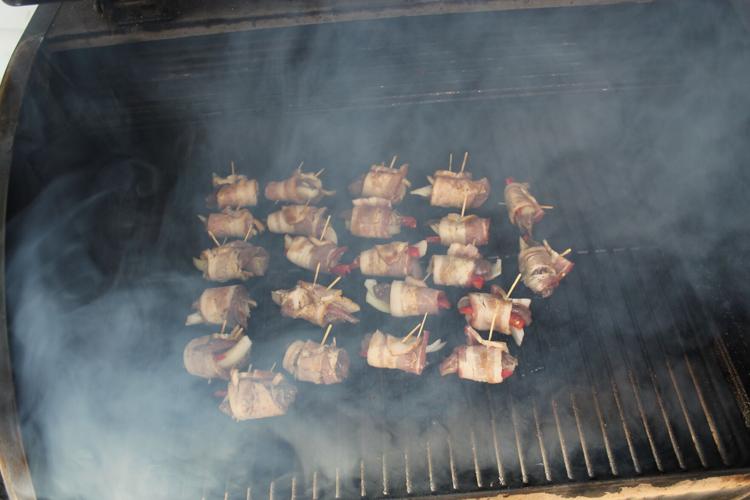


If you’re not a dove hunter, you’re missing out on a fun hunt. A lot of shooting. A low-key relaxing hunt. Nice, mild weather. Over before dark. What’s not to like about all of these elements?
Down south, dove hunting is a huge deal. Families/friends make it a big deal. Maybe because it’s the first hunt to kick off the hunting season. Who knows but it is fun. A lot of the outfitters in Texas end the day with grilling up dove poppers for all of the hunters. What great camaraderie. I need to do that someday.
If you’re new to dove hunting, let’s start with the basics. What gun do you use? Most people use a 12 ga. or 20 ga. shotgun. Some of the more mature hunters (That are good shots) later in life switch to a .410 or 28 ga.
Unless they’re right on top of you, I’d recommend using a modified choke. For ammo, everyone uses low base 8 or 7 ½ shot. If you use shells with more powder, you’ll get pounded due to all of the shooting you’ll get on a good 1-3 day hunt.
In the old days, all we had to hunt were mourning doves. Now I see plenty of Eurasian doves everywhere I hunt. They are plentiful, which is nice. They are also an invasive species, which means there is no limit on them; plus, they are a good bit larger than the mourning dove, so you get more meat. (Then down on the Southern border they also have whitewing doves).
How do you hunt them? Multiple strategies work, depending on the circumstances/elements. Setting on water holes is a great way to hunt them early/late in the day, especially on dry years. Yes, they drink water in both dry and wet years; it is just easier to be at the right water hole if there are only 1-2 holes instead of on a wet year when there are 50 different spots to water.
FEEDING AREAS
Typically in the morning, when they get off the roost, they go to water. Then they head out to the fields to feed. When the farmers are harvesting their crops, the doves will swarm to them. This is always a primo time/way to hunt them.
I’ve set up on fence lines around fields numerous times and done excellent. If it is a large field, you may have to set up out in the middle of the field. I love hunting milo fields, but there are numerous crops that draw in doves.
This isn’t an absolute, but they generally like to follow a treeline when traveling. Again, this is not an absolute, but more often than not they do.
They slow down during the heat of the day. I’ve never interviewed a dove as to why they slow down, but I assume it is due to two reasons
1. They’re full.
2. They don’t like the heat.
Then the action starts picking back up again about 6:00. End of day feeding routine and then going to get one last drink before hitting the roost for bedtime.
A few side notes: doves like to set in dead trees where they can sit and scope out the area. Seems they like to travel down tree lines. Drive around and look for flying doves to try to determine flight patterns. Then ask the farmer if you can dove hunt there.
I don’t use them as much as I should, but decoys work big time. I’ve got a few stationary decoys, but the ones that really work are the Dove-A-Flicker and Mojo dove decoys. Where I really got hung up on using decoys was a few years ago when I was on a Texas hunt with Bill Olson, the publisher of Texas Outdoors Journal, on the 24 Outfitters ranch. The guide, Ryan Gardner set-up myself and Bill with a decoy setup.
The decoys almost worked too well. The doves would fly in low at 40 mph and drop down so fast you could barely get off a shot before they landed. It was crazy. Hmm… I’m trying to remember. Why don’t I use dove decoys more???
I’m tied up the next two days but need to run out and sight in a new Ruger 10/22 that I just tricked out. In my mind, that translates into better sight in the 10/22 right fast and while out, why not slip in a fast dove hunt? Am I genius material, huh? Too bad I’m only living on a writer's budget though, so maybe I haven’t quite hit the genius status yet after all.

(0) comments
Welcome to the discussion.
Log In