


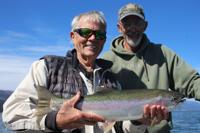
Unfortunately, there are only 24 hours in a day, and we have to spend at least 6-7 of them sleeping. I’m grateful for a good night of sleep, b…


POCATELLO — Amy’s Kitchen plans to permanently lay off dozens of workers at its Pocatello canning plant by the end of the year, as the organic…

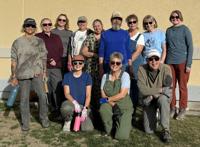
POCATELLO — Sagebrush Steppe Land Trust and Marshall Public Library are partnering to bring a native plant garden to the community, creating h…

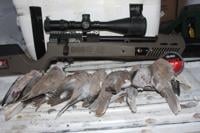
If you’re not a dove hunter, you’re missing out on a fun hunt. A lot of shooting. A low-key relaxing hunt. Nice, mild weather. Over before dar…


A lot of hunters think they don’t have time to scout, but the fact of the matter is that you’re going to scout. You either scout preseason or …

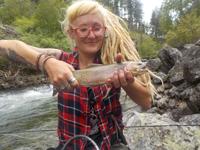
I usually teach 1-3 Backpacking 101 seminars every summer. If you’ve never backpacked or are new to Idaho, then this article is for you. First…


About a month ago, we drove down to the Warm River Spring and former fish hatchery site in Island Park. This is a favorite place for us, and I have been saddened to see noxious and obnoxious weeds such as spotted knapweed, hoary alyssum, yellow toadflax, plumeless and musk thistles, and common mullein, gaining ground each year in spite of efforts (mine and others) to control them. This trip, though, I noticed large patches of a perennial shrublike herbaceous plant (dies back to the ground each year) with yellow flowers. I had never noticed it there before, nor did I recognize it as a native. I did a little research and discovered that it is St. Johnswort, or St. John’s Wort, Hypericum perforatum, a native to Europe, Asia and Africa.


At the recent iCAST Show, I met with Whitewater, which offers nice fishing apparel. In talking, they found out that I was from Idaho, and they…


Whether it is the giant seed of the coco de mer or the dust-like seed of the jewel orchid or any size seed in between, each seed contains an embryo, a tiny plant with all the genetic material necessary to grow into its parent plant. That is relatively easy to envision with a 40-pound coco de mer seed, but much harder with the jewel orchid or similar plants, such as sagebrush, which may have two million seeds per pound. While the embryo doesn’t resemble the parent plant, it does have leaves called cotyledons, a stem, a plumule (embryonic shoot) which grows up between cotyledons and contains the primordial true leaves, and a root, called a radicle.

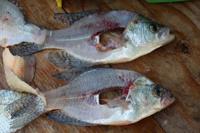
As a kid, when we got home from a fishing trip, the job for us kids was to scale the fish with a spoon, and then Dad would clean them. We’d fr…
